Key facts: Trenchless Sewer Repair
- Cured-in-place pipe lining forms a new pipe inside the old one using a resin-saturated tube that hardens in place [1].
- Pipe bursting breaks the old pipe outward while pulling a new pipe into the same path [2].
- Colorado requires an 811 call before excavation, including access pits [3].
- Aurora owners are responsible for street or property damage caused by repairs to their service line [4].
How trenchless repair works in Aurora
What trenchless sewer repair involves in an Aurora yard
Trenchless repair covers methods that fix or replace a buried pipe without digging along its whole length. In Aurora, two methods dominate for residential service lines. Lining, or cured-in-place pipe, places a resin-soaked tube inside the cleaned old pipe, inflates it against the walls and cures it so it hardens into a smooth new pipe with no joints. Pipe bursting pulls a bursting head through the old line, breaking it outward into the soil while drawing a new, continuous pipe in behind it.
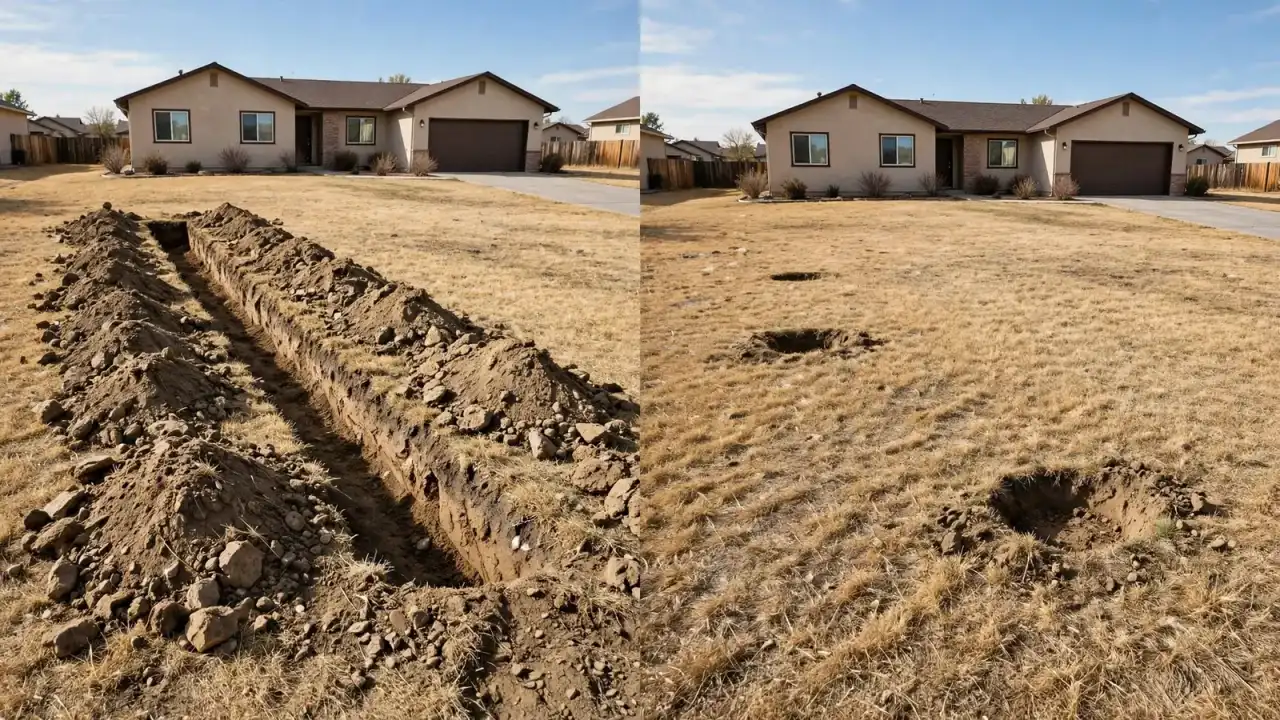
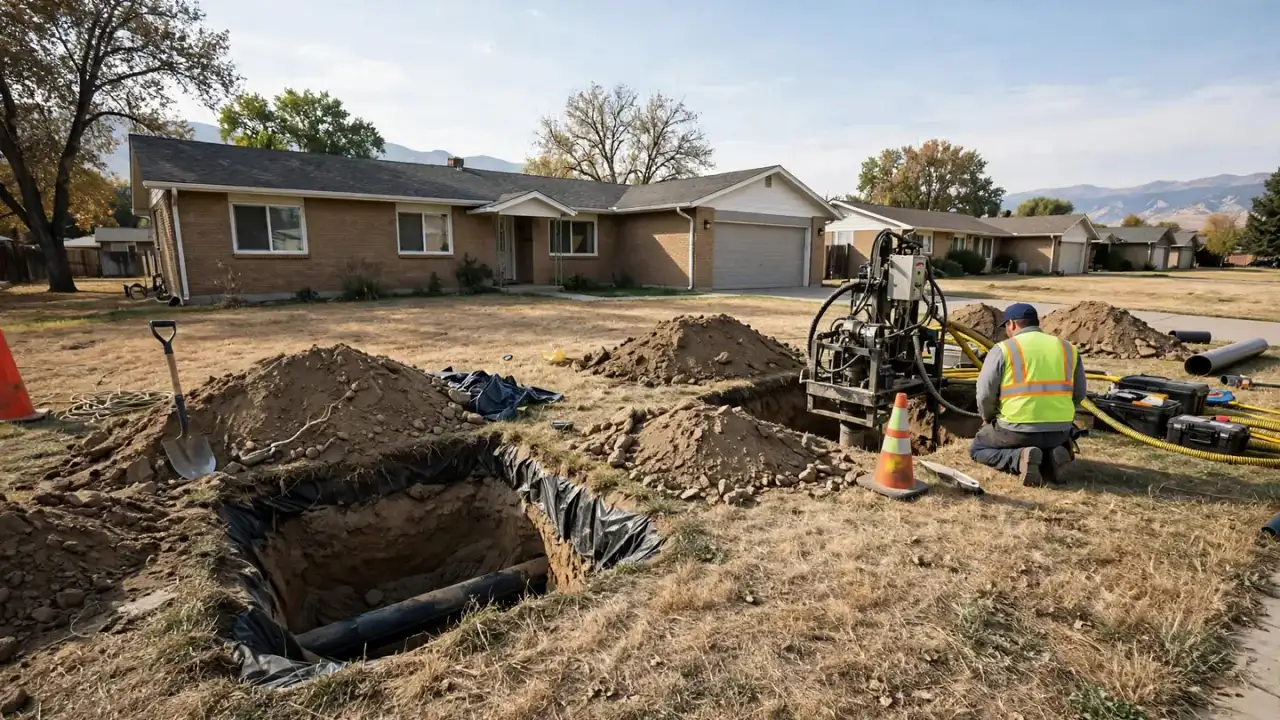
Both need access. Lining can often start from the basement cleanout or an outdoor cleanout near the house and run toward the main, sometimes with a pit near the connection. Bursting usually needs a pit at each end. Compared with a trench running from the foundation to the street, which in Aurora may be deep because lines are buried below frost, small pits disturb far less of the yard.
Trenchless does not fit every line. Lining follows the existing pipe exactly, so it cannot fix a sag. Collapsed sections stop the liner and must be dug out. Bursting needs a clear path and room to pull. The camera video shows which approach the line can take.
Good candidates
Signs an Aurora line may suit trenchless repair
These conditions often point toward lining or bursting.
Roots at many joints of round pipe
Lining seals every joint once roots are cut out.
Read moreCracked clay or corroded cast iron
Lining works if the pipe still holds its shape.
Read moreLine under a driveway or mature tree
Avoiding excavation there is the main appeal.
Deep line to the main
Small pits beat a deep trench in cold, dense soils.
Brittle or deformed pipe with a clear path
Bursting replaces it in place.
Read moreRepeat backups traced to joint failures
A sealed line stops the cycle.
Read more
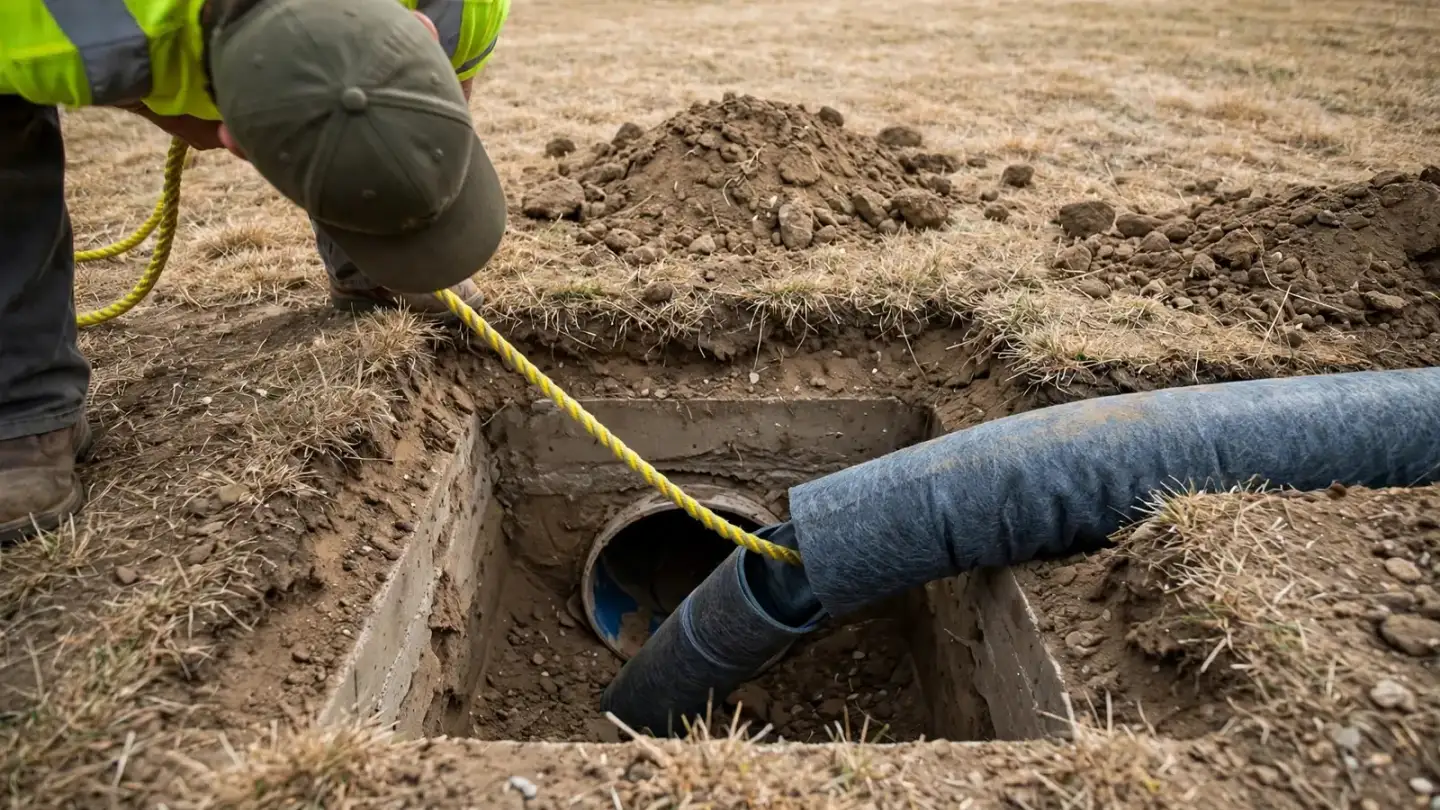
Liner pull figure
Why trenchless suits Aurora
Why many Aurora owners choose trenchless methods
Aurora's service lines often run several feet deep and pass under features owners would rather keep: finished driveways, patios, mature trees and xeriscaped beds that took years to establish. A full trench means removing and replacing all of it, and digging deep enough to reach the pipe safely requires shoring in clay soils.
Winter adds a factor. When the ground is frozen, digging is slow and restoration has to wait. Trenchless methods limit digging to small pits, which are faster to open and close in any season.
The soils matter too. Swelling clays along the Front Range move pipe over time. [5] A jointless liner or a fused polyethylene pipe from bursting has no joints to pull apart, which suits ground that shifts.
Trenchless steps
How a trenchless repair is done in Aurora
- 1
Inspect and map
A camera video shows the defects; the locator maps the route and depth.
- 2
Permits and locates
Any required permits are pulled and Colorado 811 is called. [3]
- 3
Open access
Pits are dug where needed, often near the house and near the main.
- 4
Prepare the line
For lining, roots and scale are cut and the pipe cleaned; for bursting, a cable is threaded.
- 5
Install
The liner is inserted and cured, or the new pipe is pulled in behind the bursting head.
- 6
Reconnect and test
Ends are connected, the line is filmed and tested.
- 7
Restore
Pits are backfilled, compacted and the surface restored.
Lining and bursting
Trenchless methods compared for Aurora lines
| Factor | Lining | Pipe bursting |
|---|---|---|
| What it does | New pipe formed inside the old | New pipe pulled in as the old is broken out |
| Needs | Old pipe holding its shape | A path a cable can follow |
| Diameter | Slightly reduced | Same or larger |
| Access | Often a cleanout plus one pit | Usually two pits |
| Fixes sags | No | No |
| Best for | Cracks, root entry, corrosion | Collapsed, deformed or brittle pipe |
What you can do yourself
Preparing your property for trenchless work
A few steps help the crew and protect your yard.
- Mark sprinkler heads, drip lines and low-voltage lighting near the likely pit spots.
- Clear the basement area around the cleanout.
- Move vehicles from the driveway if a pit may be needed there.
- Plan for sewer service to be off for part of the day.
- Keep pets and children away from open pits.
- Keep the before and after videos.
Trenchless limits
When trenchless repair will not work
A liner cannot correct slope; water sitting in a sag will sit in the liner too. Collapsed sections block the liner and must be excavated. Sharp bends, heavy offsets and mixed pipe sizes can complicate both methods. Bursting near shallow gas or water lines may require exposing those first. If the camera shows these conditions, the plumber may suggest digging some or all of the line.
Trenchless sewer repair in Aurora: local specifics
Aurora conditions for trenchless work
Many older Aurora neighborhoods connect to mains in alleys, so pits may go near the back fence or in the alley, where garages, utility poles and neighbors' access must be considered. Newer neighborhoods connect under the street, so a pit may be needed in the parkway or near the curb.
Aurora's rules make owners responsible for damage to streets or property caused by work on their service line. Trenchless methods reduce that exposure by limiting digging, but any work in the right of way must follow city requirements. [4] Colorado 811 locates are required before any pit is dug.
Clay soils are firm when dry and heavy when wet; spring snowmelt can flood pits. Crews plan around the season.
Trenchless or dig
When trenchless makes sense in Aurora
| Condition | Trenchless | Excavation |
|---|---|---|
| Cracks and roots, round pipe | Lining | Possible, more disruptive |
| Collapsed or deformed pipe | Bursting | Yes |
| Sag | No | Yes |
| Under driveway or mature tree | Preferred | Last resort |
| Short shallow run | Possible | Often simple |
| Frozen ground | Small pits easier | Slower |
Related problems
Problems that come up with trenchless repairs
Trenchless jobs often reveal related issues: a missing outdoor cleanout, corroded cast iron under the basement floor or a poor connection at the main. Many plumbers add a two-way cleanout during the work to make future service easier.
Trees and xeriscape
Protecting trees and xeriscaped yards
Mature trees and xeriscaped yards with rock, native grasses and drip irrigation take years to establish. Trenchless pits can usually be placed outside critical root zones and planting areas, and restoration is limited to small patches.
Liner curing
How liners are cured
Liners are cured with hot water, steam or ultraviolet light, depending on the system. Curing time varies with method and temperature. In cold weather, crews account for ground temperature. The result is a hard, smooth pipe inside the old one.
New pipe for bursting
The pipe pulled in by bursting
Bursting typically installs high-density polyethylene, fused into one continuous length so there are no joints. It flexes a little with ground movement, which suits Front Range soils.
After trenchless work
Caring for a lined or burst line
Film the finished line and keep the video. Avoid grease and wipes. If roots were the problem, an occasional check every few years confirms the connections at each end remain sealed.
Lining from the basement
Starting a liner from an Aurora basement cleanout
Many Aurora homes allow lining to begin inside the basement at the main cleanout, which avoids any digging near the house. The plumber cleans the line thoroughly, often cutting roots and grinding down scale on old cast iron, then films it to confirm it is ready. The liner is inserted from the cleanout and pushed or inverted toward the main. Depending on the system and the condition near the main, a small pit at the property line or street may still be needed to finish the downstream end and reconnect to the city's connection.
Working from the basement means protecting the floor, keeping the area ventilated and planning for resin and equipment indoors. Plumbers who line from basements regularly have routines for this. Ask how they will protect finished spaces near the utility room.
Lining cast iron under the basement floor
Lining drains beneath the slab
Corroded cast iron drains beneath the basement floor can sometimes be lined from inside, avoiding cutting the slab. Branch connections from floor drains, toilets and showers are reopened with a cutter after the liner cures. Lining works when the pipe is still continuous and round; badly broken sections under the floor still need to be cut out. The camera determines which.
Pipe bursting in clay soils
How pipe bursting behaves in Aurora clay
When a bursting head breaks old pipe outward, the fragments are pushed into the surrounding soil. Dense clay offers resistance, so crews size equipment for the job. Nearby gas, water or irrigation lines crossing the sewer path are exposed first so the bursting head does not damage them. The new pipe follows the same path and grade as the old one.
Connections at the main
Finishing a trenchless repair at the city connection
At the downstream end, the new liner or pipe must meet the city's connection cleanly. If the camera shows damage at the tap or in the main, the plumber will note it, and public-side repairs are coordinated with the city. Aurora's rules make owners responsible for their service line and tap-related damage on their side, so a clean, sealed connection matters.
Choosing a trenchless contractor
Questions to ask about trenchless work
Ask which method the plumber recommends and why, referring to the video. Ask where any pits will go, how long service will be off, how the ends are connected, whether they will film the finished line and who handles permits and 811. Check their Colorado license.
Trenchless and HOAs
Trenchless work in HOA neighborhoods
Many Aurora neighborhoods have HOAs that care about lawns and landscaping. Trenchless methods minimize visible disruption, which can make approvals and neighbor relations easier. Check whether your HOA requires notice for work in front yards.
What a typical trenchless job looks like
A typical trenchless job in an Aurora yard
On a typical job, the crew arrives, confirms 811 markings and lays protection in the basement around the cleanout. They clean and film the line, then open a small pit near the property line if needed. For lining, the liner is prepared, inserted and cured, then the downstream end is connected and the line filmed again. For bursting, the bursting machine sits in one pit and pulls the new pipe from the other. By the end of the day, pits are backfilled and the household has sewer service again in many cases.
Restoration after trenchless work
What restoration looks like after trenchless work
Restoration is limited to the pit areas: soil is replaced and compacted, and sod, rock mulch or paving is patched. In xeriscaped yards, landscape fabric and rock are set back in place. In winter, final turf restoration may wait for spring. Ask what restoration is included and what is left for you.
Trenchless in newer neighborhoods
Trenchless repair for newer PVC lines
In newer southeast Aurora homes, problems are often localized: a separated joint or a settled section. Spot repairs or short liners may be enough, avoiding digging up new landscaping. Bursting is rarely needed for PVC unless the line was crushed.
Records after trenchless work
Keeping records of a trenchless repair
Keep the before and after videos, the method used, pit locations and any permit records. They are valuable if you sell the home or need future service.
Combining methods
When trenchless and excavation work together
Some lines need both: excavating to fix a sag or collapse, then lining the rest. The camera video lets the plumber design a combination that fixes every defect with the least disruption.
Ground movement and liners
How liners cope with swelling soils
A cured liner is a continuous tube with no joints, so seasonal soil movement cannot pull joints apart. The old host pipe around it still moves with the ground, but the liner flexes slightly with it. Where the original line has a severe offset, the liner can bridge it if the gap is small; larger offsets are excavated first.
Lateral reinstatement
Reopening connections inside a lined pipe
If other drains join the service line downstream, such as a floor drain line or a connection from an addition, the liner covers those openings. After curing, a robotic or hand-guided cutter reopens them from inside, guided by the camera. A good installer documents each reopening on video.
Trenchless and basement walls
Sealing at the foundation
Where the service line passes through the basement wall, the liner or new pipe must transition cleanly to the building drain. Plumbers check that the foundation penetration is sealed so groundwater cannot follow the pipe into the basement during snowmelt.
Disruption inside the house
What to expect indoors during lining
Lining from a basement cleanout means equipment and hoses come through the basement for part of the day. Crews protect floors with drop cloths and keep work confined to the utility area. Odors from curing resins are controlled with ventilation. Ask about this if your utility room is next to finished living space.
Weather and curing in Aurora
How Colorado weather affects trenchless work
Colorado weather swings quickly. A warm afternoon can follow a freezing morning, and spring storms can drop snow on an open pit. Crews monitor temperatures because some liner resins cure differently in cold, and they cover pits overnight. Bursting is less sensitive to temperature, but frozen soil at the surface can make pit excavation slower.
Trenchless and HOA landscaping rules
Protecting common landscaping in HOAs
In many Aurora subdivisions, front-yard landscaping is part of an HOA's standards. Small pits are easier to restore to those standards than a long trench. Let your HOA know about the work if required, and photograph the area before work begins.
When trenchless saves the driveway
Lines under driveways and garages
Many Aurora service lines run under the driveway or the attached garage slab on their way to the street. Breaking and repouring concrete is disruptive and slow in cold weather. Lining or bursting avoids it in most cases. The camera's locator shows exactly how the line crosses under the slab.
How long lining lasts
Expected life of a liner
Manufacturers design liners for long service, and many systems are rated for decades when installed correctly in suitable host pipe. Ask the plumber about the specific system and its warranty.
When trenchless is not worth it
Short lines where digging is simpler
If the line is short, shallow and runs under open lawn, a small excavation may be quicker and simpler than setting up trenchless equipment. The plumber weighs setup against digging for each job.
Explaining the choice
Why the plumber's reasoning matters
A good recommendation explains why one method fits your line, referring to the video: pipe shape, defects, slope, depth and what is above. If the explanation does not reference the camera findings, ask for it, and ask to see the footage that supports the recommendation.
Trenchless and inspections
Inspections for trenchless repairs
Where permits apply, inspectors may review the pits, connections or documentation, and some require video of the finished liner or pipe. Plumbers who do trenchless work regularly know what is expected.
Trenchless questions
Questions about trenchless sewer repair in Aurora
Can trenchless repair fix a sagging line?
No. Lining and bursting follow the existing path. Sags are fixed by excavating and re-laying that section.
How many pits are needed?
Usually one or two, depending on the method and access. Lining can sometimes start from a basement cleanout.
Can trenchless work be done in winter?
Often yes. Small pits are easier to open in frozen ground than a long trench.
Do roots grow through liners?
A properly installed liner has no joints along its length for roots to enter. Ends must be sealed well.
Will my driveway need to be broken?
Trenchless methods usually avoid it, unless a pit must go there.
Do I need to call 811?
Yes. Any pit requires utility locates first.
Can a liner be installed from my basement?
Often, if the cleanout gives good access and the line is suitable.
Can trenchless work happen with snow on the ground?
Often yes. Pits are small, crews cover them overnight, and lining from a basement cleanout happens indoors, out of the wind, snow and cold of a typical Aurora winter day on the plains.
What should I tell the plumber about trenchless options?
Share the camera video, what sits over the line, and whether the main is in the alley or street.
Is digging ever simpler than trenchless?
For short, shallow lines under open lawn, a small excavation can be quicker.
How long do liners last?
Liners are designed for long service when installed correctly. Ask about the specific system and warranty.
Can trenchless methods avoid my driveway?
Usually. Lining or bursting from pits on either side avoids breaking the slab in most cases.
Will lining work in my basement disrupt the house?
Equipment comes into the utility area for part of the day, with floors protected and ventilation for curing.
Can my basement drains be lined too?
Sometimes, if they are continuous and round. Broken sections under the floor still need to be cut out.
What if the camera shows damage at the city connection?
The plumber documents it, and public-side repairs are coordinated with the city.
Is trenchless repair permanent?
A properly installed liner or burst pipe forms a continuous new line. Ask the plumber about expected service life for your situation.