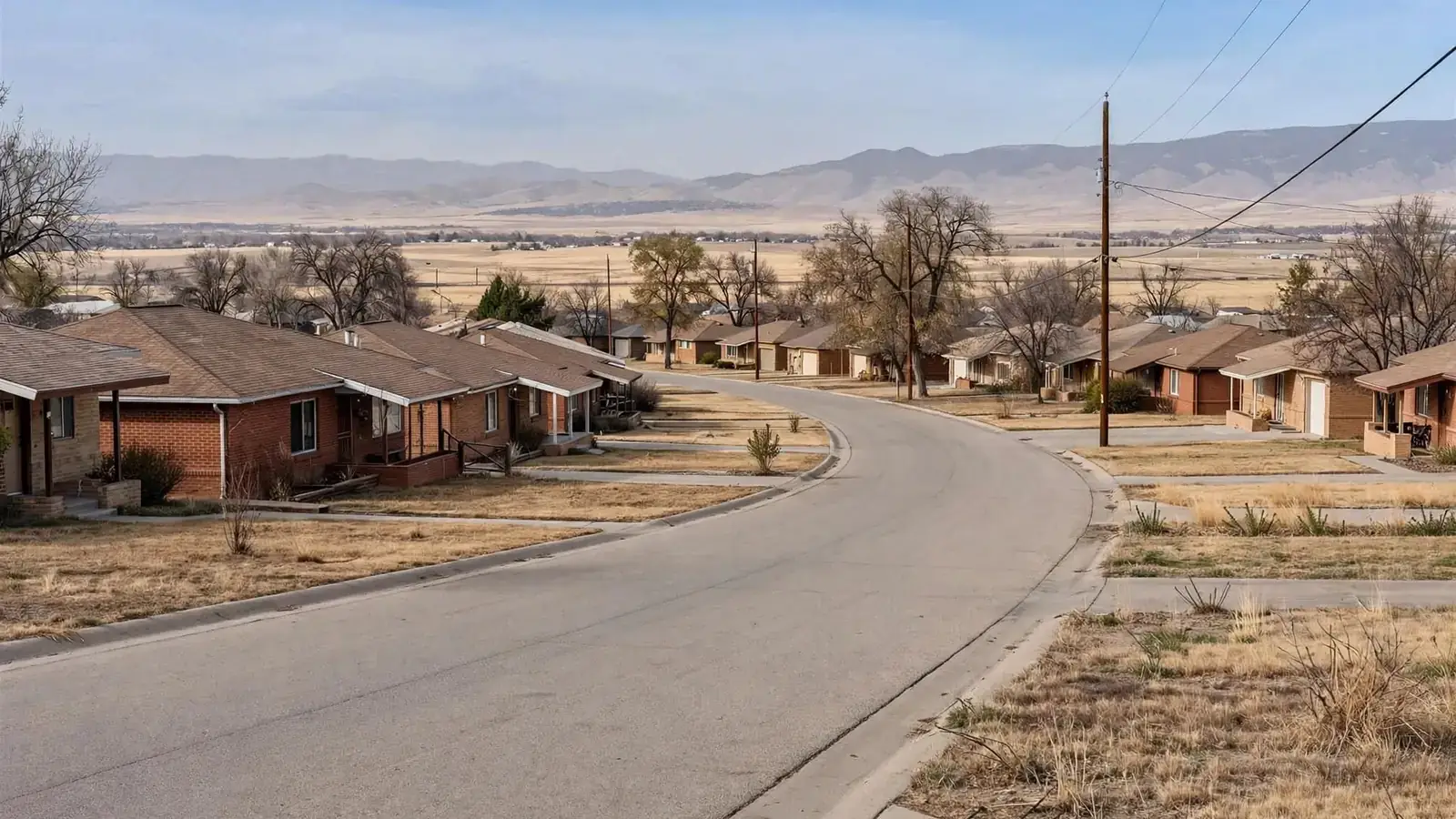
Key facts: Hoffman Heights
- Hoffman Heights was developed by Sam Hoffman and his sons during Aurora's rapid growth from the 1940s through the 1950s [1].
- The Hoffman Heights area covers roughly 400 acres near I-225 and East Colfax [2].
- Aurora assigns owners responsibility for the service line to the main [3].
- Cast iron drains corrode from the inside over decades [4].
Hoffman Heights coverage
Hoffman Heights ZIP codes covered
Calls from these Hoffman Heights ZIP codes reach the plumbing network. Ask on the call to confirm your street is served.
- 80010: Hoffman Heights' western blocks and nearby streets. [1]
- 80011: eastern and northern parts of the neighborhood toward I-225.
Hoffman Heights housing
What Hoffman Heights homes are like
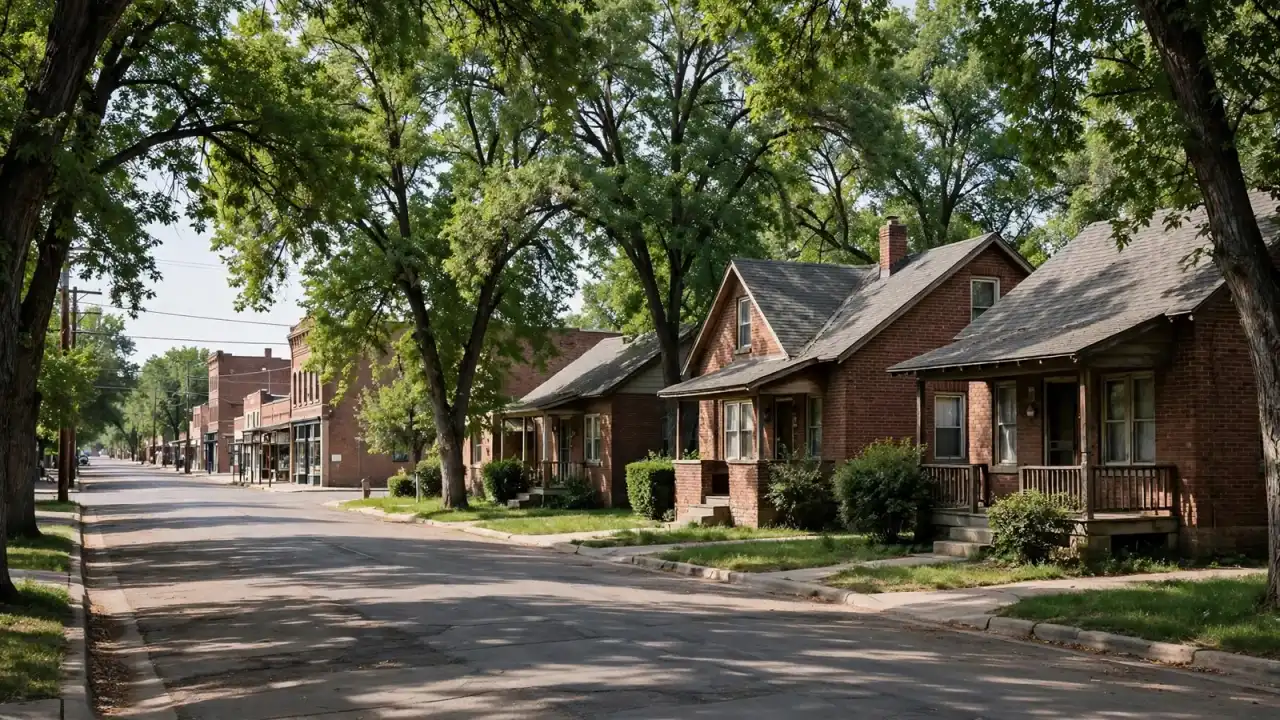
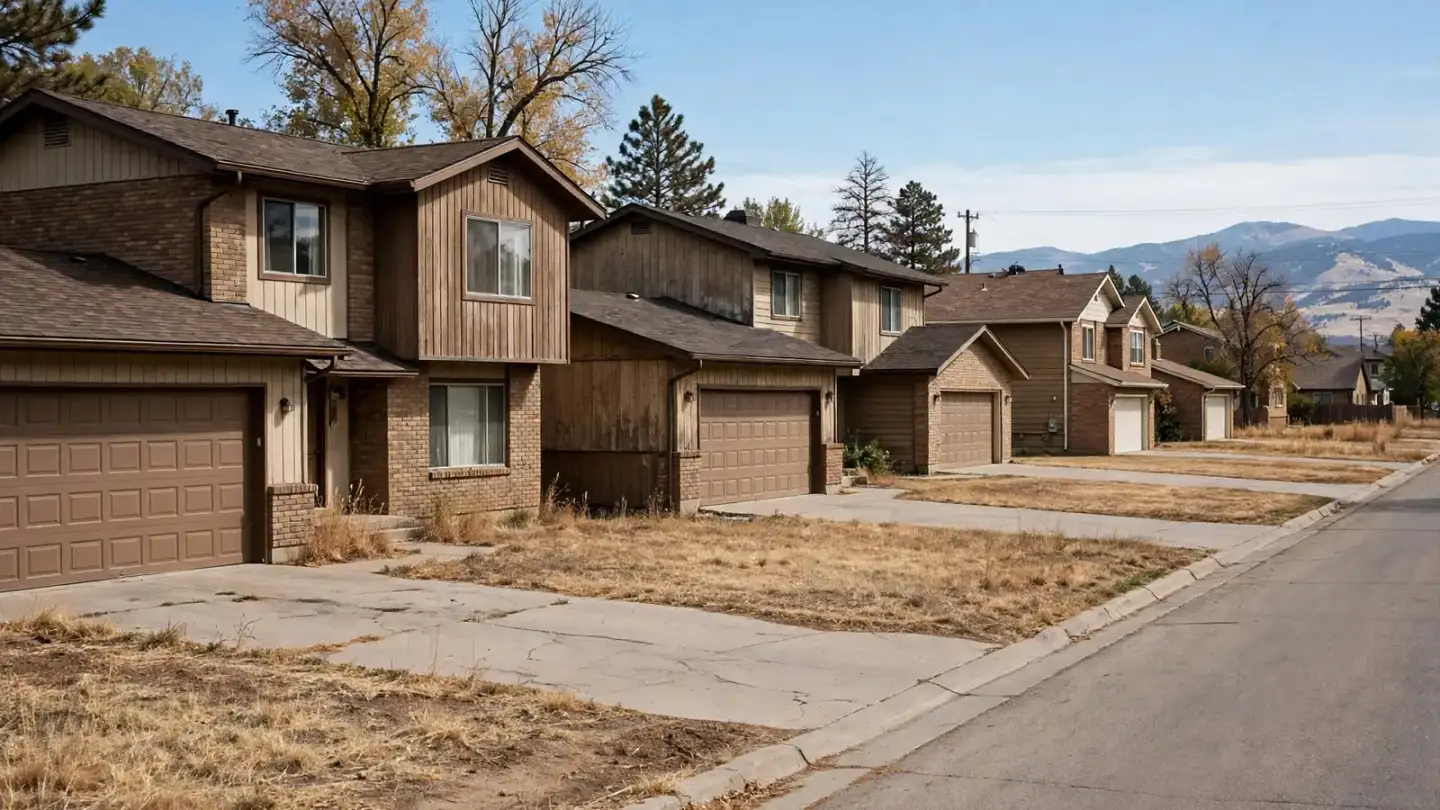
Hoffman Heights grew in the years after World War II, when Aurora expanded rapidly to house returning service members and their families. The Hoffman family built hundreds of modest single-story homes, mostly brick ranches with simple rooflines, many with basements. The neighborhood even had its own schools and fire station before annexation.
Those homes were built with the plumbing of their era: cast iron drains inside, often running under basement floors, and service lines of clay or cast iron running to mains in the streets or alleys. Seventy years later, many lines are at or near the end of their life.
Hoffman Heights sewer problems
What plumbers see in Hoffman Heights
Common findings in Hoffman Heights homes include these.
Seventy-year-old lines
Original pipe nearing the end of its life.
Read moreRoots from mature trees
Trees planted when the homes were new now reach the lines.
Read moreBasement floor drain backups
The lowest drain overflows first.
Read moreCorroded drains under basements
Cast iron under slabs wears thin.
Read more
Lines at seventy
What seventy years does to a service line
After seven decades, clay joints have loosened, cast iron has corroded and the ground has moved repeatedly as the clay soils wetted and dried. Camera inspections in Hoffman Heights often show some combination of roots, cracks, offsets and corrosion. Few original lines are in perfect shape, and many owners eventually choose lining or replacement to stop recurring problems.
Hoffman Heights figure

Basements in Hoffman Heights
Basements and backups in Hoffman Heights homes
Many Hoffman Heights ranches have basements, some finished as family rooms or bedrooms over the years. The floor drain sits at the lowest point. When roots or a break restrict the line, wastewater appears there first, sometimes on finished floors. A backwater valve helps against city-side surges; repairing the private line prevents the rest.
Historic survey
A neighborhood documented by historians
Hoffman Heights has been the subject of a historic architectural survey by the city's historic preservation program, which recognizes its role in Aurora's post-war growth. That history does not restrict private sewer repairs, but it explains why so many homes share the same age and construction.
Hoffman Heights permits
Rules and responsibility in Hoffman Heights
Owners are responsible for the service line to the main and for damages from its repair under city rules. Excavation requires 811 locates. Work in the right of way follows city requirements. [3]
Planning a Hoffman Heights visit
Planning a sewer visit in Hoffman Heights
- 1
Basement
Clear around the cleanout and floor drain.
- 2
Finished spaces
Mention finished rooms near the drain.
- 3
Trees
Note large trees over the line.
- 4
Past work
Share any previous repairs or cleanings.
- 5
Main location
Note whether the main is in the street or alley if known.
Hoffman Heights situations
Hoffman Heights sewer situations
| Finding | Typical response |
|---|---|
| Roots at clay joints | Clean and line |
| Corroded cast iron under the slab | Line from inside or replace |
| Sag in the yard | Excavate that section |
| Collapsed section | Burst or replace |
| City main surges | Backwater valve and city report |
Hoffman Heights repair choices
Choosing repairs in Hoffman Heights
Because many lines share age and condition, owners often move straight to a long-term fix after a camera inspection rather than repeated cleaning. Lining suits round pipe with roots; replacement suits collapsed or badly sagging lines.
Neighbors with the same houses
Learning from neighbors
Since many homes were built at the same time, neighbors often face the same issues. Their experiences can help, though each line differs.
The Hoffman story
How the Hoffman family built a neighborhood
Hoffman Heights takes its name from Sam Hoffman, a builder who, with his sons, developed the area after the Second World War. Aurora was booming with workers drawn by nearby military installations, and the Hoffmans built homes quickly and at scale, laying out streets, schools and even a fire station. The neighborhood was large enough to function almost as its own town before it became part of Aurora. For sewer purposes, that speed and scale matter: many lines were installed in the same few years with the same materials and methods, so they tend to age together.
Ranch homes and drain layout
How a Hoffman Heights ranch drains
A typical Hoffman Heights ranch has its kitchen, bathroom and laundry on one floor, with drains collecting into a cast iron stack that drops into the basement and joins a building drain. That drain runs under the basement floor or along the wall to the point where it leaves the foundation and becomes the service line. In basements that were later finished, the cleanout may be hidden behind paneling or under carpet, which is worth sorting out before an emergency.
Signs in Hoffman Heights
Early signs on a Hoffman Heights line
Owners often notice gurgling in the basement floor drain when a toilet flushes upstairs, slow drains in the bathtub, or a faint smell near the furnace. Wet spots in the front or back yard, depending on where the main runs, can signal a leaking line. Because so many homes share the same age, neighbors with recent repairs are a useful early warning that your own line may be near its limit.
Hoffman Heights inspection figure

Trees planted with the homes
Trees that grew up with the neighborhood
When Hoffman Heights was new, owners planted shade trees in bare yards. Seventy years later, those trees are large, and their roots have spread well beyond their canopy. Siberian elms, which grow fast and seed easily, are common along fences and alleys. Their roots are aggressive and quick to find leaking joints. Removing the tree is rarely necessary; sealing the line keeps roots out.
Cast iron in Hoffman Heights
What happens to seventy-year-old cast iron
Cast iron drains corrode from the inside, where wastewater and gases react with the metal. Scale builds up and narrows the pipe, then the bottom of horizontal sections thins and may crack or develop holes. Under a basement floor, this can let wastewater seep into the soil unnoticed. Descaling and lining from inside can restore the pipe without breaking the floor in many cases; badly deteriorated sections are replaced.
Hoffman Heights lining
Lining a Hoffman Heights line
For lines with roots and cracks but a sound shape, lining creates a jointless pipe inside the old one. It can run from the basement cleanout to the main, sometimes in one shot. Before lining, the crew cleans the line thoroughly and inspects it again. After lining, they reinstate any connections and run a final camera inspection. Ask to see both.
Hoffman Heights replacement
When to replace instead
Where the old line has collapsed, shifted significantly, or sags in long stretches, replacement is the better choice. Bursting can pull new pipe through the old path; open trenching suits complicated routes. Crews restore lawns and walkways afterward, though some settling of the trench soil is normal.
Buying in Hoffman Heights
Buying or selling a Hoffman Heights home
Because so many lines are near the end of their life, buyers often ask for a camera inspection before closing. Sellers who have already repaired the line can share the footage and paperwork. A camera inspection is a small step compared with discovering a failed line after moving in.
Talking with the plumber
Questions to ask on a Hoffman Heights call
Ask whether the plumber has worked on mid-century homes, how they find the cleanout if it is hidden, what the camera shows, and how each repair option fits your line. Ask how they will protect finished basement spaces and who handles permits. Get the scope in writing.
During a backup
What to do when a Hoffman Heights basement backs up
If water comes up through the basement floor drain, stop using water everywhere in the house at once: toilets, sinks, showers, the dishwasher and the washing machine. In a ranch with all fixtures on the main floor, every flush drains straight down to the basement, so even one use makes things worse. Keep people and pets out of the water, stay away from electrical equipment that is wet, and avoid chemical drain openers, which do not clear main-line blockages and make the water hazardous to handle.
Move valuables from the finished part of the basement if you can do so without walking through sewage. Then call, describe which drains overflowed, and mention whether the basement is finished, because that affects how urgently the cleanup needs to start.
Finished basements and cleanup
Cleanup in a finished Hoffman Heights basement
Over the decades, many Hoffman Heights basements gained carpet, paneling, drywall and furniture. Sewage-soaked carpet and pad, the bottom of drywall and upholstered furniture usually have to be removed. Hard surfaces can be cleaned and disinfected. Drying the space thoroughly matters, because hidden dampness behind paneling can lead to mold. Photograph everything first, keep receipts, and review your insurance policy for sewer backup coverage, which is often a separate endorsement.
Camera inspections in Hoffman Heights
What the camera usually shows here
On a Hoffman Heights line, the camera typically starts in cast iron near the foundation, where scale and rust may narrow the pipe, then passes into clay or cast iron in the yard. Common findings include root masses at joints, small cracks, offset joints where soil movement has shifted sections, and occasionally a belly where the line has settled. The plumber marks the location and depth of each problem with a locator. Ask for the footage and a summary of distances, so you can compare recommendations.
Swelling clay
Swelling clay soils under Hoffman Heights
Much of Aurora sits on clay soils that swell when wet and shrink when dry. Over seventy years of watered lawns, dry summers and snowmelt, that movement has nudged pipe sections out of alignment. It is one reason offset joints are so common in mid-century lines here. Consistent watering near the foundation, good gutters and downspouts that discharge away from the house help stabilize moisture, which benefits both the foundation and the sewer line.
Keeping a mid-century line healthy
Habits for a mid-century line
Older lines need gentler use. Keep fats and grease out of the sink, use a strainer in the kitchen and shower, and never flush wipes or paper towels. If roots are a known issue, a scheduled cleaning can prevent a surprise backup while you decide on a permanent repair. Make sure the cleanout is accessible, especially in a finished basement, and know how to shut off water use quickly.
Neighborhood character
Repairs that respect Hoffman Heights yards
Hoffman Heights yards often have decades-old trees, established gardens and original walks. Trenchless repairs help preserve them. When excavation is needed, ask how the crew will protect tree roots, save sod and restore walkways. Most repairs disappear into the landscape within a season.
Annexation and infrastructure
From a separate community to part of Aurora
Hoffman Heights grew so quickly that it had schools and a fire station of its own before the city absorbed it. When it joined Aurora, the city took over the public mains in the streets and alleys, while the lines running from each house to those mains remained the owners' responsibility, as they are today. That division is worth remembering: if the problem is in the public main, the city handles it; if it is between your house and the main, you do.
Telling city problems from private ones
Is it your line or the city main?
If several houses on your block back up at the same time, especially after heavy rain, the city main may be the cause. In that case, call the city's wastewater line. If only your house is affected, the problem is almost always in your service line. A camera inspection shows where the blockage sits, and the plumber can tell you whether it is on your side.
Sewer odors in Hoffman Heights
Odors in a mid-century basement
A sewer smell in a Hoffman Heights basement often comes from a dry floor drain trap, which can be fixed by pouring water into it. If the smell continues, an old cast iron joint, a loose cleanout cap or a toilet seal may be leaking gas. Persistent odors are worth a plumber's visit, because they can also signal a crack in the drain under the floor.
Laundry and kitchen loads
Modern appliances on a 1950s line
Hoffman Heights lines were designed for households that washed fewer loads and had no garbage disposals or dishwashers. Today, a busy family runs a dishwasher daily, a washer several times a week and often a disposal that sends food particles into the line. Older lines with roots or offsets catch that material more readily. Scraping plates into the trash, limiting disposal use and spreading laundry loads out helps an aging line keep up until it is repaired.
Sewer backup endorsements
Insurance for basement backups
Many standard homeowners policies leave out damage from sewer backups unless a specific endorsement was added. For a Hoffman Heights home with a finished basement and an aging line, checking your coverage before anything happens is worthwhile. After a backup, photograph damage, keep receipts for cleanup and replacements, and report the claim promptly.
Winter in Hoffman Heights
Winter sewer problems in Hoffman Heights
Most of a Hoffman Heights service line runs deep enough to avoid freezing, but problems still cluster in winter. Holiday cooking sends more grease down kitchen drains, guests mean more flushing, and frozen ground makes excavation slower. Trenchless repairs and indoor lining work well in cold months, and a plumber can clear a blockage in any season.
Step by step repair day
What a repair day looks like in Hoffman Heights
On a typical lining day, the crew arrives, protects the basement floor near the cleanout with drop cloths and sets up hoses and equipment outside. They clean the line with a jetter or cutter until the pipe walls are clear of roots and scale, then run the camera again to confirm the line is ready. The liner tube is wetted out with resin, inserted and inflated against the old pipe walls, and cured with hot water, steam or light depending on the system. Water use in the house stops for several hours. When the liner has hardened, the crew trims the ends, reopens any branch connections and runs a final camera inspection so you can see the smooth new interior.
For an excavated repair, the day starts with marking utilities that Colorado 811 has located, then digging carefully with a small excavator and hand tools near buried lines. The damaged pipe is cut out, new pipe is set on compacted bedding at the right slope and joined with proper couplings, and the trench is backfilled in layers. The crew tests flow before closing up and restores sod or seed over the trench.
Sharing footage with family
Keeping records for the house
Keep the camera footage, the written scope, permits and any warranty paperwork from a sewer repair together with the house records. If you sell, a buyer's inspector will often ask about the line, and a clean record of a recent repair is a selling point in a neighborhood of seventy-year-old pipes.
Choosing who to call
Choosing a plumber for a Hoffman Heights line
Look for a plumber who explains the camera footage in plain words, shows you each problem on screen and tells you which repair fits which section and why. A good plumber will say when cleaning is enough for now and when a permanent repair makes more sense, and will put the scope in writing before work starts. Ask for the state license number and who will pull permits. Avoid anyone who will not show you the footage or pushes a decision on the spot without explaining it.
Cleanouts outside
Adding an outdoor cleanout
Many Hoffman Heights homes have only an indoor cleanout, sometimes hard to reach in a finished basement. Adding an outdoor cleanout near the foundation gives plumbers direct access to the service line without bringing equipment through the house, and it is often done during a repair.
More Hoffman Heights questions
More questions from Hoffman Heights owners
Is it worth inspecting a line that has never backed up?
In a home this age, many owners do, because problems often build silently until a backup.
Can a cast iron drain under my basement floor be lined?
Often, if it still holds its shape. The camera shows whether it can.
Will repairs disturb my mature trees?
Trenchless methods reduce that. If digging is needed, crews can work to protect major roots.
Do neighbors' repairs tell me anything about my line?
They are a hint, since many lines are the same age, but each line needs its own inspection.
Hoffman Heights sewer questions
Questions about sewer lines in Hoffman Heights
How old are Hoffman Heights sewer lines?
Many date from the 1950s, about seventy years old.
Should I replace or line my line?
The camera decides. Round pipe with roots often suits lining; collapsed or sagging pipe needs replacement.
Why does my basement drain back up?
The service line is likely restricted. Stop water use and call.
Does the historic survey limit repairs?
No. It documents the neighborhood's history but does not restrict sewer work.
Do I need a backwater valve?
It helps against city-side backups, especially with a finished basement.
What should I tell the plumber about my Hoffman Heights home?
Basement layout, finished rooms, trees, past repairs and whether you have had backups.