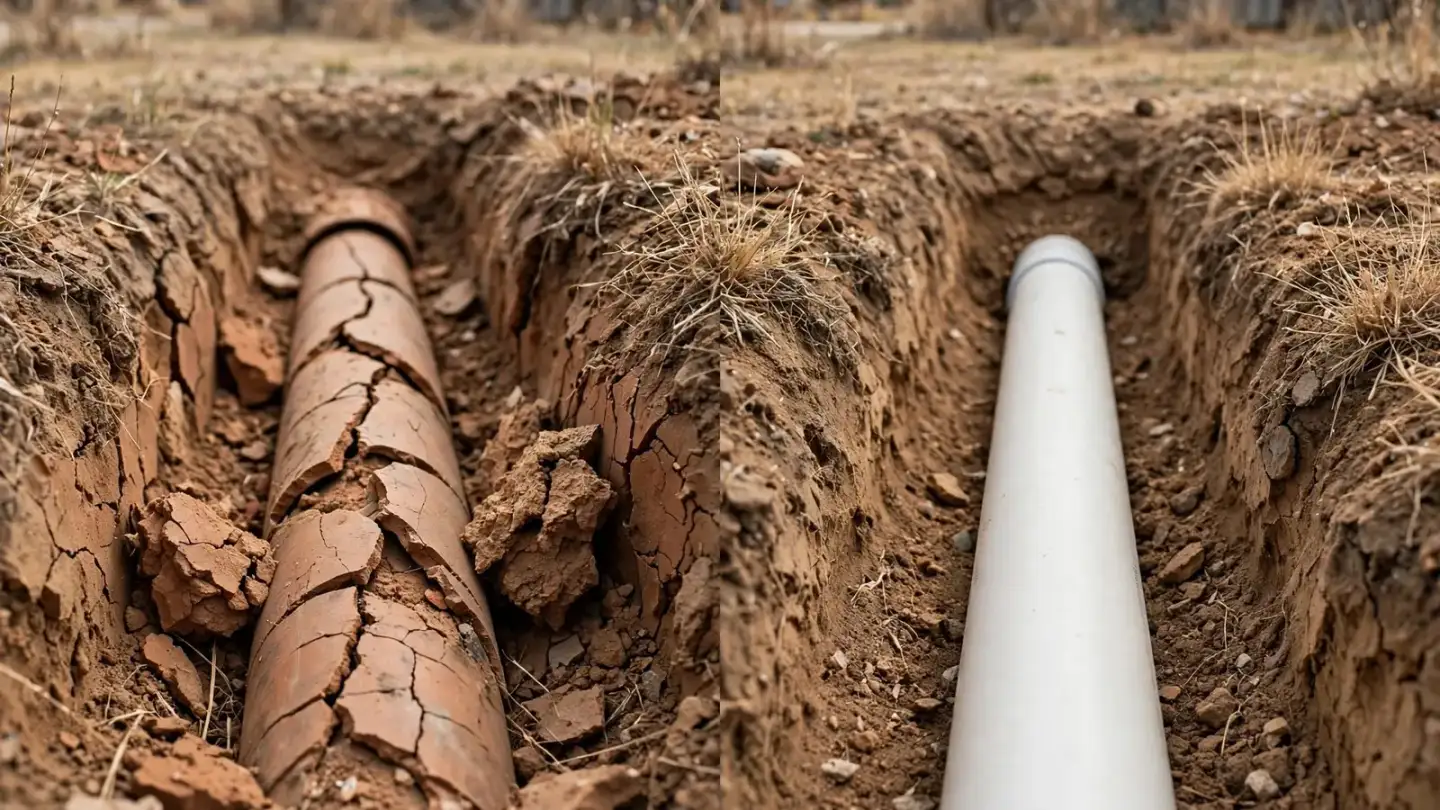
Key facts: Sewer Line Replacement
How replacement works in Aurora
What replacing an Aurora service line involves
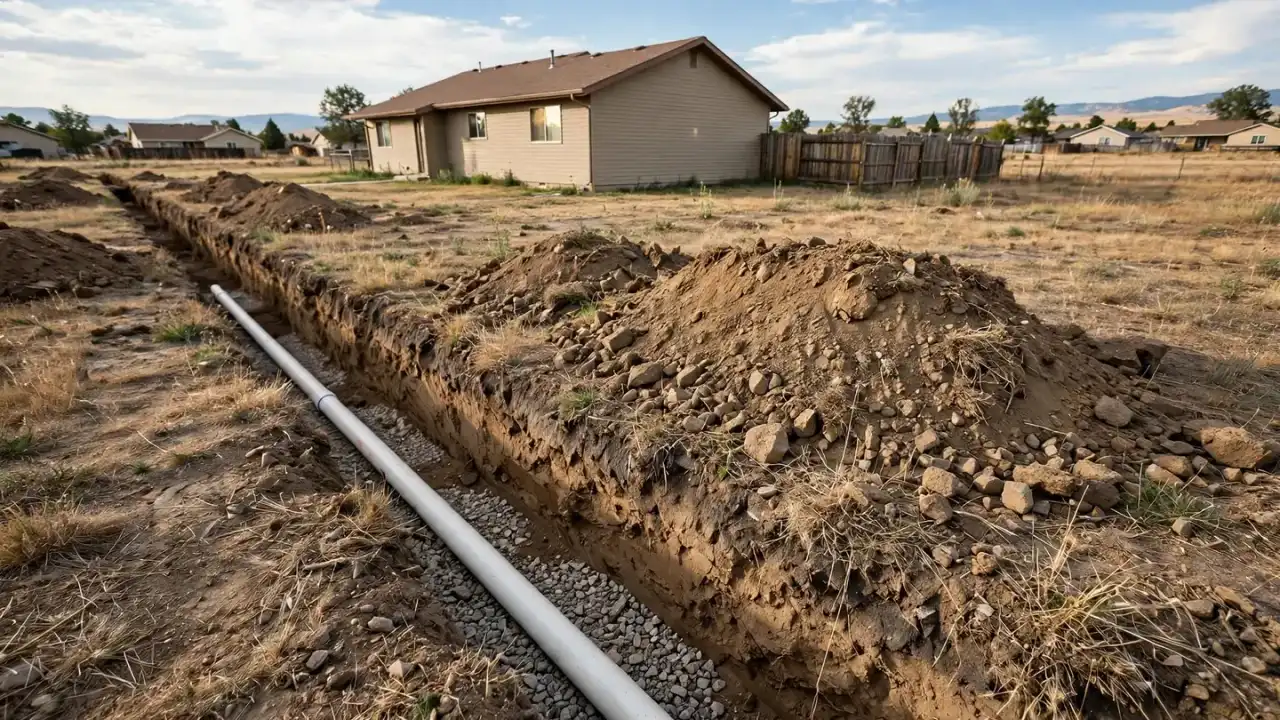
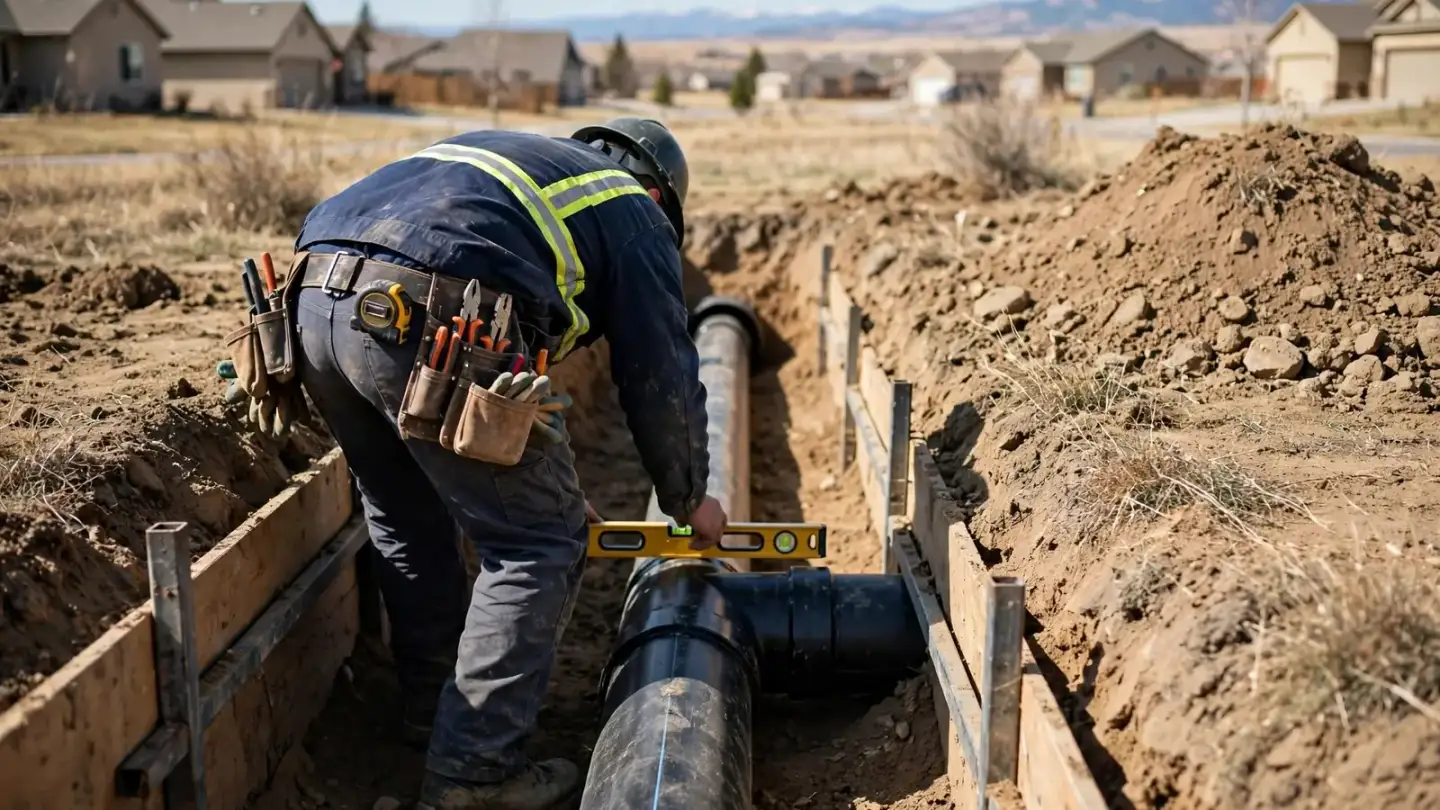
A full replacement swaps the pipe between the house and the city main for a new continuous line. In Aurora, the line usually leaves through the basement wall several feet below grade and slopes down to the main. The new pipe must keep a steady downhill grade, sit on firm bedding, connect securely to the building drain at the foundation and to the city's connection at the main, and include cleanouts for future access.
There are two common approaches. An open trench exposes the whole line so the old pipe can be removed and new PVC laid at the correct slope on bedding, then inspected and backfilled. Pipe bursting replaces the line through two pits by pulling new pipe through the old path. Trenching can correct slope problems; bursting cannot, but it avoids digging up the yard.
Depth matters. Because Colorado lines are buried below frost, trenches can be deep, which in clay soils requires shoring for safety. That depth is one reason bursting is popular when the line's path and slope are acceptable.
When replacement is needed
Signs an Aurora sewer line needs replacement
These findings usually mean repair is no longer practical.
Collapsed sections
Pipe that has caved in cannot be lined.
Read moreSags along the line
Several low spots need the line re-laid.
Cracks and offsets everywhere
Repairing piece by piece never ends.
Read moreBadly corroded cast iron
Thin or missing pipe walls cannot hold a liner.
Roots through every clay joint
Sometimes replacement beats ongoing cleaning.
Read moreUndersized line after a remodel
Added bathrooms may need more capacity.
Slope figure
Why Aurora lines wear out
Why Aurora service lines reach the end of their life
Aurora's oldest neighborhoods date from the early twentieth century and grew rapidly after World War II. Lines from those decades were often vitrified clay with many joints, or cast iron. [2] Clay joints loosen and let in roots; cast iron corrodes from inside. Swelling clay soils add stress, pushing and pulling pipe as moisture changes. [3] Over decades, the result is cracks, offsets, sags and collapses.
Newer lines are PVC, which resists roots and corrosion, but they can still settle where trench backfill was not compacted, or be damaged by later construction. In those cases, partial replacement of a damaged section may be enough.
Replacement steps
How a sewer line replacement is done in Aurora
- 1
Inspect and decide
The camera shows whether to trench or burst and where the problems are.
- 2
Permits and 811
Permits are arranged where required and utilities located.
- 3
Excavate
A trench or pits are dug, with shoring where depth requires.
- 4
Remove or burst
The old pipe is removed or broken out.
- 5
Lay new pipe
PVC on bedding at a steady slope, or HDPE pulled into place.
- 6
Inspect and test
The line is inspected where required, tested and filmed.
- 7
Backfill and restore
The trench is backfilled in compacted layers and the surface restored.
Replacement methods
Trenching and bursting compared
| Factor | Open trench | Pipe bursting |
|---|---|---|
| Digging | Full length | Two pits |
| Fixes sags | Yes | No |
| Deep lines | Needs shoring | Pits only |
| Under trees and drives | Disruptive | Preferred |
| Frozen ground | Slow | Easier |
| New pipe | PVC | Usually HDPE |
What you can do yourself
Preparing for a replacement
Preparation protects your yard and household.
- Mark sprinklers, drip lines and lighting along the route.
- Clear access to the basement cleanout and foundation wall.
- Plan for sewer service to be off for part of the job.
- Keep children and pets away from trenches.
- Photograph the yard before work starts.
- Ask whether a two-way cleanout will be added.
Leave to the pros
Why replacement is a licensed job
Deep trenches in clay can collapse without warning. Work near gas and electric lines needs utility locates. Connections at the main and the foundation must meet code. In Colorado, plumbing work is performed by licensed plumbers, and excavation follows 811 rules. This is not homeowner work.
Sewer line replacement in Aurora: local specifics
Aurora factors in sewer line replacement
Aurora's rules put the service line, its locating and any damage from its repair on the owner. Where the main runs in an alley, replacement may involve working near garages, fences and neighbors' access. Where it runs under the street, work in the right of way follows city requirements. [1]
Basements shape the job. The line exits the foundation well below grade, and the connection at the wall must be sealed to keep groundwater out of the basement. Some replacements include the building drain under the basement floor if it is corroded cast iron.
Seasons matter. Frozen ground slows trenching in winter; spring snowmelt can flood trenches; dry summers make clay hard to dig. Crews plan accordingly.
Repair or replace
When replacement beats repair
| Situation | Repair or line | Replace |
|---|---|---|
| Single defect | Spot repair | No |
| Many cracks, round pipe | Lining | Optional |
| Several sags | Not effective | Yes |
| Collapse | Not possible | Yes |
| Corroded cast iron with holes | Not reliable | Yes |
Related problems
Problems found during replacement
Replacement often uncovers corroded cast iron under the basement floor, an aging foundation penetration, or problems at the city connection. Abandoned lines or old septic remnants can appear on older lots. A good plumber explains any surprises before proceeding.
The foundation connection
Sealing where the line leaves the basement
Where the sewer passes through the basement wall, the penetration must be sealed against groundwater. Old penetrations may leak, letting water into the basement during snowmelt. Replacement is a chance to reseal it properly.
Restoration
Restoring the yard after replacement
After backfill and compaction, lawns, xeriscape and paving are restored. Clay settles over the following months, so topping up soil may be needed. Ask what restoration is included.
Materials
Pipe materials for a new Aurora line
PVC is common for trenched lines; HDPE is used for bursting. Both resist roots and corrosion.
Downtime
How long service is out
Sewer service is off while the old line is disconnected and the new one connected. Plan meals, showers and laundry around it, and ask the crew when they expect to reconnect the new line so everyone in the household knows exactly when drains can be used again after the connection.
Shoring and trench safety
Why deep Aurora trenches need shoring
Trenches several feet deep in clay can collapse suddenly, especially after rain or snowmelt. Crews use trench boxes, shoring or sloped sides to protect workers. This is one reason replacement is a professional job and why trenches are kept open only as long as needed. Keep everyone away from open trenches.
Bedding and backfill
Bedding the new pipe and backfilling properly
New pipe sits on a bed of gravel or sand that supports it evenly. Backfill goes in layers, compacted as it rises, so the soil does not settle later and pull the pipe into a sag. In Aurora's clay, careful compaction is especially important, since loose backfill settles as it wets and dries.
Replacing the building drain too
When the basement drain is replaced with the service line
In older homes, the cast iron building drain under the basement floor may be as worn as the service line. Replacing both at once gives a fully renewed system. That involves cutting a trench in the basement slab, replacing the pipe and patching the concrete. It adds work inside the house but avoids a second project later.
Alley connections
Replacing lines that run to alley mains
Older Aurora homes often connect to alley mains. Replacement trenches run across back yards, past garages and fences, to the alley. Equipment access, neighbors' garages and utility poles in the alley all shape the plan. Pipe bursting can avoid digging through fences and patios.
Cleanouts on the new line
Adding cleanouts during replacement
A new line is the time to add a two-way cleanout outside near the house, and to make sure the basement cleanout is accessible. Future cleaning and camera inspections will be faster and cleaner.
Partial replacement
Replacing only a damaged section
If the camera shows one damaged area in an otherwise sound line, replacing only that section may be enough. Common in newer homes where a single joint failed or a section settled. Older lines with damage throughout are better replaced in full.
Questions to ask
Questions to ask before replacing a line
Ask which method the plumber recommends and why, how they will handle depth and shoring, whether the basement drain should also be replaced, how slope and bedding will be checked, who handles permits and 811, what restoration is included and whether the finished line will be filmed.
A typical replacement day
What a replacement day looks like in Aurora
On replacement day, the crew confirms locates, protects the basement around the drain, and sets up equipment in the yard. Excavation follows the marked route; spoil is piled on tarps. The old pipe is removed in sections, the trench bottom is shaped and bedded, and new pipe is laid and checked for slope. After any required inspection, the trench is backfilled in layers and compacted. Expect noise, mud in wet weather and equipment on the lawn.
Replacement and snowmelt
Replacing lines in spring
Spring snowmelt raises groundwater and softens clay. Trenches may fill with water and need pumping, and sides are less stable. Crews plan dewatering and shoring. If timing is flexible, late spring after the ground firms up or early fall can be easier.
Replacement in newer homes
Replacing damaged lines in newer Aurora homes
In newer homes, replacement is usually partial: a section crushed by landscaping equipment, a joint pulled apart by settling or a line damaged during a later project. The rest of the PVC is often sound. The camera identifies the damaged length, and a short excavation fixes it.
Replacement near trees
Protecting trees during replacement
When the line passes near mature trees, trenching through the root zone can harm them. Bursting or rerouting the new line around the tree can avoid major roots. If digging near a tree is unavoidable, an arborist can advise on limiting damage.
Replacement and landscaping
Xeriscape and replacement
Many Aurora yards use rock, native grasses and drip irrigation. Replacement crews can remove and stockpile rock and fabric for reinstallation. Drip lines crossing the trench are repaired afterward.
Keeping records
Records after replacement
Keep the permit, inspection result, before and after videos and a sketch of the new route and cleanouts.
Line sizing and capacity
Sizing a new Aurora service line
Most single-family homes use a four-inch service line. Homes that added bathrooms, basement apartments or larger fixtures may benefit from confirming the line size and slope can handle the load. The plumber checks fixture counts and code requirements when designing the replacement.
Replacement with a basement bathroom
Basement bathrooms and ejector pumps during replacement
If the house has a basement bathroom below the service line, it may use an ejector pump. Replacement is a good time to check the pump and its check valve and confirm the discharge ties into the new line correctly.
City inspections
Inspections during replacement
Where permits are required, inspectors may need to see the new pipe, bedding and connections before backfill. Scheduling affects how long the trench stays open. Ask the plumber how inspections are handled.
Dealing with surprises
Surprises a replacement can uncover
Older lots may have abandoned lines, debris from earlier construction or utilities closer to the sewer than records show. A careful crew works slowly near marked utilities and explains any changes to the plan before going ahead.
After replacement
Living with a new line
A new line should drain quickly and quietly. Keep grease and wipes out of it, keep the cleanouts accessible and consider a camera check after the first year if the trench was deep or the soil prone to settling.
Driveways and garage slabs
Replacing lines that pass under concrete
If the line passes under a driveway or garage slab, open-trench replacement means saw-cutting and repouring concrete. Bursting through pits on either side, or rerouting the new line around the slab, often avoids that. In winter, concrete repairs may have to wait for warmer weather.
Replacement in alleys
Working at alley mains
At alley mains, crews may need to dig in the alley itself to reach the connection. That can mean coordinating with neighbors for access and following any city requirements for work in the alley. Ask how the crew will handle traffic and access in the alley.
Choosing a contractor for replacement
What to look for in a replacement contractor
Look for a licensed plumber who explains the plan clearly with the camera video, addresses trench safety, slope and bedding, handles 811 and permits, and describes restoration in writing.
Older homes near Colfax
Replacement in Aurora's oldest neighborhoods
Homes near East Colfax and in Original Aurora have some of the oldest lines in the city, often clay with many repairs. Lots are smaller and alleys common. Replacement there usually means working across a back yard to an alley main, with attention to fences, garages and neighbors.
Mid-century subdivisions
Replacement in 1950s and 1960s subdivisions
Neighborhoods built after the war, such as Hoffman Heights, typically have basements and service lines of clay or cast iron that are now decades old. Many owners replace the full line once roots, cracks and sags combine. Bursting is popular where front lawns and mature trees sit over the line.
Replacement and basement finishing
Coordinating replacement with basement remodeling
If you plan to finish or remodel the basement, replacing the building drain and service line first avoids tearing out new finishes later. Plumbers can coordinate with remodelers on timing.
Permits and Aurora
Permits for sewer replacement in Aurora
Sewer replacement work is typically permitted plumbing work, and work in public right of way follows city requirements. The plumber handles permits and inspections and calls Colorado 811. [4]
Replacement in southeast Aurora
Newer neighborhoods and partial repairs
In Saddle Rock, Tallyn's Reach and other newer southeast neighborhoods, full replacement is rare. Most problems are localized: a crushed section, a separated joint or settled backfill. Short excavations fix them. Because these yards often have new landscaping and irrigation, careful restoration matters.
Replacement timeline
How long a replacement takes
A straightforward replacement may take a day or two; deep trenches, alley access, inspections and weather can extend it. Bursting is often quicker than trenching the full length.
Communication during the job
Staying informed during replacement
Ask the crew lead to explain each stage: excavation, removal, laying, inspection and backfill. Knowing when service will be restored helps the household plan.
Insurance and replacement
Insurance and sewer line replacement
Standard policies often exclude wear and tear on sewer lines but may cover sudden damage or backups with an endorsement. Some homeowners carry separate service line coverage through their insurer or utility partners. Check your policy wording before work starts so there are no surprises.
Deep lines and pipe bursting
Why bursting suits deep Aurora lines
When a line is deep and its slope is acceptable, bursting replaces it through two pits instead of a long deep trench with shoring. That reduces disruption and safety risk. If the old line has sags, though, trenching those sections is still needed.
Building drain cleanouts
Cleanouts at the foundation
Codes generally require a cleanout near where the building drain leaves the house. Replacement is the time to make sure it is accessible and not buried behind finished walls.
Replacement questions
Questions about sewer line replacement in Aurora
How do I know my line needs replacing rather than repairing?
A camera inspection decides it. Collapses, multiple sags and severe corrosion usually mean replacement.
Who is responsible for the line to the main?
In Aurora, the property owner, including locating it and any damage from repairs.
Can the line be replaced without trenching?
Pipe bursting replaces it through two pits if the path and slope are acceptable.
How deep is the trench?
Often several feet, deeper toward the main, because lines are buried below frost.
Can replacement happen in winter?
Yes, but frozen ground slows trenching. Bursting needs less digging.
Will my basement floor be cut?
Only if the building drain under the floor also needs replacing.
Do I need 811?
Yes, before any excavation.
Can the new sewer line be routed around a big tree?
Often, if slope and the connection points allow it. Rerouting protects roots and the tree.
What should I tell the plumber about replacing my line?
The symptoms, any camera findings, what sits over the line and whether your main is in the alley or under the street.
Does insurance cover replacement?
Wear and tear usually is not covered, but some policies or service line plans help. Check yours.
Do newer homes ever need full replacement?
Rarely. Most newer-home problems are localized and fixed with a short excavation.
Should I replace my sewer line before finishing my basement?
If the line or building drain is old and failing, doing it first avoids tearing out new finishes later.
Will my driveway be cut for replacement?
Only if open-trench replacement crosses it. Bursting or rerouting often avoids it.
Is my four-inch line big enough?
For most homes, yes. Homes with added bathrooms or basement apartments should confirm capacity during replacement.
Is spring a bad time to replace a sewer line?
Snowmelt can flood trenches and soften clay. Late spring or early fall is often easier if timing is flexible.
Should I replace the drain under my basement floor at the same time?
If it is old cast iron in poor condition, doing both at once avoids a second project.
Can only part of the line be replaced?
Yes, if the rest of the line is sound on camera.
What pipe is used?
Usually PVC for trenches and HDPE for bursting.