
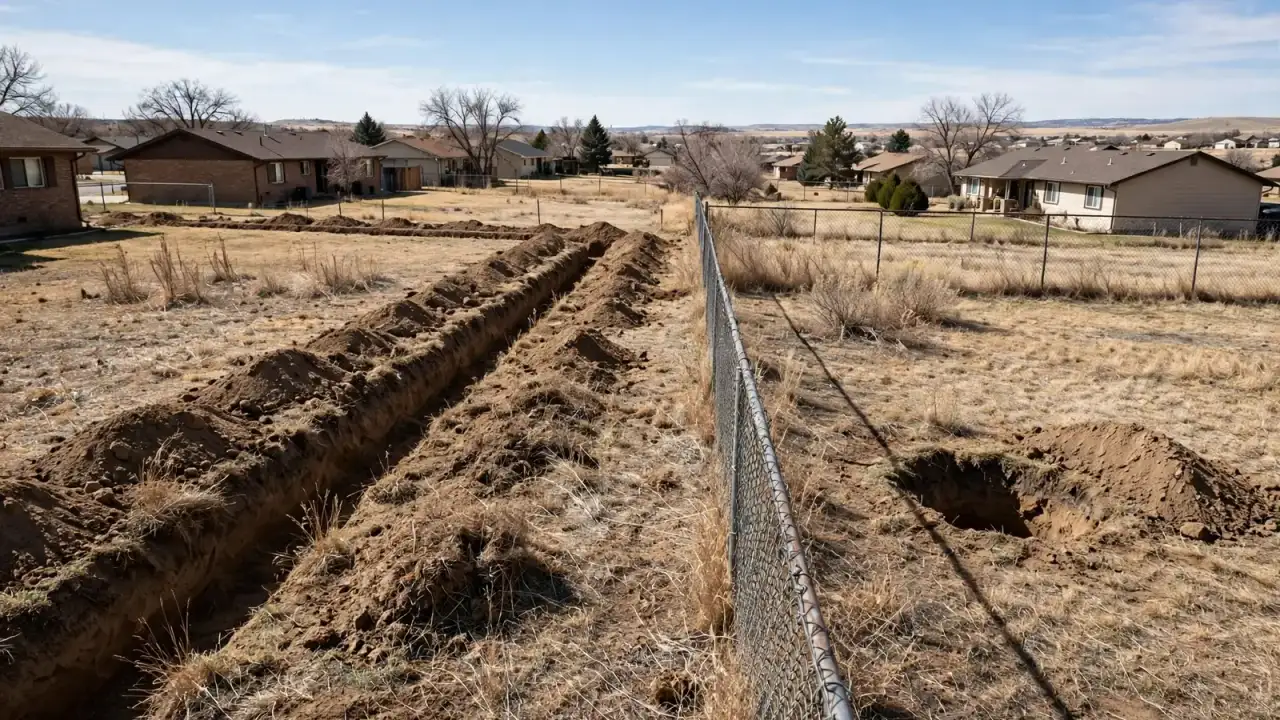
Key facts: Trenchless vs excavation
Method choice: the short answer
Trenchless or digging: the short answer
Trenchless fits round, continuous pipe under things you want to keep. Digging fits sags, collapses and short shallow runs. Many Aurora jobs combine both.
Comparison
Trenchless and excavation compared for Aurora
| Factor | Trenchless | Excavation |
|---|---|---|
| Disturbance | Small pits | Full trench |
| Deep lines | Easier | Needs shoring |
| Frozen ground | Easier | Slower |
| Fixes sags | No | Yes |
| Under drives and trees | Preferred | Disruptive |
Staging figure
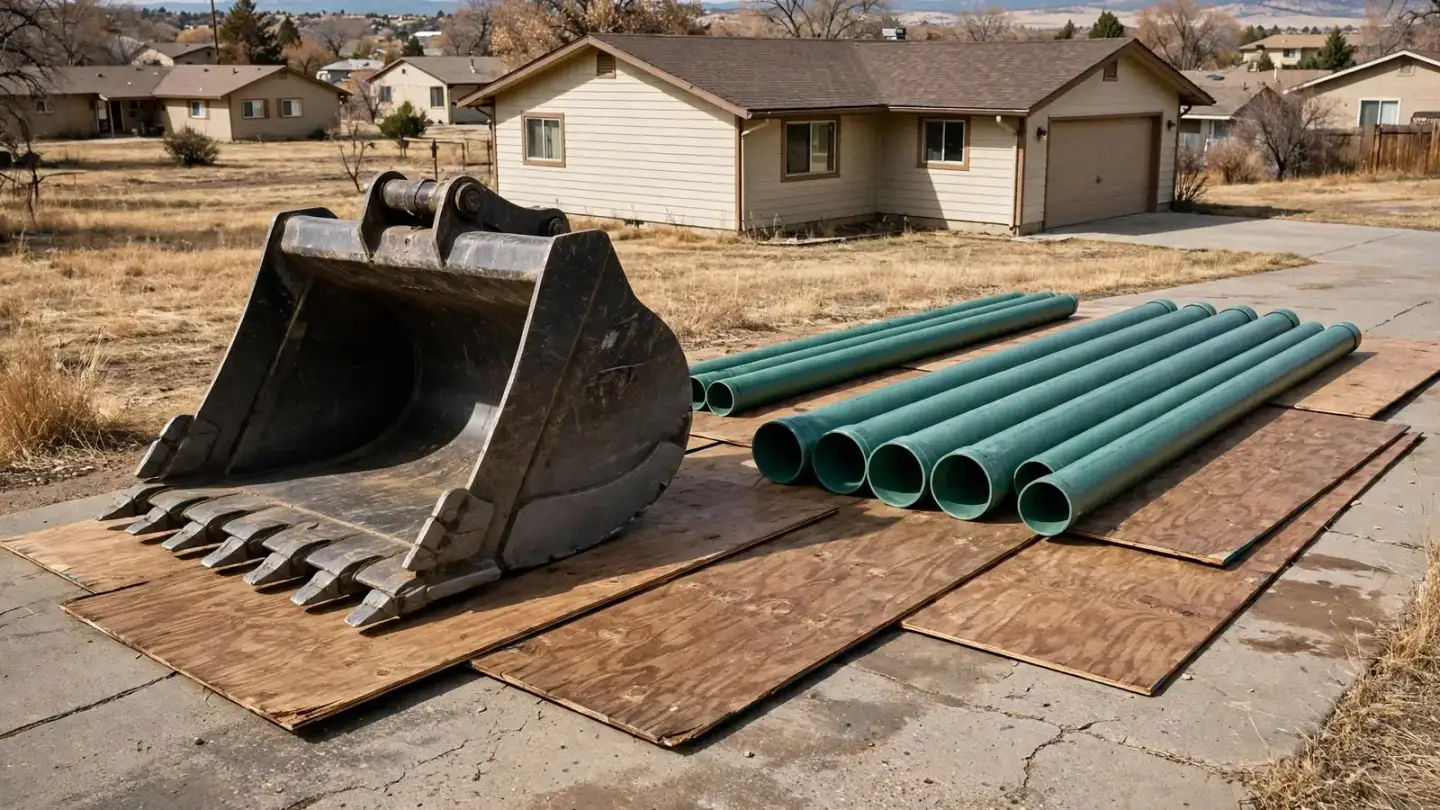
Questions first
Questions to answer before choosing
- What does the camera show?
- Are there sags?
- How deep is the line?
- What sits above it?
- Is the main in the alley or street?
Trenchless wins
When trenchless is the better choice in Aurora
Trenchless methods shine on deep Aurora lines, where a full trench would need shoring and extensive restoration. They protect driveways, patios and mature trees by limiting digging to small pits. In winter, opening two small pits in frozen ground is far easier than trenching the full length. Lining from a basement cleanout can avoid digging near the house entirely.
Digging wins
When digging is the better choice
Excavation is the right call when the line has sags, because only re-laying the pipe can restore slope. It is also needed for collapsed sections that block a liner or bursting cable, and it can be the simplest option for a short, shallow run under open lawn. Spot repairs at a single defect are usually done by digging a small hole at the marked location.
Aurora factors
Aurora factors in the decision
In Aurora, lines are buried below frost, so trenches are deep. Clay soils need shoring in deep trenches and settle if backfill is not compacted. Basements mean the line leaves the house well below grade. Many yards are xeriscaped with rock and drip irrigation that take effort to restore. Each of these factors tends to favor trenchless methods where the pipe allows.
How plumbers decide
How plumbers choose a method
- 1
Film
Map defects.
- 2
Locate
Depth and route.
- 3
Survey
What is above.
- 4
Recommend
One method or both.
Combining methods
Using both methods on one line
Many lines have more than one kind of defect. A common plan is to excavate and re-lay a sagging section, then line the rest of the pipe from a cleanout. The result fixes every defect while keeping digging to a minimum. The camera video makes this kind of plan possible.
Restoration differences
What each method leaves behind
After excavation, the trench is backfilled and the surface restored; clay settles for months and may need topping up. Xeriscape rock and fabric must be reset, and drip lines repaired. After trenchless work, only small pits need restoring. For yards with years of landscaping, that difference is often decisive.
Alley and street mains
How the main's location affects the choice
Alley mains mean the line runs under back yards, garages and fences. Trenchless pits near the house and alley avoid digging through them. Street mains mean the line runs under front lawns and driveways, where trenchless methods protect concrete and landscaping.
Time and disruption
Downtime with each method
Both methods take sewer service out for part of the job. Lining from the basement and bursting often finish within a day; long, deep trenches can take longer, especially with inspections. Ask for a realistic timeline.
Shoring and safety
Why deep trenches need shoring
Deep trenches in clay can cave in without warning. Crews use trench boxes, shoring or sloped sides. That adds equipment and time to excavation. Trenchless methods avoid most of it.
Basement lining
Lining from inside the house
When the basement cleanout allows, lining can begin indoors, avoiding digging near the foundation and keeping much of the work out of the weather. A pit near the main may still be needed.
HOA considerations
HOAs and front-yard work
Many Aurora neighborhoods have HOAs with landscaping standards. Small pits are easier to restore to those standards than a full trench. Check whether notice is required.
Asking the right questions
Questions to ask a plumber about methods
Ask why a method fits your line, where pits or trenches will go, how long service will be off, what restoration is included and whether the finished line will be filmed.
Methods for newer lines
Choosing methods for newer PVC lines
In newer neighborhoods, most problems are localized: a separated joint or a settled section. A short excavation at the marked spot usually fixes it, and full trenchless rehabilitation is rarely needed. The camera shows how long the damaged section is.
Methods for older lines
Choosing methods for older clay and cast iron
In older neighborhoods, lines often have roots at many joints, cracks and some sags. A combination is common: excavate sags, line the rest, or burst the whole run if slope is acceptable.
Winter scheduling
Scheduling repairs in winter
Frozen ground slows excavation and delays restoration, but trenchless work and indoor lining can continue. If a repair is urgent in winter, trenchless options become even more attractive.
Records after the work
Keeping records of the repair
Keep the before and after videos, the method used, pit or trench locations and any permits. They help if you sell the home or need future service.
Utilities in the way
Other buried utilities near the sewer
Gas, water, electric, communications and irrigation lines may cross the sewer path. 811 marks utility-owned lines; private lines such as sprinklers and lighting are not marked, so point them out. [3] Crews dig carefully near marks, and bursting requires checking for nearby crossings.
Explaining the plan
Ask to see the plan on the ground
Ask the plumber to walk the route with you and show where pits or trenches will go before work begins.
Preparing
Preparing for either method
- Mark sprinklers.
- Move vehicles.
- Plan for downtime.
Method guide questions
Questions about trenchless versus digging in Aurora
Is trenchless always better?
No. It cannot fix sags.
Is winter a problem?
Digging is slower in frozen ground; trenchless needs less digging.
Do both need 811?
Yes.
Which protects trees?
Usually trenchless.
Do I need a permit for either method?
Sewer repairs that involve excavation or replacement often need permits, and both need 811 locates. The plumber handles them.
Which method is faster?
Often trenchless, but short shallow excavations can be quick too.
Will my lawn recover after excavation?
Yes, though clay may settle and need topping up.
Is excavation better for newer PVC lines?
Often a short excavation at the damaged spot is simplest for localized problems in newer lines.
Can trenchless work start from my basement?
Often, if the cleanout gives good access.
Who decides?
The camera findings and the plumber's assessment.