Key facts: Village East
- Split-level homes place their lowest drains below the main floor, close to the service line [1].
- Aurora makes owners responsible for the service line to the main [2].
- Swelling clay soils on the Front Range shift buried pipe as moisture changes [3].
- ABS and early PVC plastics came into residential drain use during the 1960s and 1970s [4].
Village East coverage
Village East ZIP codes covered
Village East addresses in these ZIP codes are on the network's list. Confirm your street when you call, since coverage is updated.
- 80012: Village East and nearby central Aurora streets.
- 80014: neighboring blocks to the south and west.
Village East housing
What Village East homes look like
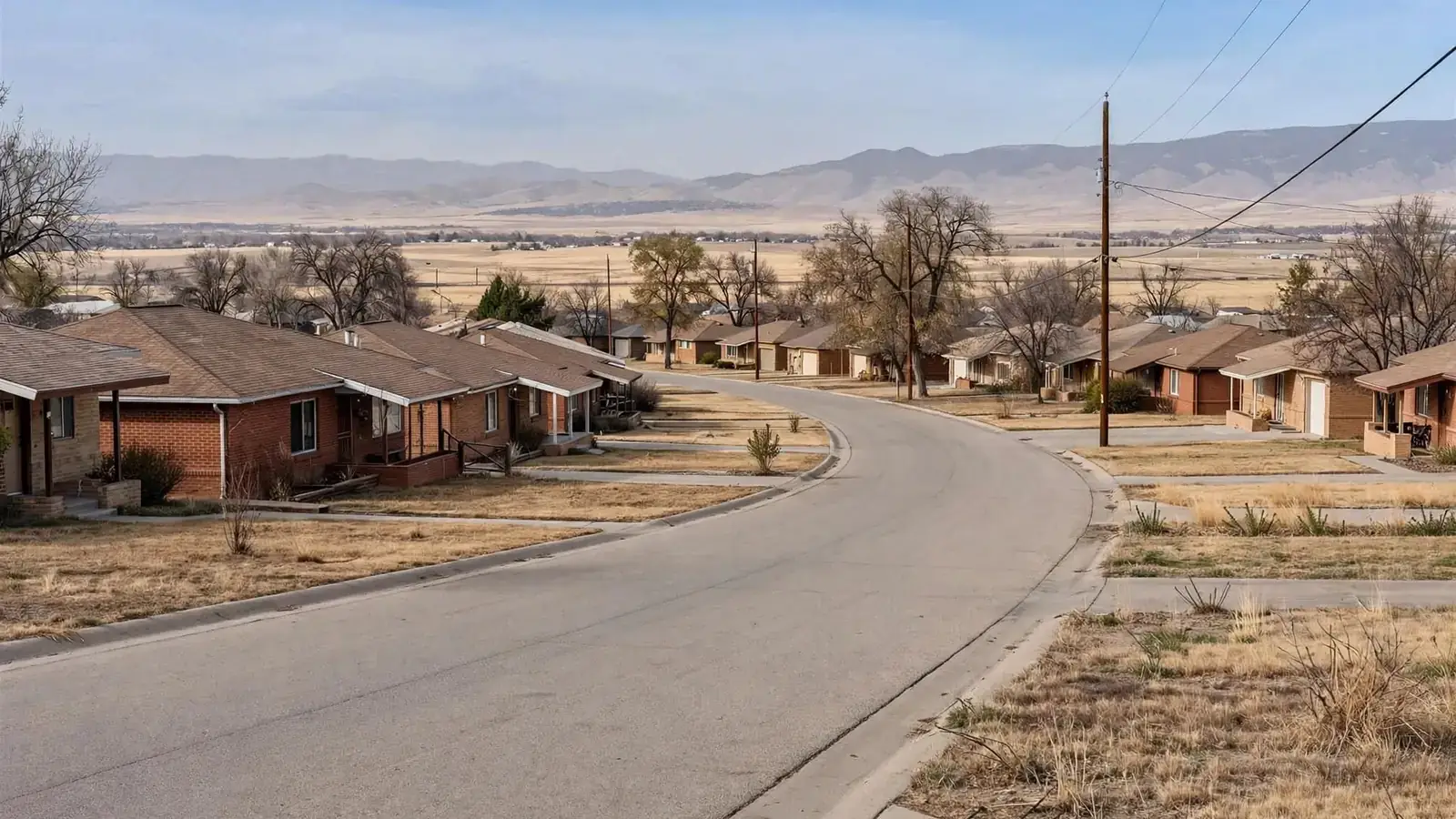
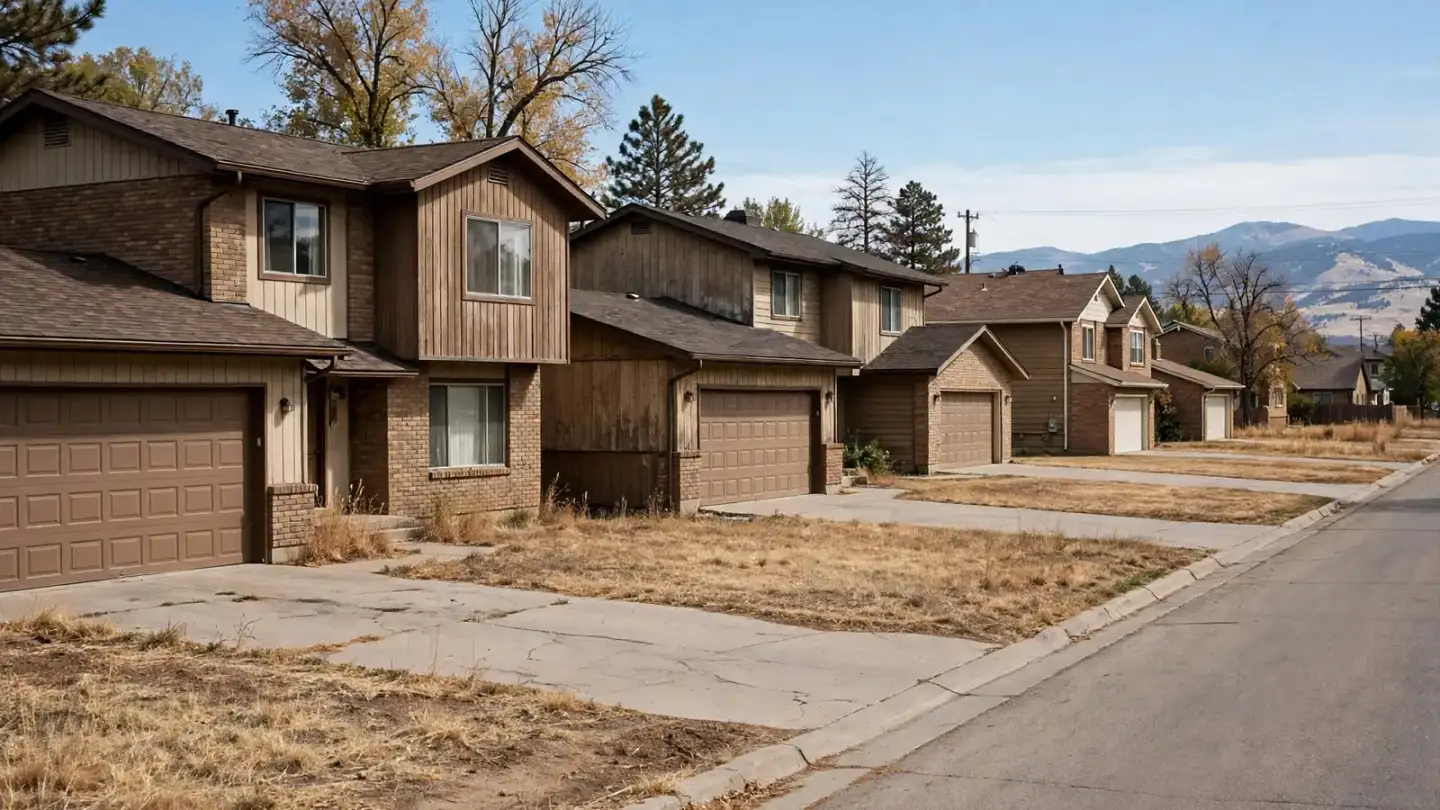
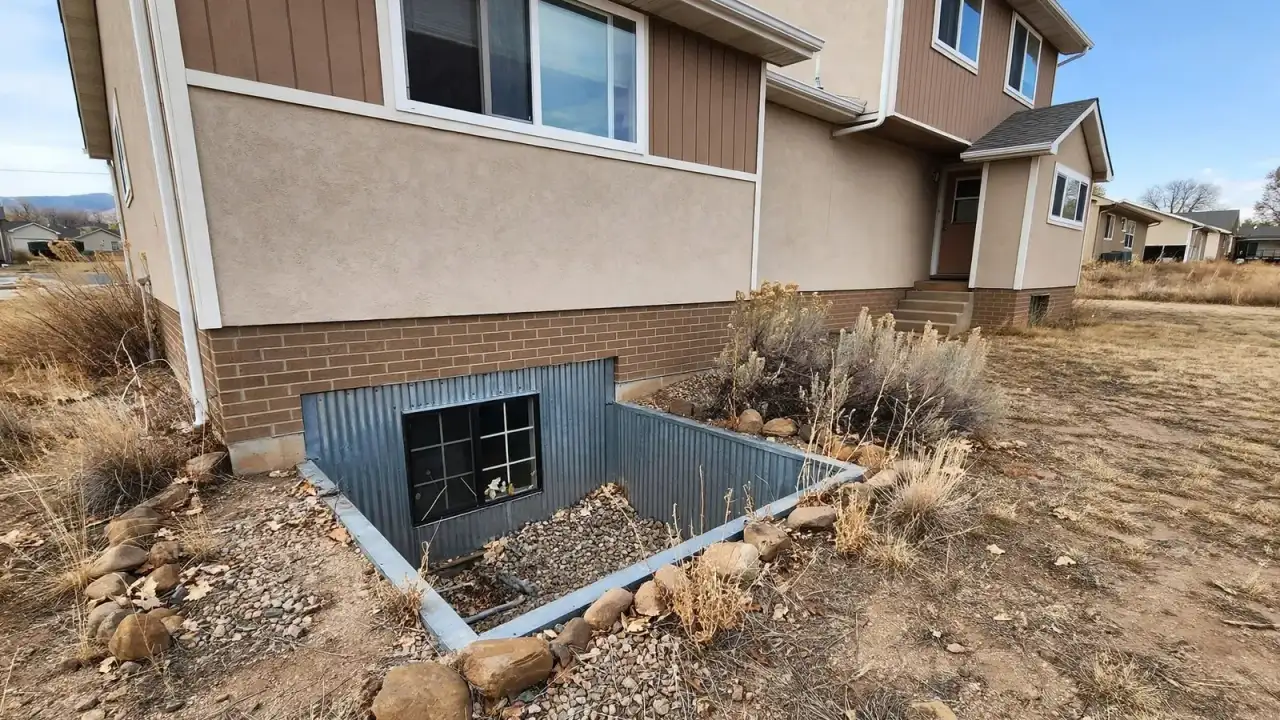
Village East filled in during the 1960s and 1970s, when Aurora was spreading quickly south of Colfax. The streets curve, lots are a little larger than in the older grid, and the houses are mostly split-levels and ranches with attached garages. Many split-levels have a lower family room and laundry half a story below the entry, plus a basement or crawl space under part of the house.
Sewer mains here usually run in the streets rather than alleys, so service lines leave the front of the house, pass under the front yard and often under the driveway, and meet the main near the curb.
Village East sewer problems
Problems plumbers find in Village East
These are the findings that come up most often on Village East lines.
Lower-level backups
Laundry and family room drains overflow first.
Read moreRoots from front-yard trees
Mature ash and maple near the line.
Read morePipe under the driveway
Lines crossing beneath concrete.
Read moreShifted joints in clay soil
Seasonal swelling moves pipe sections.
Read more
Split-level plumbing
How split-level plumbing changes the picture
In a split-level, the lowest drains, often a laundry standpipe, a floor drain and sometimes a lower bathroom, sit only a few feet above the service line. When the line slows, those fixtures are where wastewater appears first, long before the upstairs toilets act up. Owners sometimes assume the problem is the washer or the laundry drain itself when the real restriction is out under the yard.
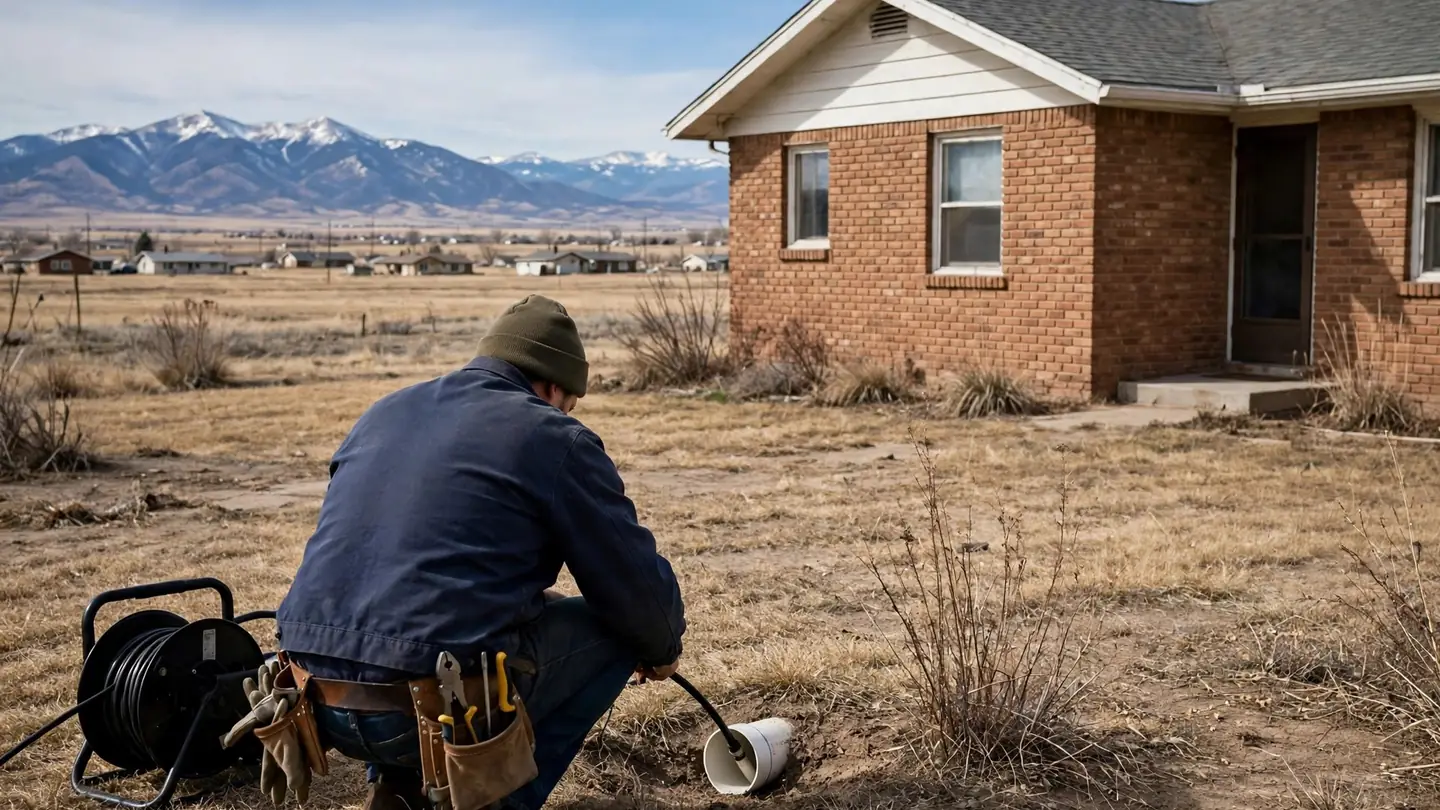
A plumber usually starts at the main cleanout, often found in the lower level or just outside the foundation, and runs a camera toward the street to find where flow stops.
Village East figure
Mixed materials
Cast iron, clay and early plastic
Houses from this period were built during a change in plumbing materials. Some have cast iron inside and clay outside; others have early ABS or PVC for part of the run. Each fails differently: cast iron scales and cracks, clay joints admit roots, and early plastic joints can separate or the pipe can deform where the soil pushes on it. A camera inspection identifies each material along the line, which matters when choosing a repair method.
Clay soil movement
Swelling soils under Village East yards
Much of central Aurora sits on clay that swells when wet and shrinks when dry. Over fifty years of lawn watering, dry spells and spring melt, that movement can tilt pipe sections, open joints and create low spots that collect solids. Camera footage often shows standing water in a sag partway to the street.
Driveways and front yards
Lines under driveways and front yards
Because mains run in the street, many Village East lines pass beneath driveways. Trenchless lining or bursting avoids breaking out concrete. When a sag or collapse sits under the drive, crews compare digging a narrow section against a full replacement from the house to the main.
Planning a Village East visit
Getting ready for a Village East sewer visit
- 1
Lower level
Clear space around the laundry and the main cleanout.
- 2
Driveway
Leave room near the street side of the drive.
- 3
Trees
Point out large trees in the front yard.
- 4
History
Mention earlier cleanings or partial repairs.
- 5
Symptoms
Note which fixtures backed up first.
Village East findings
Village East line findings and typical responses
| Finding | Typical response |
|---|---|
| Roots at clay joints | Clean, then line or replace |
| Scaled cast iron near the house | Descale or line |
| Separated plastic joint | Spot repair |
| Sag under the front yard | Excavate that section |
| Crack under the driveway | Trenchless repair |
Village East repair choices
Choosing a Village East repair
If the camera shows a round pipe with roots and minor cracks, lining is often the cleanest fix. A sag needs excavation because a liner follows the existing grade. A collapsed run calls for bursting or replacement. Many owners combine approaches: spot excavation for the low spot and lining for the rest.
Village East permits
Rules that apply in Village East
The owner is responsible for the service line to the main under city rules. Digging requires Colorado 811 locates, and work near the curb or in the street follows city right-of-way requirements. Your plumber can explain which permits apply.
Village East in context
Where Village East fits in Aurora's growth
By the 1960s, Aurora had outgrown its post-war boundaries and was pushing south and east of the original town. Builders laid out curving streets with cul-de-sacs instead of the old alley grid, and split-level designs became popular because they fit gently sloping lots and offered separate living and sleeping areas. Village East belongs to that wave. Its homes are now fifty to sixty years old, which is the age when the first serious sewer repairs often come due.
Signs in Village East
Early signs on a Village East line
Village East owners typically first notice trouble on the lower level: the laundry standpipe overflowing during a rinse cycle, a floor drain that gurgles, or a lower bathroom toilet that bubbles. Upstairs fixtures may seem fine. Outside, a soft or greener strip across the front lawn toward the street, or a dip in the lawn near the driveway, can point to a leaking or settled section of the line.
Roots in Village East
Roots from front-yard trees
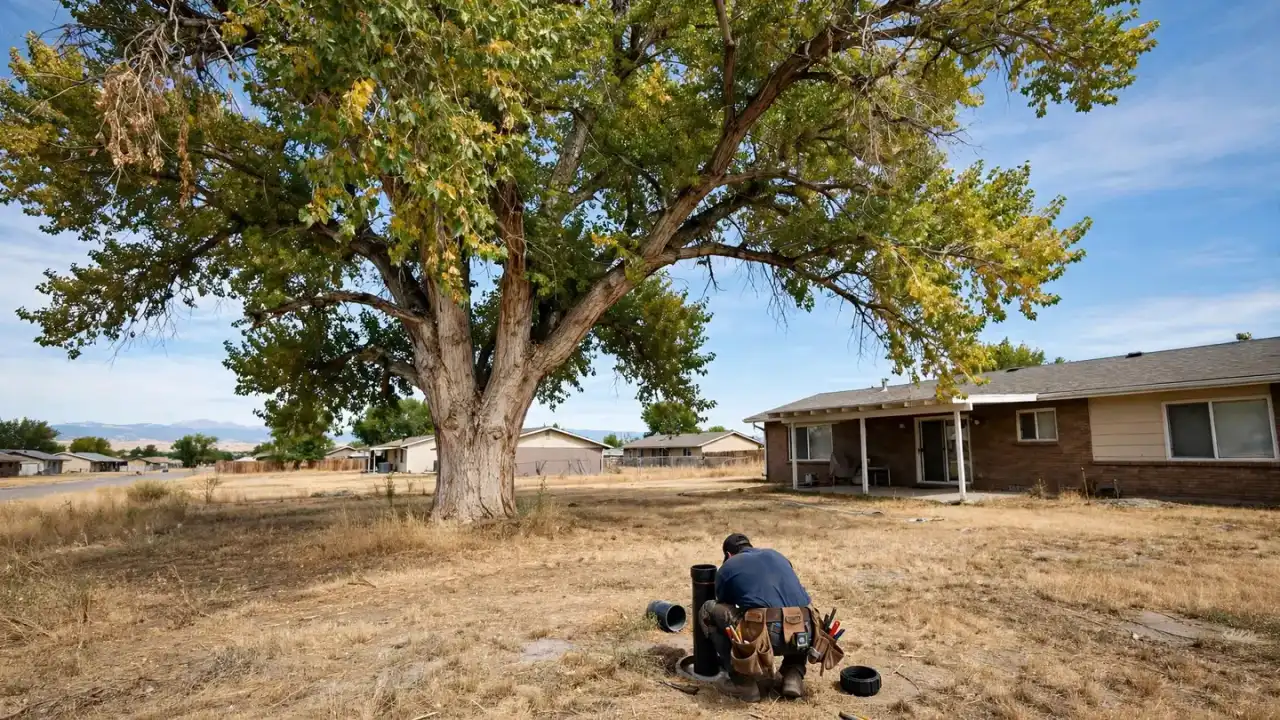
Builders and early owners planted ash, maple, honey locust and spruce in front yards, often close to where the service line runs to the street. Fifty years later, those roots reach the line, especially at clay joints or at old transitions between materials. Many Village East owners have also lost ash trees to emerald ash borer and replaced them, and the dead roots of removed trees can still sit in and around the pipe.
Village East roots figure
Laundry and lint
Laundry, lint and lower-level drains
Washing machines discharge a lot of water fast, and in a split-level the laundry is often the lowest drain. Lint and fibers from synthetic clothing collect in the line along with grease and soap residue, gradually narrowing the pipe. A lint trap on the washer discharge hose and avoiding large loads in quick succession during a known slow-drain period can ease the strain. If the standpipe overflows repeatedly, the main line deserves a camera inspection.
Cast iron near the house
Cast iron inside Village East homes
Inside many Village East homes, cast iron runs from the stacks to the point where the line leaves the foundation. After half a century, scale narrows it and corrosion thins the bottom. Descaling with specialized cutters restores the opening, and lining from inside can seal it. When corrosion has gone through, the affected section is replaced.
Village East lining
Lining a Village East line
Lining works well where the line has roots and cracks but keeps its shape. Crews clean and inspect, then install the liner from the cleanout, and the driveway and lawn stay intact. Sagging sections need to be dug up and re-set first, because a liner follows the existing grade.
Village East replacement
Replacing a Village East line
When the line has collapsed or has several sags and offsets, replacement may be best. Bursting pulls new pipe through the old route from pits at the house and near the street; open trenching suits routes that need to change. Crews plan around the driveway and restore the lawn after.
Buying in Village East
Buying or selling in Village East
Homes of this age often change hands, and a sewer camera inspection is a common part of buying. Footage shows the material, condition and any repairs. Sellers with recent work can share records.
Talking with the plumber
Questions to ask on a Village East call
Ask how the plumber will find where the line restricts, whether the camera will run from the lower level or outside, and how they will handle the driveway if needed. Ask for the license number and a written scope.
During a backup
What to do when a Village East lower level floods
When water rises from the laundry standpipe or the lower-level floor drain, stop running all fixtures in the house, including the washer mid-cycle if you can safely reach it. Keep everyone out of the water and away from wet outlets and appliances. Do not use chemical drain cleaners, and do not open the main cleanout while the line is full. Move rugs and belongings from the lower level if it is safe. Then call and describe which level backed up and when.
Cleanup in a split-level
Cleaning up a split-level family room
Lower-level family rooms in Village East often have carpet over concrete, paneled walls and a laundry area. Contaminated carpet and pad usually need to come out, and the lower edge of drywall or paneling may need to be cut away and replaced. Concrete can be cleaned and disinfected. Drying fully with fans and dehumidifiers prevents mold. Photograph the damage and check your policy for sewer backup coverage.
Camera inspections in Village East
What the camera usually shows in Village East
On a Village East line, the camera often starts in cast iron at the lower level, passes the foundation and continues in clay, cast iron or plastic toward the street. Common findings include roots at joints near front-yard trees, scale in cast iron, offset joints from soil movement and occasionally a sag partway under the lawn or driveway. A locator marks the position and depth of each problem. Ask for footage with distances.
Keeping a Village East line healthy
Habits that help Village East lines
Use a lint trap on the washer, keep grease out of the kitchen sink and never flush wipes or paper towels. Spread large laundry loads out during the day rather than running several back to back. If roots are known, a scheduled cleaning can bridge the gap until a permanent repair. Keep the cleanout accessible.
Ash tree losses
Ash trees, removals and old roots
Emerald ash borer has killed many ash trees along the Front Range, and Village East has lost its share. When a tree is removed, its roots die and decay slowly. Dead roots already inside a pipe can break off and catch debris, and decaying roots leave voids in the soil that can let a pipe settle. If you have removed a large tree near the line, a camera inspection afterward is a sensible step.
Driveway decisions
Deciding how to repair under a driveway
When a problem sits under the driveway, owners weigh trenchless repair against breaking out concrete. Lining avoids concrete work but needs a sound pipe shape and proper slope. If the driveway is old and due for replacement anyway, some owners choose open trenching and pour a new drive afterward. The camera footage and the driveway's condition guide the decision.
Odors in a split-level
Sewer odors on the lower level
A sewer smell in a Village East lower level is often a dry trap in a floor drain or a seldom-used shower. Pour water in to refill it. If the smell returns, an old cast iron joint, a loose cleanout plug or a failed toilet seal may be leaking gas, and a plumber can find the source with a smoke test or camera.
City main or private line
Village East: whose pipe is it?
If several homes on your street back up at once, the city main may be involved, and the city's wastewater line should be called. If only your home is affected, the issue is almost always in your service line. A camera inspection shows where the restriction is.
Basement bathrooms added later
Lower-level bathrooms added after construction
Many Village East owners added bathrooms on the lower level decades after the house was built. Some connected properly to the building drain with correct slope and venting; others were done quickly. A poorly vented or sloped addition can gurgle, drain slowly or let gas into the room even when the service line is fine. If problems are limited to an added bathroom, the plumber may look at its connection before the main line.
Winter in Village East
Winter and Village East lines
Village East lines are generally deep enough to avoid freezing, but holiday cooking and guests put more grease and paper into lines that may already have roots or offsets. Clogs often appear during busy weeks. In hard freezes, digging is slower, so trenchless repairs and lining are popular in winter.
Insurance in Village East
Insurance for lower-level backups
Many standard policies leave out sewer backup damage unless an endorsement was added. For a split-level with a finished lower level, checking your coverage before a backup is worthwhile. After an event, document damage, keep receipts and report promptly.
Step by step repair day
What a repair day looks like in Village East
For a lining job, the crew protects the lower-level floor near the cleanout, cleans the line with a jetter or cutter, and runs the camera to confirm the pipe is ready. The liner is wetted out with resin, inserted from the cleanout toward the street and cured in place. Water use in the house stops for several hours. After curing, the crew reopens connections, trims the ends and runs a final camera inspection.
For a spot excavation, perhaps to fix a sag in the front yard, the crew marks utilities, digs a pit over the problem section, replaces the pipe on compacted bedding and backfills in layers. Sod or seed goes back over the trench, and the crew checks flow before leaving. If a pit is needed near the curb, right-of-way rules apply.
Keeping records
Keeping sewer records with the house
Keep camera footage, permits and written scopes from any repair with your house records. Buyers of homes this age often ask about the sewer line, and good records answer that question clearly.
Gutters and downspouts
Gutters, downspouts and soil moisture
Downspouts that dump water right next to the foundation soak the clay soil there, which can swell and shift nearby pipe. Extending downspouts several feet away from the house keeps moisture steadier and helps both the foundation and the sewer line where it leaves the house.
Choosing who to call
Choosing a plumber for a Village East line
A good plumber will run the camera, show you each problem on the monitor, explain whether lining, a spot repair or replacement fits each section, and put the scope in writing. Ask how they will handle the driveway and front yard, who pulls permits and for the state license number. Be cautious of anyone who recommends a full replacement without showing footage.
Sprinklers in Village East
Sprinkler systems over older lines
Many Village East yards have had sprinkler systems added over the years, with lines crossing the sewer route. Before digging, the crew should locate sprinkler zones and plan to repair any they cut.
Outdoor cleanouts
Adding an outdoor cleanout in Village East
If your only cleanout is on the lower level behind the laundry, adding one outside near the foundation gives plumbers easy access without bringing cables through the house. It is a common addition during a repair and makes future cleaning simpler and cleaner.
Wipes and paper
Wipes in Village East lines
Wipes labeled flushable do not break down like toilet paper and catch on roots and joints. In older lines with roots, they are a leading cause of backups. Throw them in the trash.
Moving into Village East
What new Village East owners should check
New owners should locate the main cleanout, ask about any past backups or repairs and find out whether trees near the line were removed. A camera inspection soon after moving in gives a baseline for a home of this age.
Odd noises
Gurgling on the lower level
If the lower-level floor drain gurgles when the washer drains, air is being forced past water in a restricted line. It is an early warning worth acting on before a backup.
Older fixtures
Old toilets and lower water use
Some Village East homes still have older toilets that use more water per flush, while others have switched to low-flow models. Low-flow toilets conserve water but carry solids a shorter distance, which can expose a line with a sag.
More Village East questions
More questions from Village East owners
Is my home old enough to need a sewer inspection?
At fifty to sixty years, many lines are due for a look, especially with trees nearby.
Can a removed tree still cause sewer problems?
Its decaying roots can catch debris or leave voids that let the pipe settle.
Will a lint trap really help?
It keeps fibers out of the line, which reduces gradual buildup.
Can I keep using the washer if the standpipe overflows?
No. Stop and have the line checked first.
Village East sewer questions
Questions about sewer lines in Village East
Why does my laundry drain back up before anything else?
In a split-level it is often the lowest drain, so it overflows first when the main line restricts.
Is my Village East line plastic or cast iron?
Homes from this era vary. A camera inspection shows each material along the run.
Can a line under my driveway be fixed without breaking concrete?
Often, with lining or bursting through small pits.
Why is there standing water in my line on camera?
Usually a sag where the soil has settled, which collects solids.
Does my sewer main run in the street or alley?
In Village East it is usually the street. A locator confirms it.
What should I tell the plumber about my split-level?
Which level backs up, where the cleanout is and any earlier repairs.