Key facts: Original Aurora
- Aurora grew from a small town east of Denver, and its oldest neighborhoods lie in the northwest near East Colfax Avenue [1].
- Aurora makes owners responsible for the service line to the main in the alley or right of way [2].
- Vitrified clay sewer pipe was common in early twentieth-century homes and its joints loosen with age [3].
- Swelling clay soils along the Front Range move buried pipe as moisture changes [4].
Original Aurora coverage
Original Aurora ZIP codes covered
These ZIP codes cover the old blocks around Colfax. Network coverage shifts from time to time, so confirm on the call.
- 80010: northwest Aurora along and near East Colfax Avenue, including the oldest residential blocks. [5]
- 80011: neighborhoods just north and east, with mid-century homes mixed in.
Original Aurora housing
What Original Aurora's homes are like
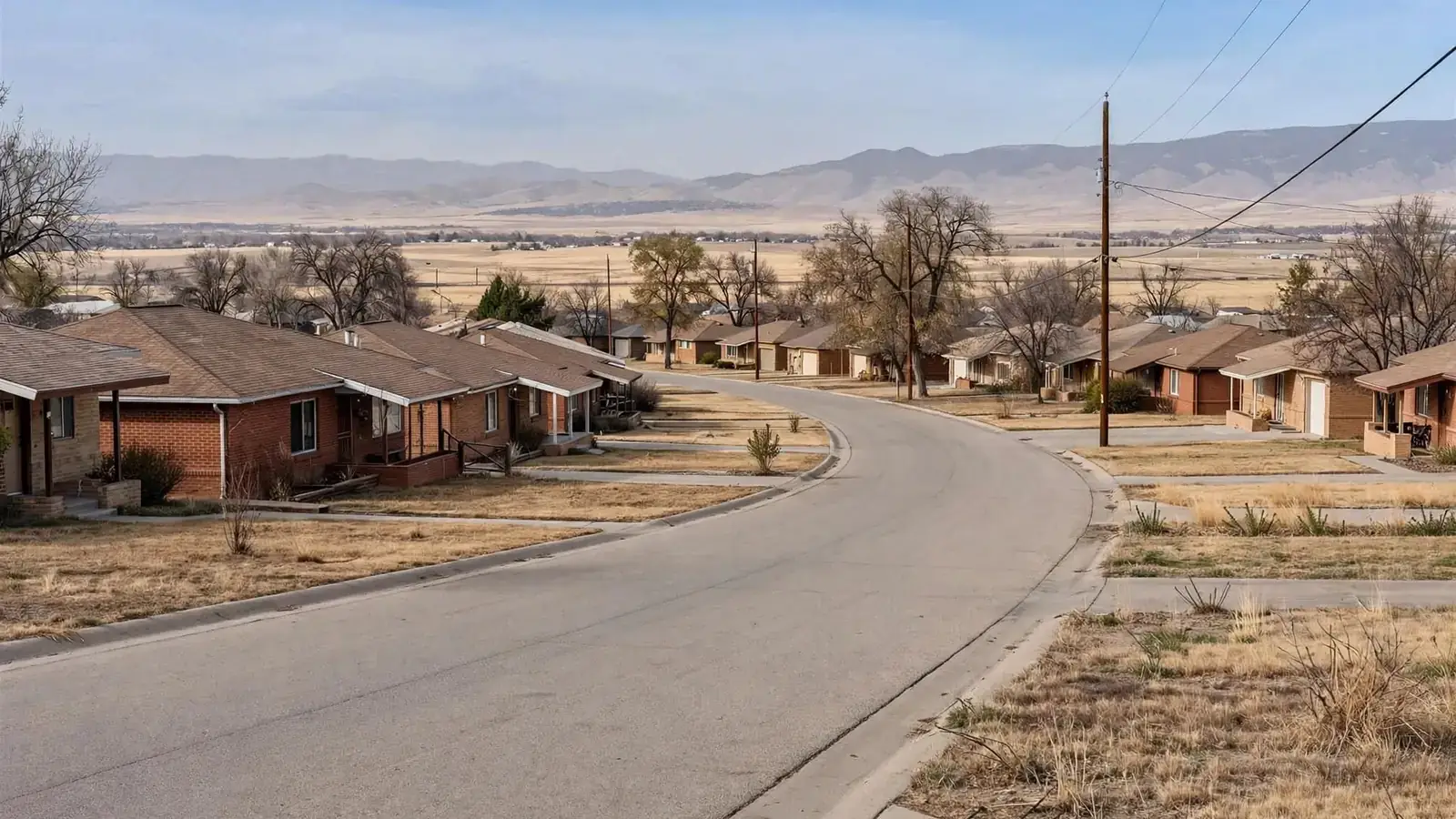
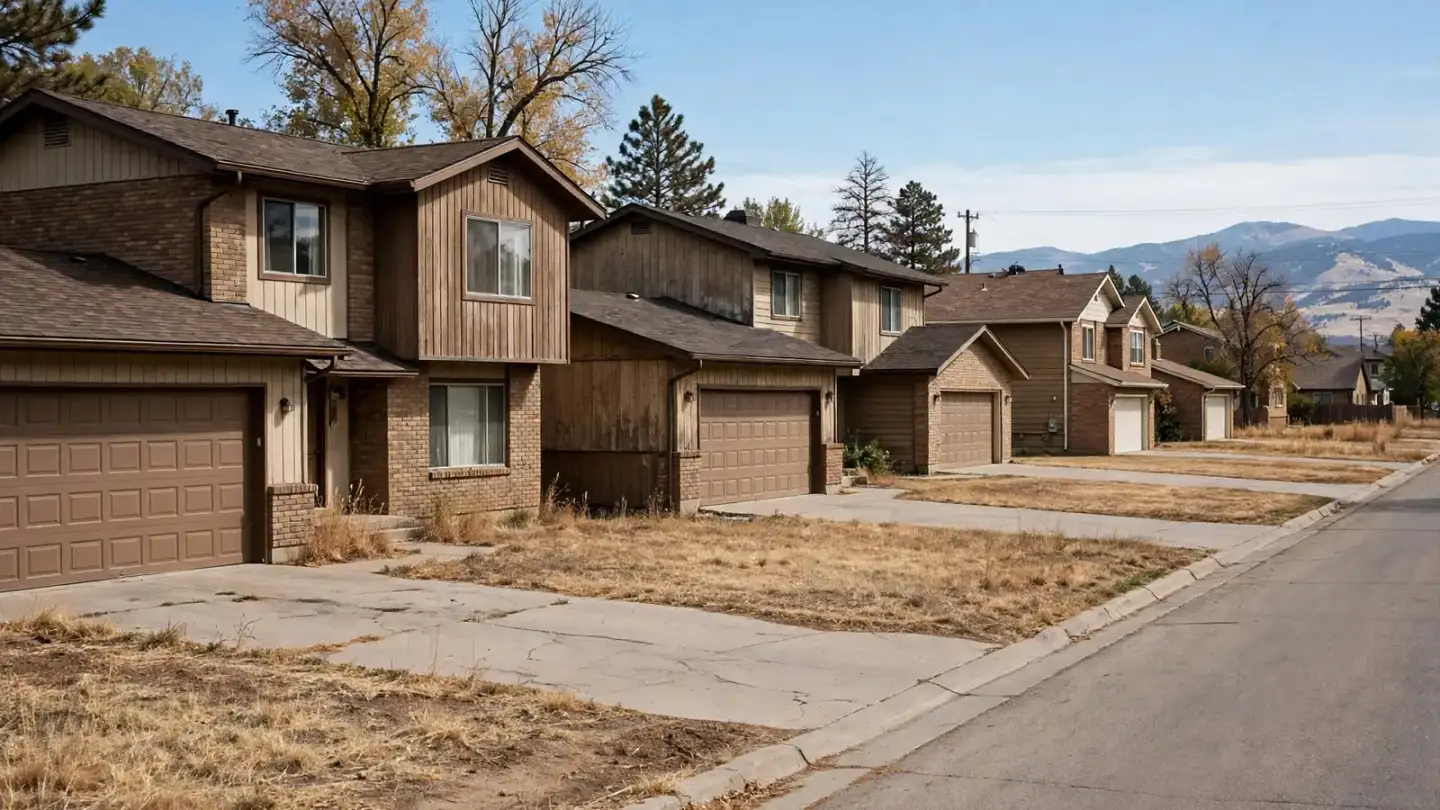
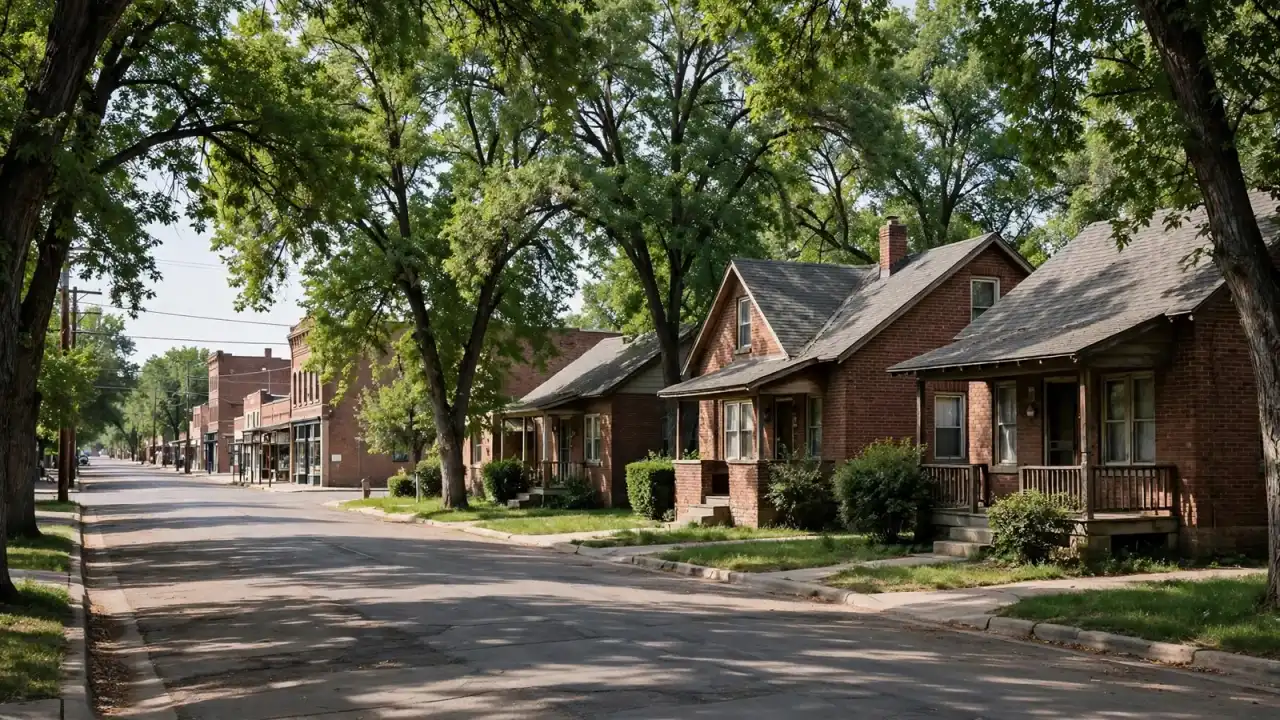
Aurora began as a small town on the plains east of Denver, and its first residential blocks grew up around East Colfax Avenue. Homes here range from early twentieth-century bungalows and small frame houses to brick cottages and post-war ranches that filled remaining lots. Many have basements, often modest and partly finished, and small detached garages reached from alleys.
The blocks follow a grid with alleys behind the houses, and many sewer mains run in those alleys. Service lines leave the back of the basement and cross the back yard to the alley. Original lines were commonly vitrified clay, with cast iron inside the house. [3] Many have been patched over the decades, so a single line can include several materials.
Trees are a defining feature. Older blocks have large elms, ash, maples and honey locusts planted generations ago, and volunteer Siberian elms grow along fences and alleys.
Original Aurora sewer problems
What plumbers see most in Original Aurora
These are the patterns plumbers find again and again on Original Aurora lots.
Roots in old clay joints
Mature street and yard trees invade aging joints.
Read moreCorroded cast iron under basements
Building drains under basement floors wear thin.
Read moreAlley connections
Lines cross back yards to alley mains past garages and fences.
Read moreBasement backups
Low floor drains overflow when the line restricts.
Read more
Alley mains in Original Aurora
Alley sewer mains and back-yard service lines
Because mains often run in the alleys, Original Aurora service lines usually head out the back of the house. They pass under back yards, patios, detached garages and fence lines on their way to the alley connection. A camera and locator show the route and depth before any work, which matters because repairs may involve the alley itself, where utility poles, neighbors' garages and trash collection share the space.
Trenchless methods are popular here because they avoid digging through garages and fences. Where excavation is needed, crews plan access from the alley and coordinate with neighbors.
Original Aurora alley figure
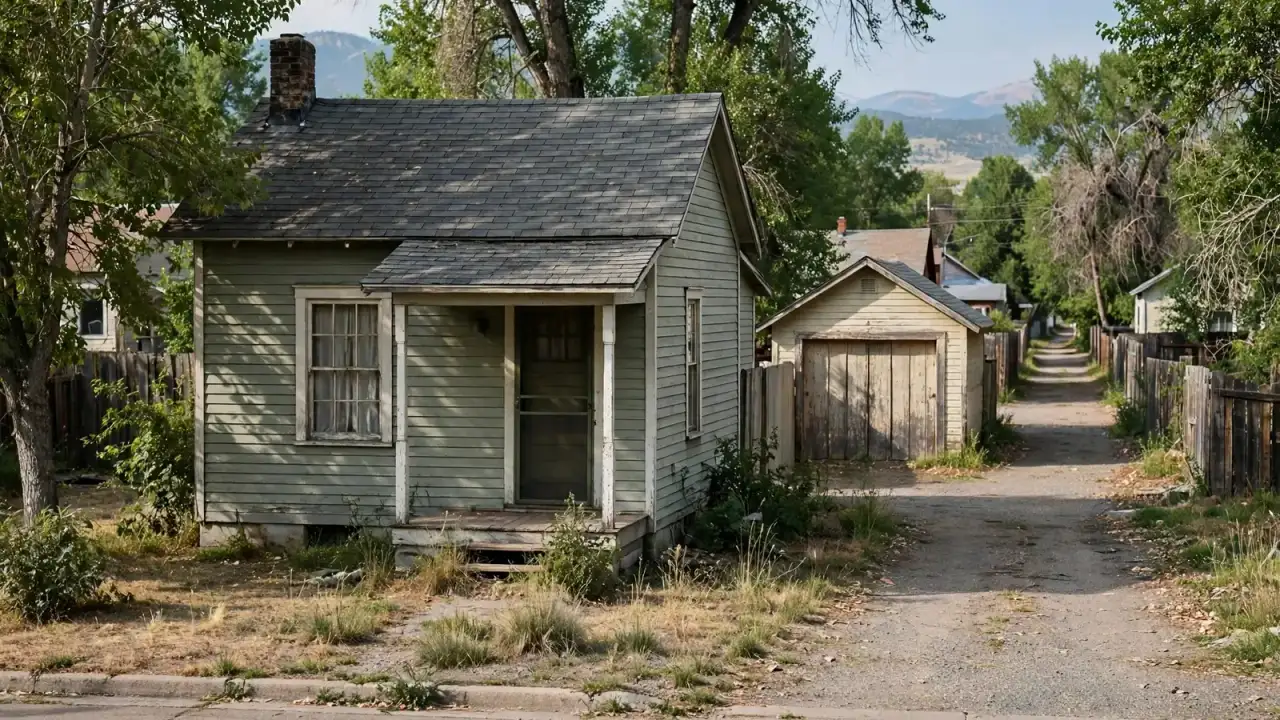
Old clay and roots
Clay pipe and mature trees in Original Aurora
Clay sewer pipe was laid in short sections, and every joint is a potential gap once its original seal has aged. In Original Aurora, decades of seasonal soil movement have loosened many joints, and big trees have found them. Camera inspections often show roots every few feet along the line, with the heaviest growth near the largest trees. Cleaning restores flow for a while; lining or replacement keeps roots out for good.
Cast iron under the basement
Building drains beneath Original Aurora basements
Inside the house, the drain that collects from the basement floor drain, laundry and any basement bathroom often runs under the concrete floor in cast iron. After many decades, it scales and corrodes. Cracks or holes let wastewater soak into the soil under the slab, causing odors and slow drains, and sometimes contributing to floor movement in swelling clay. [4] A camera inspection from the basement cleanout reveals these problems.
Basements in older homes
Older basements and backup risk
Original Aurora basements tend to be shallow and partly finished. Floor drains are often near the furnace and water heater. When the service line restricts, these are the first places wastewater appears. A backwater valve can protect against city-side surges, and repairing the private line prevents backups from roots and breaks.
Original Aurora permits
Permits and responsibility in Original Aurora
Under city rules, owners are responsible for the service line to the main and for locating it, including any damage from repairs. Excavation needs Colorado 811 locates. Work in the alley or right of way follows city requirements. [2] A licensed plumber handles permits where required.
Planning an Original Aurora visit
Planning a sewer visit in Original Aurora
- 1
Basement access
Clear the area around the main cleanout.
- 2
Alley access
Note gates, garage doors and alley conditions.
- 3
Trees
Point out large trees near the back yard.
- 4
Past repairs
Share any history of cleaning or repairs.
- 5
Neighbors
Alley work may affect neighbors briefly.
Original Aurora homes
Original Aurora home types and sewer notes
| Home | Era | Sewer notes |
|---|---|---|
| Early bungalow or cottage | 1910s-1930s | Clay line to alley; roots common |
| Brick cottage | 1930s-1940s | Clay or cast iron; shallow basement |
| Post-war ranch infill | 1950s | Cast iron under basement; clay or cast iron line |
| Duplex or small apartment | Various | Shared lines, heavier use |
Original Aurora repair choices
Choosing repairs in Original Aurora
For root-filled clay lines that keep their shape, lining often fixes the problem without digging through yards and garages. For collapsed or sagging lines, bursting or excavation is needed. Corroded drains under the basement may be lined from inside or replaced through a slab cut.
Colfax-area commercial neighbors
Homes near commercial corridors
Homes near East Colfax sit close to commercial buildings with their own sewer connections. Alleys may carry heavier traffic and more utilities. Plan access carefully for any alley work.
Original Aurora winters
Winter and older lines
Cold snaps rarely freeze deep sewer lines, but they make excavation slower and can crack exposed cleanout caps. Trenchless repairs and indoor lining are useful in winter.
How Aurora began
From Fletcher to Aurora: why the oldest pipe is here
The town that became Aurora was platted in the 1890s under the name Fletcher, after a Denver businessman who promoted it, and renamed Aurora in 1907. For decades it stayed small, a string of blocks along the road east from Denver that later became East Colfax Avenue. Growth came in bursts: modest houses before the Second World War, then a flood of building when military installations nearby brought workers and families. The blocks closest to Colfax and the Denver line are the ones that filled first, which is why the city's oldest sewer service lines are concentrated here.
That history shows up underground. A single block can hold a house from the 1920s with its original clay line, a 1950s infill ranch with cast iron, and a recent rebuild with PVC. Two neighbors with identical symptoms may need completely different repairs, so a camera look at your own line matters more here than anywhere else in the city.
Signs on older lines
Warning signs that show up first on older lines
On older Original Aurora lines, trouble usually announces itself slowly. The basement floor drain gurgles when the washer empties. The toilet takes two tries. A faint sewer smell drifts up near the furnace on humid days. Then, often after a heavy rain or a long weekend with guests, wastewater appears around the floor drain. Owners who notice the early signs and have the line inspected before a backup can plan a repair calmly rather than in the middle of a mess.
Outside, look for a patch of lawn that stays greener or softer than the rest, a small depression along the path from the house to the alley, or a cleanout cap that is cracked or missing. Each of these hints at a problem worth a camera look.
Root seasons
When roots grow fastest in Original Aurora lines
Roots in sewer lines grow year-round, but the pattern on Original Aurora lots follows the seasons. In late spring and summer, trees push new growth and draw more water, and roots inside the pipe thicken quickly. In a dry August, a leaking joint is often the wettest spot in the yard, which pulls roots toward it even harder. Many owners notice slow drains in late summer and early fall for exactly that reason. Cleaning cuts the roots back, but they regrow from what remains outside the pipe, which is why the long-term answer is sealing the joints.
Original Aurora roots figure
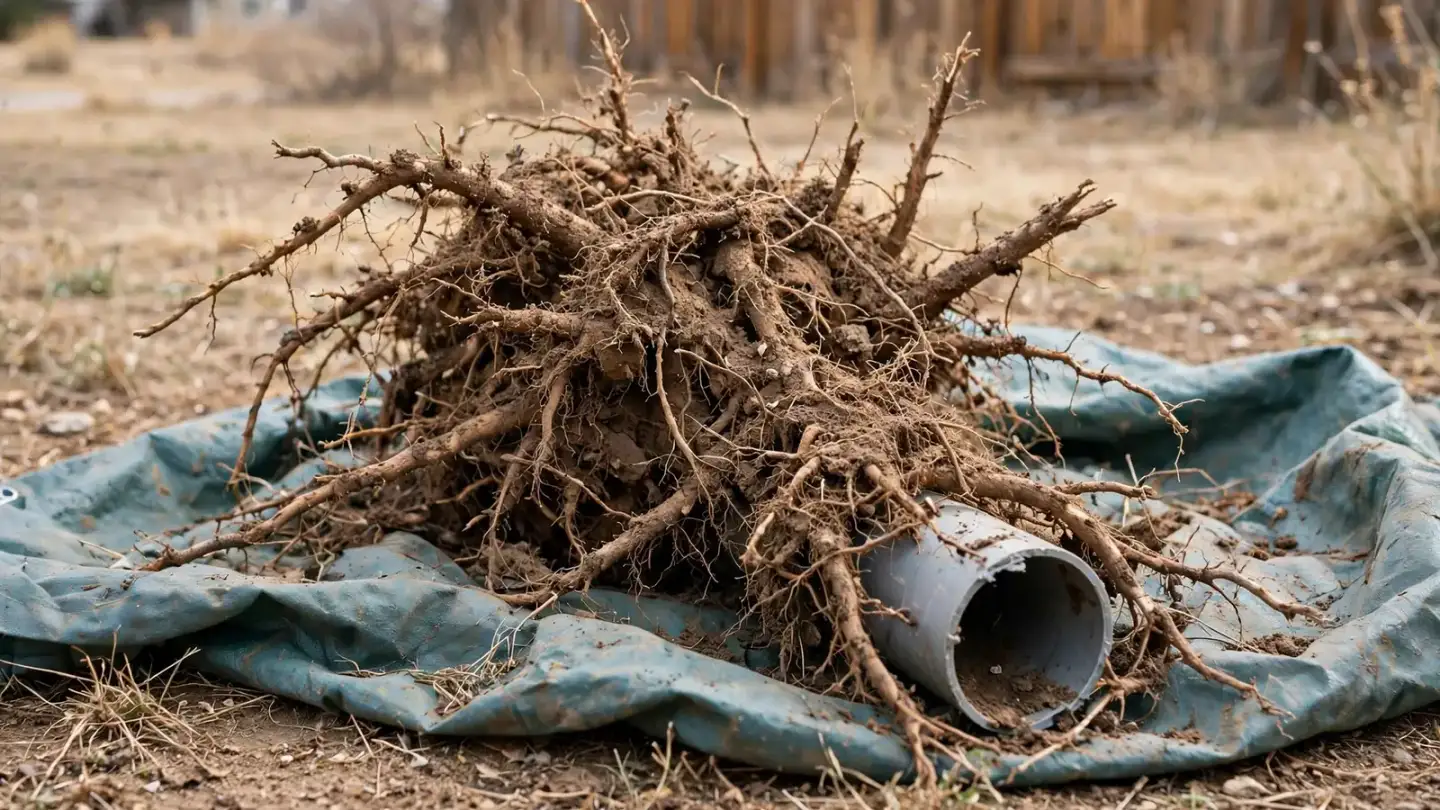
Original Aurora lining
Lining clay lines without digging up alley access
Cured-in-place lining suits many Original Aurora lines because it works from the existing cleanout and, where needed, a small pit near the alley. The crew cleans the pipe, removes roots, inspects again, then pulls or inverts a resin-soaked tube through the line and cures it into a new pipe inside the old one. Back yards, garages and fences stay put. Lining needs the old pipe to hold its shape and keep enough slope; badly collapsed or sagging sections are dug up first. Ask the plumber to walk you through the before and after camera footage.
Original Aurora replacement
When a full replacement makes more sense
Sometimes an old line is beyond lining: sections are crushed, the pipe has shifted out of alignment, or a sag holds standing water along much of the run. Pipe bursting can pull a new line through the path of the old one from pits at each end. Open-trench replacement is used when the route has to change or several problems stack up. In tight Original Aurora lots, crews plan carefully around garages, fences and alley utilities, and the plumber should explain how they will restore the yard.
Rentals and older duplexes
Rentals and duplexes in Original Aurora
The neighborhood has many rentals and older duplexes, and their lines often carry more people than they were built for. Landlords see more frequent clogs, and tenants often report problems only when wastewater appears. Regular camera checks and clear instructions to tenants about wipes and grease prevent many calls. When a duplex shares one line to the alley, a backup in one unit may start in the other; the plumber locates the restriction before anyone assigns blame.
Mixed-material lines
Old patches and mixed materials
Decades of spot repairs leave Original Aurora lines with mixed materials: clay from the house to the yard, a section of cast iron from a 1970s repair, a piece of PVC joined with a rubber coupling. Each transition is a place where offsets and leaks can develop. Camera footage shows each material change. Lining can bridge some transitions, but large offsets may need excavation first.
Talking with the plumber
Questions to ask on an Original Aurora call
When you call, ask what the plumber will check first, whether they will run a camera, and how they will share the footage. If repair is needed, ask which method they recommend for each section and why, how they will handle the alley and any garage or fence, and who pulls permits. Ask for the license number and a written scope. These questions help you compare options without pressure.
During a backup
What to do when the Original Aurora basement drain overflows
The moment wastewater rises around the floor drain, stop running every faucet, toilet, dishwasher and washing machine in the house. Every gallon you send down has nowhere to go but back out of the lowest opening. Tell everyone at home, including anyone upstairs, because people tend to flush out of habit. Keep children and pets away from the water, and do not walk through it in socks or bare feet. If the water is near the furnace, water heater or any outlet, stay clear and let a professional judge the risk.
Do not pour chemical drain cleaner into the floor drain. On a root-filled clay line it will not dissolve the blockage, and it turns the backed-up water into something caustic that the plumber then has to work in. Do not open the main cleanout yourself while the line is full, because the pressure of the water behind the clog can push sewage out of the opening. The safest move is to stop the water, keep people away, and call.
Cleanup in older basements
Cleaning up an older basement after a backup
Original Aurora basements often have bare concrete, old paint, wood shelving and stored boxes. Sewage soaks into porous materials quickly, and cardboard, carpet scraps, fabric and particleboard usually cannot be saved once contaminated. Bare concrete can be cleaned and disinfected. Old wooden stair stringers and shelving sometimes can be cleaned if the exposure was brief, but anything that stays damp is a mold risk in an older basement with limited ventilation.
Photograph the damage before anything is thrown away, keep a list of what was lost, and check whether your homeowners policy has a sewer backup endorsement, because standard policies often leave it out. A professional cleanup crew uses protective gear, removes damaged materials and dries the space with fans and dehumidifiers.
Camera inspections in Original Aurora
What a camera inspection shows on an old line
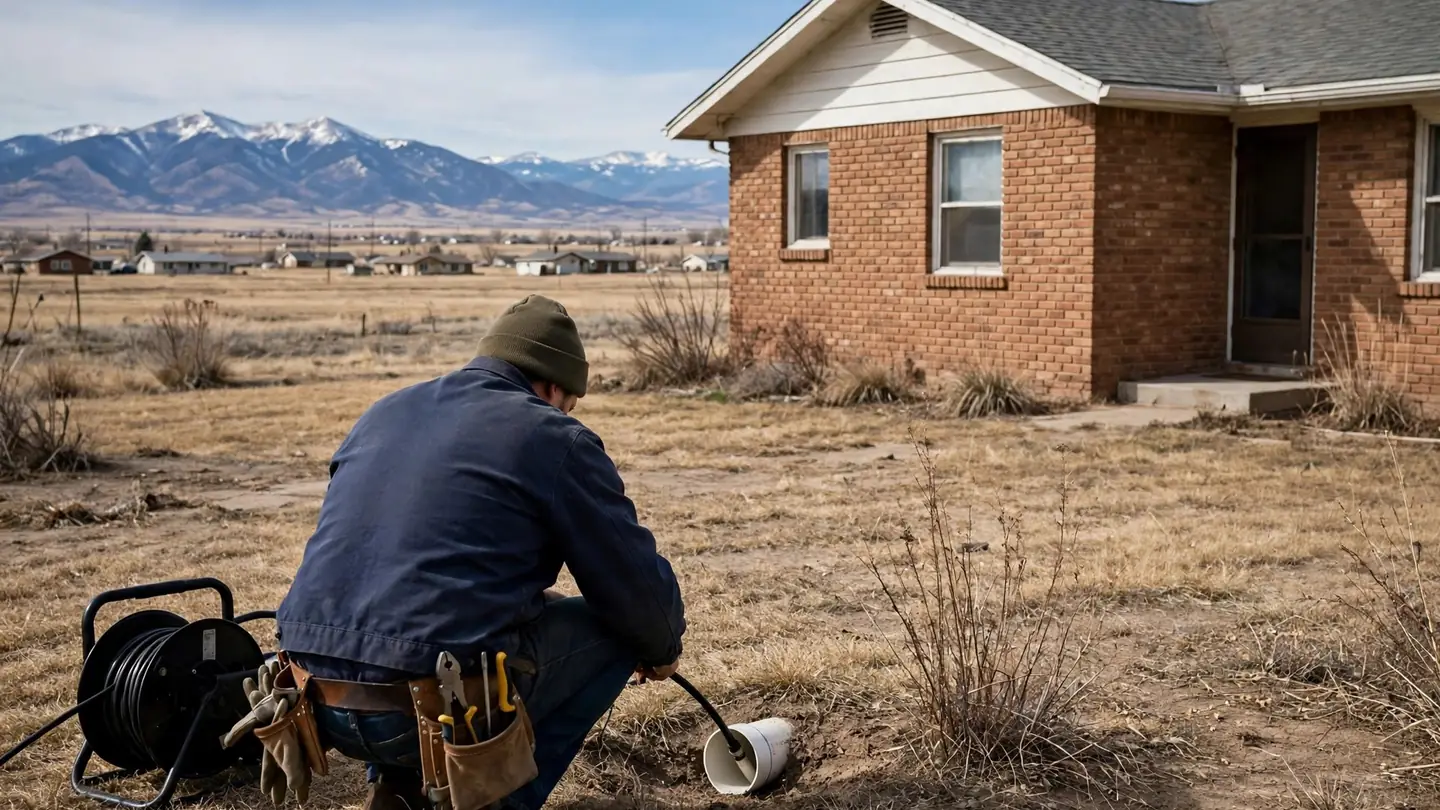
A sewer camera is a small waterproof lens on a flexible push rod. The plumber feeds it in at the cleanout and watches a monitor as it travels toward the alley. On an Original Aurora line, the screen usually shows the material change from cast iron to clay near the foundation, then a series of clay joints every few feet. Healthy joints look like neat rings. Problem joints show roots hanging in like hair, cracks, offset edges where one pipe has dropped below the next, or a gap where soil is visible.
Most cameras include a transmitter in the head, so a locator on the surface can mark the exact spot and depth of each problem. Ask for a copy of the footage with the distances noted. It is the single most useful document when comparing repair options, and it helps if you sell the house later.
Alley work and neighbors
Working in the alley without disrupting neighbors
When a repair reaches the alley, the work affects more than one household. Neighbors may need to move trash bins, park elsewhere for a day or wait while equipment passes. A good crew talks to adjacent owners before starting, keeps the alley passable where possible and cleans up afterward. If the connection to the main is in the alley surface, the city's right-of-way requirements apply, and the plumber handles the paperwork and restoration standards.
Keeping an old line healthy
Habits that help an old Original Aurora line
Old clay lines are less forgiving than modern pipe. Keep grease, coffee grounds and food scraps out of the kitchen drain. Never flush wipes, even those sold as flushable, or paper towels and hygiene products. If big trees sit near the line, a scheduled cleaning before roots fully block the pipe can prevent a backup while you plan a permanent repair. Know where your main cleanout is and keep it accessible. These habits do not repair a cracked line, but they buy time and reduce emergencies.
Historic character
Keeping Original Aurora's character during repairs
Many owners in the neighborhood value its mature trees, old brick and established gardens. Trenchless methods help keep those intact. When digging is unavoidable, ask the crew to set aside topsoil and sod, protect tree roots as much as possible and restore paths and borders. A careful repair leaves little trace once the lawn grows back.
Frost and depth
Frost, depth and older shallow lines
Some of the oldest Original Aurora lines were laid shallower than modern codes require, especially near the house where the pipe leaves a shallow basement. Deep, hard freezes on the plains can push frost down several feet in bare, wind-swept spots. A shallow section under a driveway or alley that gets plowed clear of insulating snow is the most exposed. Running water through the line keeps it from freezing solid in most cases, but houses left vacant in winter, or lines with standing water in a sag, are more vulnerable. If a line clogs during a hard freeze and clears when the weather warms, mention that pattern on your call.
Sewer gas
Sewer odors in older Original Aurora basements
A sewer smell in an older basement does not always mean a broken service line. A floor drain trap that has dried out lets gas rise from the line, and pouring a bucket of water into it often solves that. Old cast iron with a cracked hub, a loose cleanout plug or a failed wax ring under a toilet can also leak gas. If the smell persists after the trap is refilled, a plumber can smoke-test or camera the system to find the source.
Vacant and flipped houses
Houses that sat empty or were recently flipped
Original Aurora has seen a steady stream of renovations. When a house sits empty for months, traps dry out, roots keep growing into an unused line and debris from demolition can end up in the drains. Flipped houses sometimes get new kitchens and baths while the original clay line out to the alley stays untouched. If you have bought a recently renovated older home, ask the seller whether the service line itself was inspected or replaced, and consider a camera look before the first backup answers the question for you.
Original Aurora sewer questions
Questions about sewer lines in Original Aurora
Do Original Aurora homes connect to alley mains?
Many do. A camera and locator confirm your route.
Is my sewer line likely clay?
Many original lines are clay, often with later repairs. A camera inspection shows what you have.
Can roots be kept out without removing my trees?
Yes. Lining or replacing the line seals it against roots.
Who is responsible for the line to the alley?
Under Aurora's rules, the property owner, including locating it and any damage from repairs.
Can a line under my garage be repaired without demolishing it?
Often, using trenchless methods with pits outside the garage.
Why does my basement floor drain back up?
The service line is likely restricted by roots or damage. Stop water use and call.
What should I tell the plumber about my Original Aurora home?
Age, basement layout, alley access, big trees and past repairs.