Key facts: Sewer Backup Cleanup
- Sewage can carry bacteria, viruses and parasites, so contact with it should be avoided [1].
- Damp building materials can grow mold within 24 to 48 hours if not dried [2].
- Backwater valves let wastewater leave a building while stopping reverse flow from the sewer [3].
- In Aurora, the owner is responsible for the service line and resulting damages from failures on it [4].
How basement backup response works
What happens when a plumber responds to a basement backup
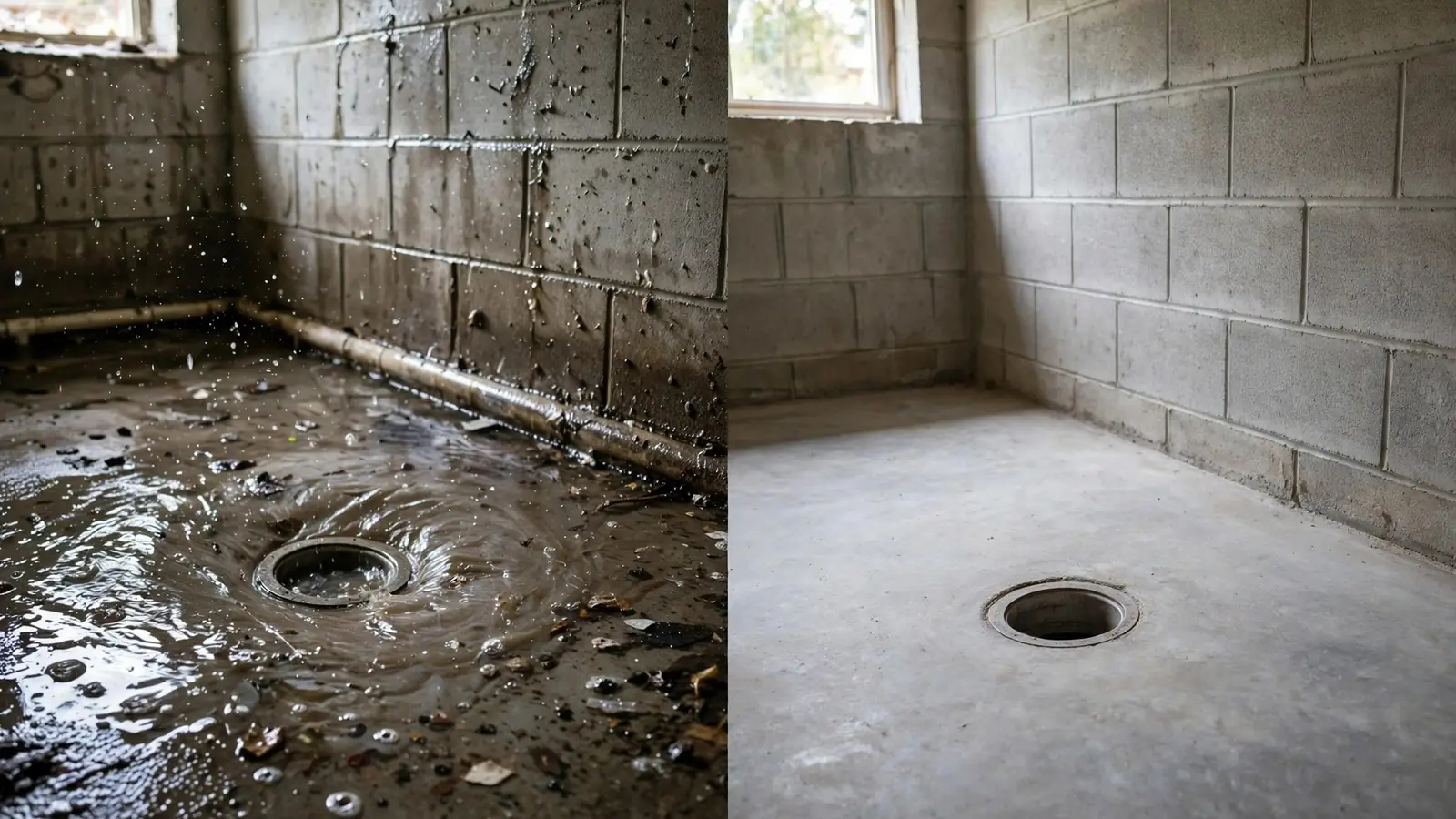
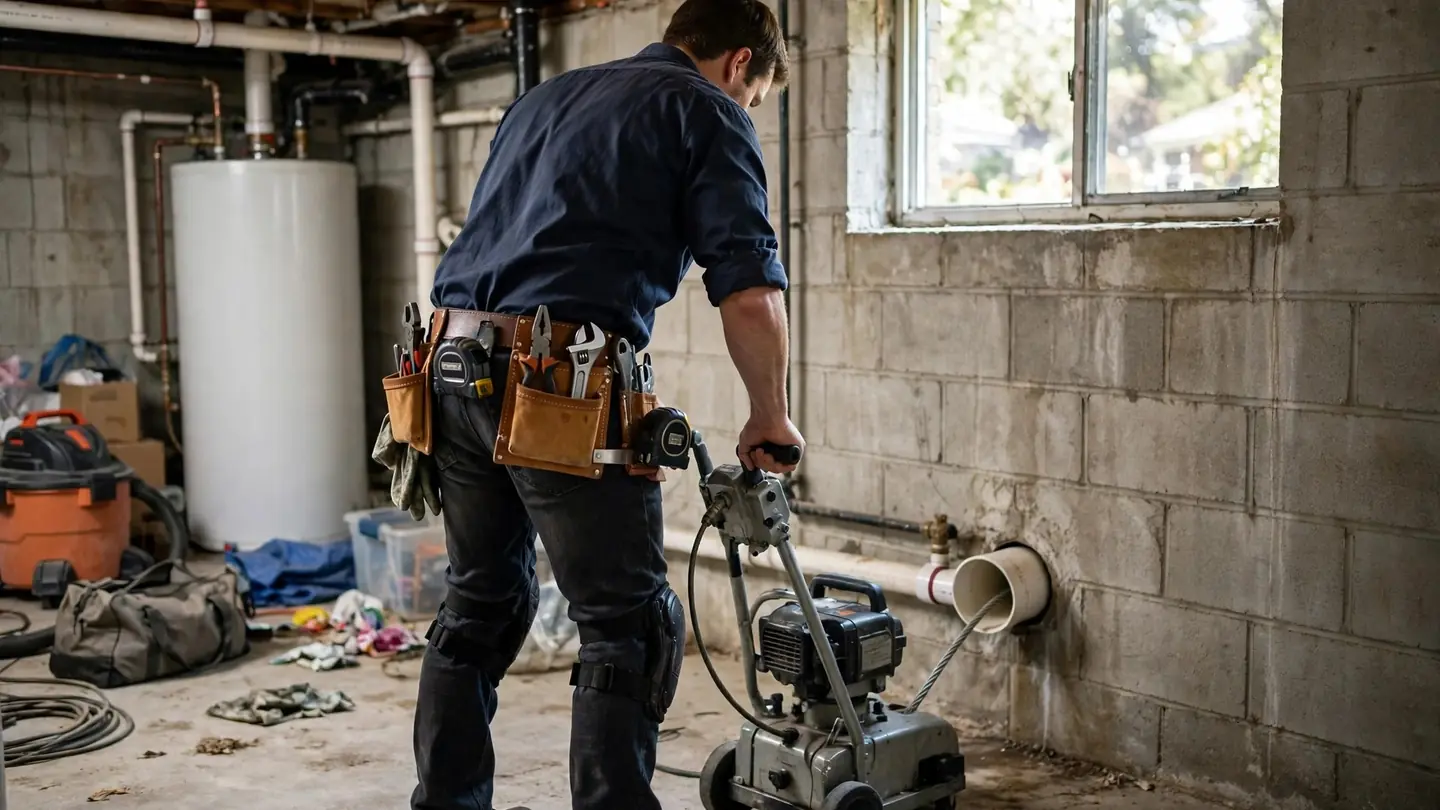
When sewage comes up through a basement floor drain, the first job is to stop more water from arriving and get the line flowing again. The plumber opens a cleanout, often in the basement near where the drain leaves the house, carefully, because pressure may have built up behind a blockage. They clear the line with a cable machine or a water jetter until flow returns.
Next comes the question of why. A camera inspection after clearing shows whether roots, a sag full of solids, a broken section, grease or wipes caused the backup, and whether the problem lies in your service line or at the city main. That answer decides the next step: maintenance, repair, replacement or a report to the city.
Then the basement. Hard surfaces such as concrete, tile and sealed floors can be cleaned and disinfected. Carpet, pad and drywall that soaked up sewage usually have to come out. Everything must dry thoroughly. Plumbers handle the line; larger cleanups are often handled by water damage and restoration companies, and the plumber can tell you when to call one.
Warning signs
Signs a basement backup is coming
Backups often send warnings first.
Gurgling floor drain
Air pushing up through the basement drain when upstairs fixtures run.
Read moreWater at the floor drain during laundry
A washer surge has nowhere to go.
Read moreSeveral slow drains
The shared service line is restricted.
Sewer odor in the basement
A dry trap or a leaking drain.
Backups after storms
Extra water entering the system overloads a restricted line.
Repeat clogs
Roots or a sag keep catching debris.
Read more
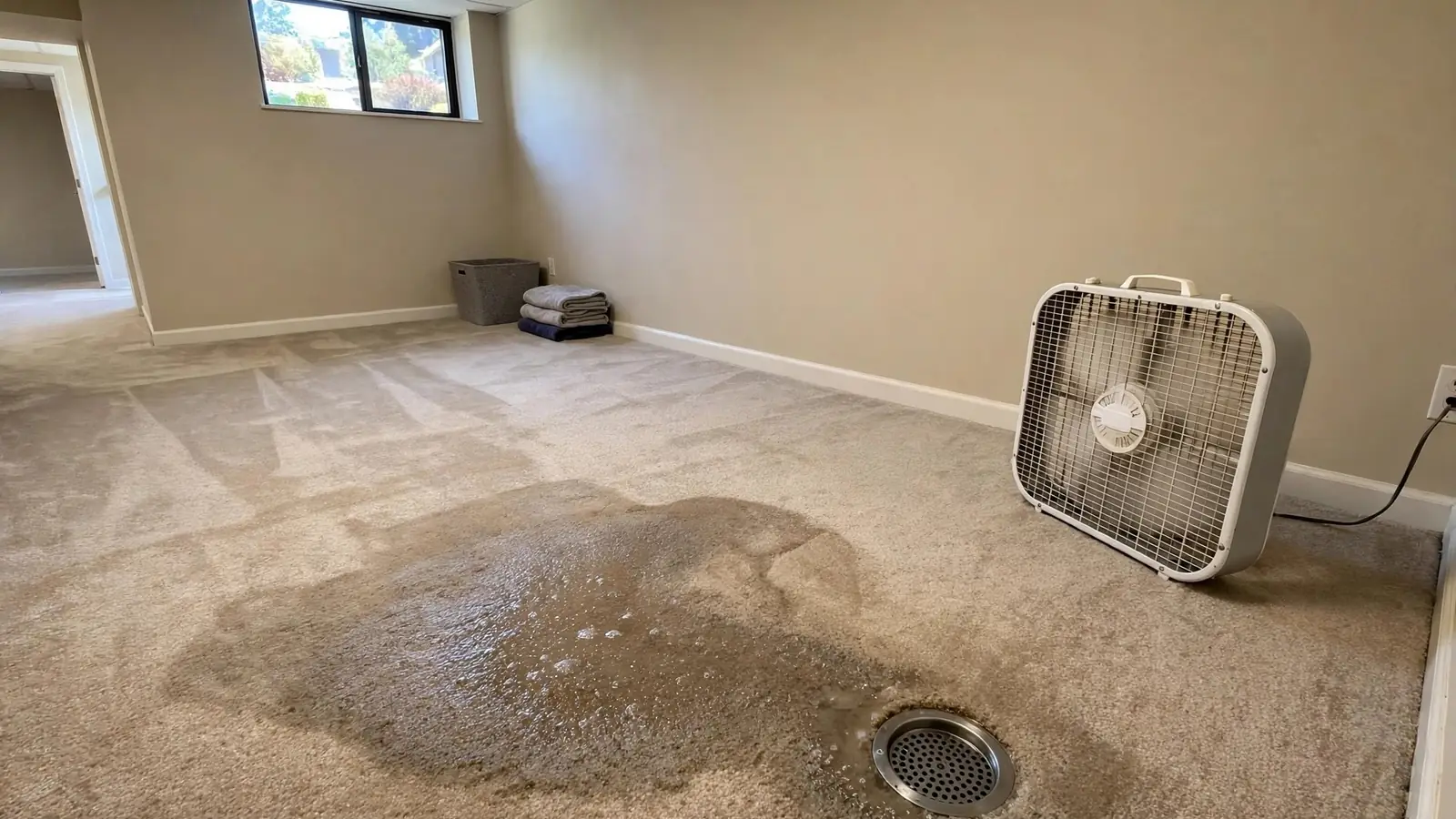
Wet basement figure
Why Aurora basements back up
What causes basement sewer backups in Aurora
The usual causes are roots in older clay and cast iron service lines, sags where solids settle, broken or offset sections, and build-up from grease and wipes. In newer neighborhoods, debris left from construction or a joint pulled apart by settling can cause problems. Occasionally the city main is blocked or overloaded, and sewage backs up into homes connected to it, which is why backwater valves are popular in basement homes.
Heavy rain can make backups more likely when groundwater leaks into cracked lines and adds flow. Snowmelt can do the same.
Backup response step by step
How a basement backup is handled
- 1
Stop water use
Nobody flushes, showers or runs appliances.
- 2
Clear the line
The plumber opens a cleanout and clears the blockage.
- 3
Find the cause
A camera inspection shows why it happened.
- 4
Check the city side
If the main is involved, the plumber advises a report to Aurora Water.
- 5
Clean and dry
Contaminated materials are removed and the area disinfected and dried.
- 6
Prevent
Repairs, maintenance or a backwater valve are discussed.
Basement materials
How basement materials are usually handled after a backup
| Material | Usual approach |
|---|---|
| Unfinished concrete floor | Clean and disinfect |
| Tile or sealed flooring | Clean and disinfect |
| Carpet and pad | Remove and discard |
| Drywall wicked by sewage | Cut out above the wet line |
| Wood framing | Clean, disinfect and dry; replace if damaged |
| Stored boxes and fabric items | Usually discarded |
What you can do yourself
First steps when the basement backs up
These steps protect people and limit damage.
- Stop all water use in the house right away.
- Keep children and pets out of the basement.
- Wear rubber boots and gloves if you must go down.
- Shut off power to the basement only if you can reach the panel without standing in water.
- Open windows or run fans for ventilation.
- Photograph damage for insurance.
- Do not pour chemical drain cleaners into the line.
Where to stop
Cleanup jobs that need professionals
Small backups onto bare concrete can sometimes be cleaned with protective gear and disinfectant. Anything involving soaked carpet, drywall, furniture or HVAC equipment should be handled by professionals. If a furnace or water heater in the basement was reached by sewage, have it checked before running it.
Basement backup cleanup in Aurora: local specifics
Aurora factors in basement backups
Basements are the reason backups hurt so much in Aurora. Many homes have finished lower levels with bedrooms, family rooms and storage, so a backup can damage much more than a utility room. Floor drains near furnaces and water heaters are often the first point of overflow.
City rules place responsibility for the service line, and damage from failures on it, with the owner. If the backup came from the public main, the city handles the main. A plumber's camera inspection helps establish which side the problem is on.
The local climate plays a part. Snowmelt and spring storms can add water to cracked lines. Dry summers shrink the clay and draw roots toward any leak. Both seasons bring backup calls.
Next steps by cause
Matching the response to the cause
| Cause | Next step |
|---|---|
| Grease, wipes, paper | Clean the line; change habits |
| Roots at joints | Clean and line or spot repair |
| Sag | Excavate and re-lay |
| Broken or collapsed pipe | Repair or replace |
| City main blocked | Report to Aurora Water; consider a backwater valve |
Related problems
Damage that follows a basement backup
Sewage can soak into carpet, drywall, wood framing and stored belongings. Lingering moisture leads to mold and odors. Appliances on the basement floor may be affected. A thorough cleanup and drying limit lasting damage. Insurance coverage for sewer backup often depends on a specific endorsement.
Backwater valves
Backwater valves for Aurora basements
A backwater valve installed on the building drain lets wastewater leave but closes if flow reverses from the main. For basement homes, it can prevent a city-side backup from reaching the floor drain. It needs a suitable location, access for maintenance and generally a permit. It does not stop blockages in your own service line.
Sump pumps and floor drains
Sump pumps versus floor drains
Many Aurora basements have a sump pit for groundwater, separate from the sewer floor drain. Sump pumps should discharge outside, not into the sewer. If a sump pump is tied into the sewer, it can overload the line during storms. A plumber can check how yours discharges.
Prevention habits
Habits that prevent basement backups
Keep grease out of kitchen drains, flush only toilet paper and run water into seldom-used floor drains to keep traps full. Schedule camera checks on older lines with a history of slow drains.
Checking after cleanup
Confirming the line after a backup
After repairs, a final camera pass and a test with several fixtures running confirm the line is clear. Keep the video.
Finished basements and backups
When a finished basement floods with sewage
Finished basements with carpet, drywall and furniture suffer the worst damage. Carpet and pad that sewage reached are normally removed and discarded. Drywall is cut out above the wet line. Insulation in the bottom of walls is removed. Wood framing is cleaned, disinfected and dried, and replaced if badly affected. Professional drying equipment speeds the process and reduces the risk of mold behind walls.
Utility rooms and appliances
Furnaces, water heaters and washers in the basement
Basement utility rooms usually hold the furnace, water heater and washer close to the floor drain. If sewage reached their bases or controls, they should be inspected before use. Gas appliances in particular should be checked by a qualified technician if water reached burners, controls or venting.
Children and health
Keeping the household safe during cleanup
Keep children, older adults and anyone with a weakened immune system away from the basement until it is cleaned and disinfected. Wear gloves, boots and eye protection during any cleanup, wash hands thoroughly and launder work clothes separately. Do not eat or drink in the area.
Odors after cleanup
Getting rid of lingering basement odors
If a sewer smell lingers after cleanup, contaminated material may remain, or a floor drain trap may be dry. Run water into floor drains to refill traps, check behind baseboards and inside lower cabinets, and keep ventilating. Persistent odor may mean a cracked drain under the slab, which a camera can find.
Repeat backups
When backups keep happening
If the basement has backed up more than once, the cause has not been fixed. A camera inspection after each clearing is the best way to find roots, sags or breaks. Repeated backups from the public main are a reason to consider a backwater valve and to report the problem to the city.
Rental and multi-unit properties
Backups in rental homes and basements
Landlords of homes with basement units or rented basements face more risk, since tenants' belongings and living space are affected. Prompt clearing, cleanup and repair, plus clear communication, matter. Colorado landlord-tenant law and lease terms govern responsibilities.
Insurance and documentation
Documenting a basement backup for insurance
Take photos of the water, the affected rooms and damaged belongings before cleanup starts, if it is safe. Keep damaged items until your insurer says they can go, keep receipts for plumbing, cleanup and drying, and ask the plumber for a written note of the cause. Coverage for sewer backup usually depends on an endorsement; read your policy wording.
Drying the basement
Drying out after a sewage backup
After contaminated materials are removed and surfaces disinfected, fans and dehumidifiers dry the remaining structure. Colorado's dry air helps, but basements stay cooler and damper than upper floors. Moisture meters confirm when walls and floors are dry enough to rebuild. Rushing to close walls can trap moisture and lead to mold.
Choosing who to call
Plumber first, then restoration
Call a plumber first to stop the backup and find the cause. Without that, cleanup may be undone by the next flush. Once the line is working, a water damage or restoration company can handle larger cleanups. Some plumbers can recommend local restoration firms.
Laundry habits
Laundry and basement drains
Washers send large volumes of water quickly. If the main is partly restricted, that surge backs up at the floor drain. Spreading out loads and watching the floor drain during the first load after a repair can catch problems early.
Older homes and cast iron
Cast iron drains in older Aurora basements
Mid-century homes often have cast iron under the basement floor. Corroded cast iron can crack and leak beneath the slab, causing odors and slow drains even without a full backup. A camera inspection finds these, and repairs range from lining to replacing sections.
Newer homes
Basement backups in newer Aurora homes
Newer homes are not immune. Construction debris, a sag from settled backfill or a poorly glued joint can block a PVC line. Backups in homes only a few years old are worth a camera inspection, since builder warranties may apply in some cases.
Floor drain traps
Keeping floor drain traps filled
Basement floor drains have traps that hold water to block sewer gas. In dry Colorado air, unused traps evaporate and let odors in. Pouring a bucket of water into floor drains every few weeks keeps the seal. Some homes add trap primers that refill them automatically.
Snowmelt and spring storms
Spring backups after snowmelt
In spring, melting snow and storms saturate the ground. Groundwater can seep into cracked service lines, and the city system carries more flow. Homes with marginal lines may back up then. If backups happen every spring, a camera inspection usually shows infiltration at cracks or joints.
After a backup is fixed
Testing the line after repairs
After the cause is repaired, run several fixtures at once, including a washer cycle, and watch the floor drain. A final camera pass confirms the line is clear. Keep the video and repair details with your home records.
Planning ahead
Planning repairs before the next backup
If a backup was caused by roots or a structural problem, schedule the repair soon after cleanup. Waiting until the next backup means another cleanup and more damage. A plumber can explain the options from the camera video.
Main line versus branch
Telling a branch clog from a main line backup
If only one sink or toilet backs up while the basement floor drain stays dry, the clog is usually in that fixture's branch line. If the basement floor drain fills when upstairs fixtures run, the main line is blocked. The difference matters, because branch clogs are often simpler to clear.
Neighbors and the main
When neighbors back up too
If several homes on the same street or alley back up at once, especially after storms, the public main may be blocked or overloaded. Report it to the city. A plumber's camera inspection can confirm whether your own line is clear.
Choosing a backwater valve
Types and placement of backwater valves
Backwater valves come in different designs and are installed on the building drain where they can be reached for cleaning. Some sit in the basement floor with an access cover; others are installed outside. Placement must keep upstairs fixtures draining normally while protecting the lowest drains. A plumber can recommend a design for your layout.
Basement bathrooms and backups
Basement bathrooms and ejector pumps
Some basement bathrooms sit below the level of the service line and use an ejector pump to lift waste up to the main. If the ejector pump fails, the basement bathroom can back up even when the main line is clear. A plumber can check the pump, its float and its check valve.
Typical Aurora backup call
What a typical basement backup call looks like
A common call: a family in a 1960s Aurora ranch finds water around the basement floor drain after laundry. The plumber stops water use, opens the basement cleanout, clears a root mass in the clay service line and runs a camera. The video shows roots at several joints and a crack near a large elm. The plumber explains cleaning versus lining, and the family arranges cleanup of the basement carpet while planning the permanent repair.
Seasonal checks
Seasonal checks that prevent basement backups
Before winter, check that outdoor cleanout caps are intact. In spring, watch drains after snowmelt. Before summer, consider cleaning root-prone lines. Year-round, keep grease and wipes out of the drains.
Cleanup timeline
How long cleanup and drying take
A small, clean-up-and-disinfect job may be done in a day. Removing carpet and drywall and drying the structure can take several days, followed by rebuilding. The plumbing repair schedule runs alongside.
What not to do
Mistakes to avoid during a basement backup
Do not keep running water to see whether it drains. Do not use a shop vacuum on sewage unless it is rated for wet contaminated material and will be disinfected afterward. Do not pour bleach and ammonia-based cleaners together. Do not run a furnace or water heater that sewage reached until it is checked.
Pets in the basement
Pets and basement backups
Many Aurora households keep pet beds, litter boxes or food in the basement. Move pets upstairs during a backup, discard bedding that sewage reached and clean bowls and toys with hot water and disinfectant.
Water heaters and floor drains
Water heater relief lines and floor drains
Water heater relief valves often discharge near the floor drain. If you see water at the floor drain with no backup, check whether the water heater relief valve is dripping before assuming a sewer problem.
Storing items in basements
Protecting stored items in a basement
Store boxes on shelves or in plastic bins off the floor, especially near floor drains and utility rooms. If a backup happens, raised and sealed storage limits what is lost. Keep important papers, photographs and electronics upstairs, well away from any floor drain, sump pit or laundry area, and keep a list of what is stored below grade.
Basement backup questions
Questions about basement sewer backups in Aurora
What should I do first if sewage comes into my basement?
Stop all water use, keep people and pets out and call a plumber. Avoid contact with sewage.
Why does my floor drain overflow when I do laundry?
The washer releases a surge of water that cannot pass a restricted line, so it rises at the lowest drain.
Will a backwater valve stop all backups?
It stops backups from the city main, not blockages in your own service line.
Who pays if the city main caused the backup?
The city handles the main. Claims follow the city's process.
Can I clean up a small backup myself?
Small backups on bare concrete can be cleaned with protective gear. Soaked carpet and drywall need professionals.
Is my furnace safe after a backup?
If sewage reached it, have it checked before running it.
Does insurance cover basement backups?
Many Colorado homeowners policies leave backups out unless an endorsement covers them. Photograph the damage and check your declarations page.
Can a plumber tell me whether the backup came from my line or the city's?
Usually, with a camera inspection after clearing the line, which shows where the blockage was.
Should I move belongings off the basement floor?
Yes. Keeping boxes and furniture off the floor near drains limits damage if a backup happens.
Is water at the floor drain always a sewer backup?
Not always. A dripping water heater relief valve or a sump overflow can also leave water there. Clean water versus sewage is the clue.
How long does it take to dry a basement after a backup?
Small cleanups may take a day; larger ones with carpet and drywall removal often take several days of drying before rebuilding.
Can a basement bathroom back up if the main is clear?
Yes, if it relies on an ejector pump that has failed. Have the pump checked.
Why does my basement smell like sewer gas without a backup?
A dry floor drain trap is the most common cause. Pour water into the drain. If the smell persists, have the drains checked.
Should my sump pump drain into the sewer?
No. It should discharge outside, not into the sanitary sewer.