
Key facts: Signs of a broken sewer line
Broken line: the short answer
Signs of a failing sewer line: the short answer
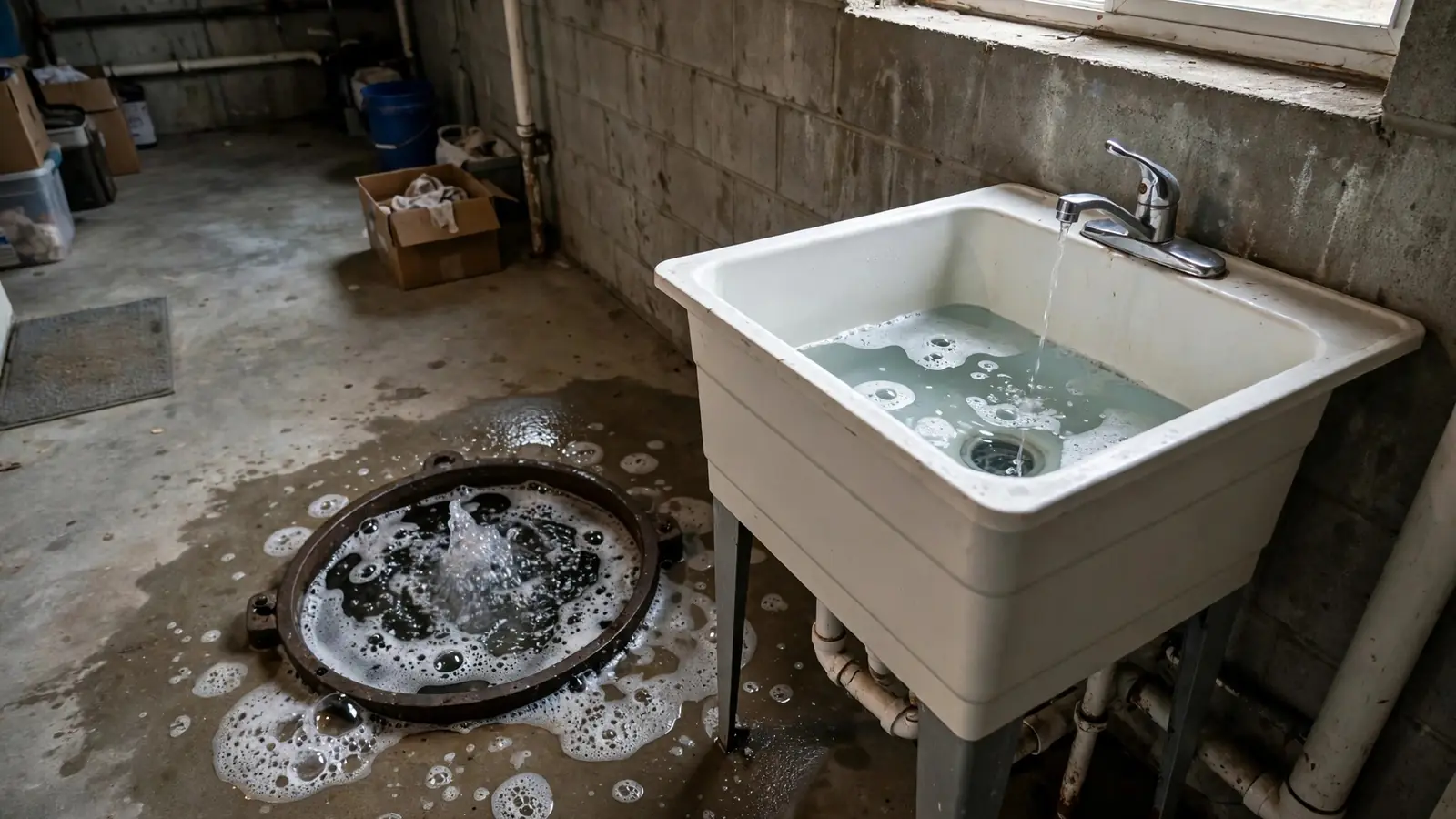
Watch for problems that involve more than one drain: a gurgling basement floor drain when upstairs fixtures run, slow drains everywhere, clogs that return, sewer odors and a green or soggy strip of lawn over the line. A camera inspection confirms the cause.
Sign table
Warning signs and what they usually mean
| Sign | Likely cause | What to do |
|---|---|---|
| Floor drain gurgles | Restriction downstream | Inspect soon |
| Slow drains throughout | Shared line narrowing | Camera inspection |
| Clogs return | Roots, sag or break | Camera inspection |
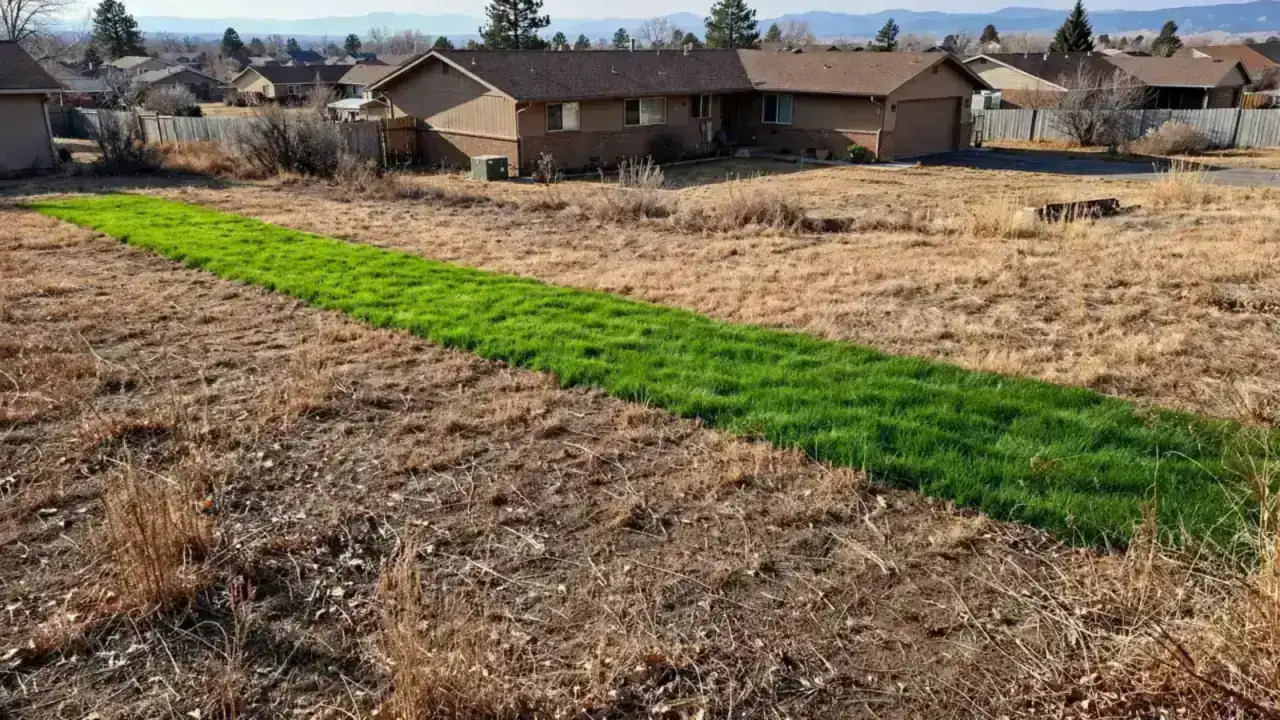
| Green strip in dry lawn | Leak feeding grass | Locate |
| Sewer odor outdoors | Leak or open cleanout | Check caps; inspect |
| Water at floor drain after storms | Infiltration or main surge | Inspect |
Green strip figure
Safe checks
Checks you can make yourself
- Run an upstairs sink and watch the basement floor drain.
- Note which fixtures slow down together.
- Walk the line's likely route for green strips or soft spots.
- Check outdoor cleanout caps.
- Note whether problems follow laundry, storms or snowmelt.
Inside clues
Clues inside an Aurora house
In an Aurora house, the basement floor drain is the early warning system. Gurgling there when an upstairs toilet flushes means air is being pushed back through the drain by a restriction downstream. Water rising around the drain during a washer cycle means the line cannot carry the surge. Slow tubs and showers on the lowest level often follow. Each of these points to the shared service line rather than a single fixture.
Outside clues
Clues in an Aurora yard
In Aurora's semi-arid climate, most lawns brown in dry spells unless watered heavily. A strip that stays green and lush, often running from the house toward the street or alley, can trace a leaking service line feeding the grass. Soft or sunken patches, sewer odors on warm days and soil that stays damp when everything else is dry are other outdoor signs.
Foundation clues
When the house itself gives hints
Aurora sits on clay that swells when wet. A sewer leak near the foundation adds water to that clay on one side of the house, which can contribute to localized heaving or movement. New cracks in basement walls or floors near where the drain leaves the house, or doors that start sticking, are not proof of a sewer leak, but they deserve mention when you call so the plumber can check the line near the foundation.
How plumbers confirm
How a plumber confirms a failing line
- 1
Listen
Symptoms and history.
- 2
Check cleanout
Standing water shows where the blockage is.
- 3
Clear and film
Camera shows the defect.
- 4
Locate
Mark position and depth.
Repair options
Repair options once a break is confirmed
One defect in otherwise sound pipe usually calls for a spot repair. Cracks and roots along a round pipe often suit lining. Collapsed or badly deformed sections call for bursting or replacement, and sags need excavation to restore slope. The camera video determines which approach fits your line.
Aurora notes
Why Aurora lines fail
Aurora lines fail for several local reasons: aging clay and cast iron in neighborhoods built before the 1980s, swelling clay soils that shift pipe, mature trees whose roots invade joints, and settled backfill in newer neighborhoods. [2] Grease and wipes add to the load everywhere.
Signs after snowmelt and storms
Why problems show up in spring
In spring, melting snow and storms raise groundwater. A cracked line takes on extra water, and the city system carries more flow. If the basement drain gurgles or rises every spring, infiltration through cracks is a likely cause.
Signs in newer homes
Warning signs in newer Aurora homes
Newer homes with PVC lines can still show signs: slow drains caused by a sag where backfill settled, or a blockage from construction debris. A camera inspection within the first years can catch these, sometimes while builder warranties apply.
Odors indoors
Indoor odors as a warning sign
A sewer smell in the basement can come from a dry floor drain trap, which dry air empties quickly, or from a cracked drain under the slab. If running water into the trap does not help, the drain may be leaking.
Repeat clogs
When clogs keep coming back
If a plumber clears the line and it blocks again within months, the cause is structural: roots, a sag or a break. A camera inspection after clearing shows which, so the fix targets the cause rather than the symptom.
Older homes
Warning signs in older Aurora homes
In homes built before about 1980, original clay or cast iron lines are common. Slow basement drains, repeated clogs and lush lawn strips are especially telling in these homes, and a camera inspection is worth arranging before a backup forces the issue.
What to do next
What to do once you notice the signs
Note which fixtures are affected and when, check outdoor cleanout caps and walk the yard along the likely line route. Then call. A plumber can usually tell on the call whether it sounds like a clog, roots or a broken line, and whether a camera inspection is the next step.
Keeping a log
Signs worth writing down
Keep a simple note of when drains slowed, when the floor drain gurgled and when the lawn changed. Patterns over weeks help the plumber understand whether the problem is roots, a sag or a break.
Grease and wipes
Everyday habits that strain the line
Grease hardens in pipes and wipes snag on joints and roots. Keeping both out of drains slows the narrowing that leads to backups, especially in older clay and cast iron lines.
Prevention
Reducing the risk of line failure
- Keep grease and wipes out.
- Film older lines.
- Keep trees away from the line.
What to tell the plumber
What to tell the plumber about warning signs
- Which drains act up.
- Any yard signs.
- House age and past repairs.
Signs guide questions
Questions about sewer line warning signs
Does one slow drain mean a broken sewer line?
Usually not. One slow drain is typically a local clog.
Why is part of my lawn greener?
A leaking line can feed grass above it.
Can a line leak without a backup?
Yes. Cracks can leak into the soil for a long time.
Do newer homes get broken lines?
Less often, but settling and construction damage happen.
Should I film my line before buying an older home?
It is one of the most useful checks for pre-1980 Aurora homes.
Can sewer problems damage my foundation?
Leaks near the foundation can wet swelling clay and contribute to movement. Have the line checked near the house.
Why does my floor drain gurgle in spring?
Snowmelt can enter cracked lines and raise flow. A camera inspection shows where.
How soon should I act?
Soon. Early signs often come before a basement backup.