Key facts: Sewer Camera Inspection
- Aurora assigns the property owner responsibility for the service line to the main, including locating the line and tap [1].
- Front Range swelling soils can shift buried pipe as moisture changes, opening joints and creating sags [2].
- Camera inspection, or pipeline video inspection, sends a camera through the pipe to record its interior condition [3].
- Colorado plumbers are licensed by the state's Division of Professions and Occupations [4].
How an Aurora camera inspection works
What happens during a camera inspection in an Aurora home
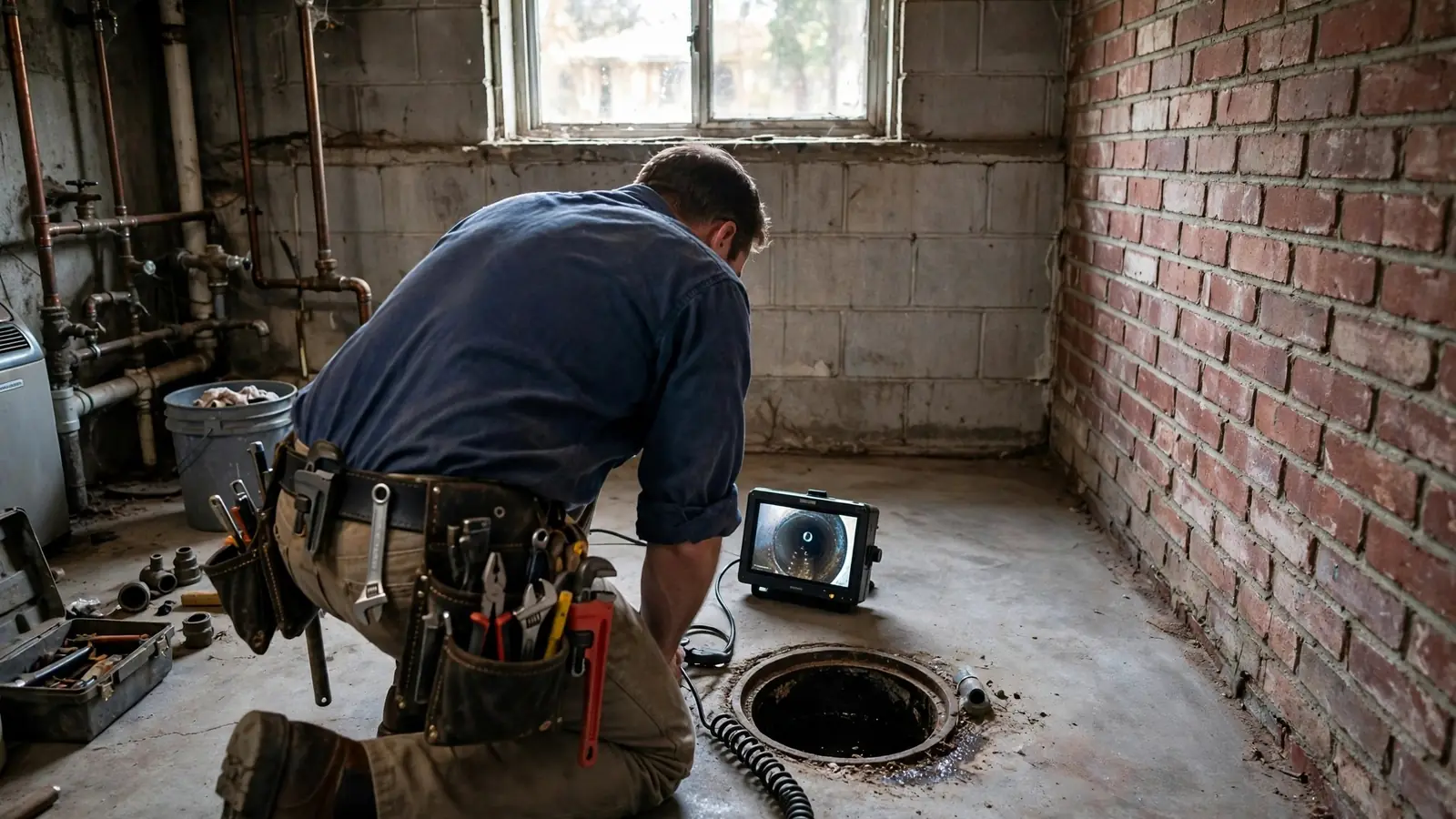
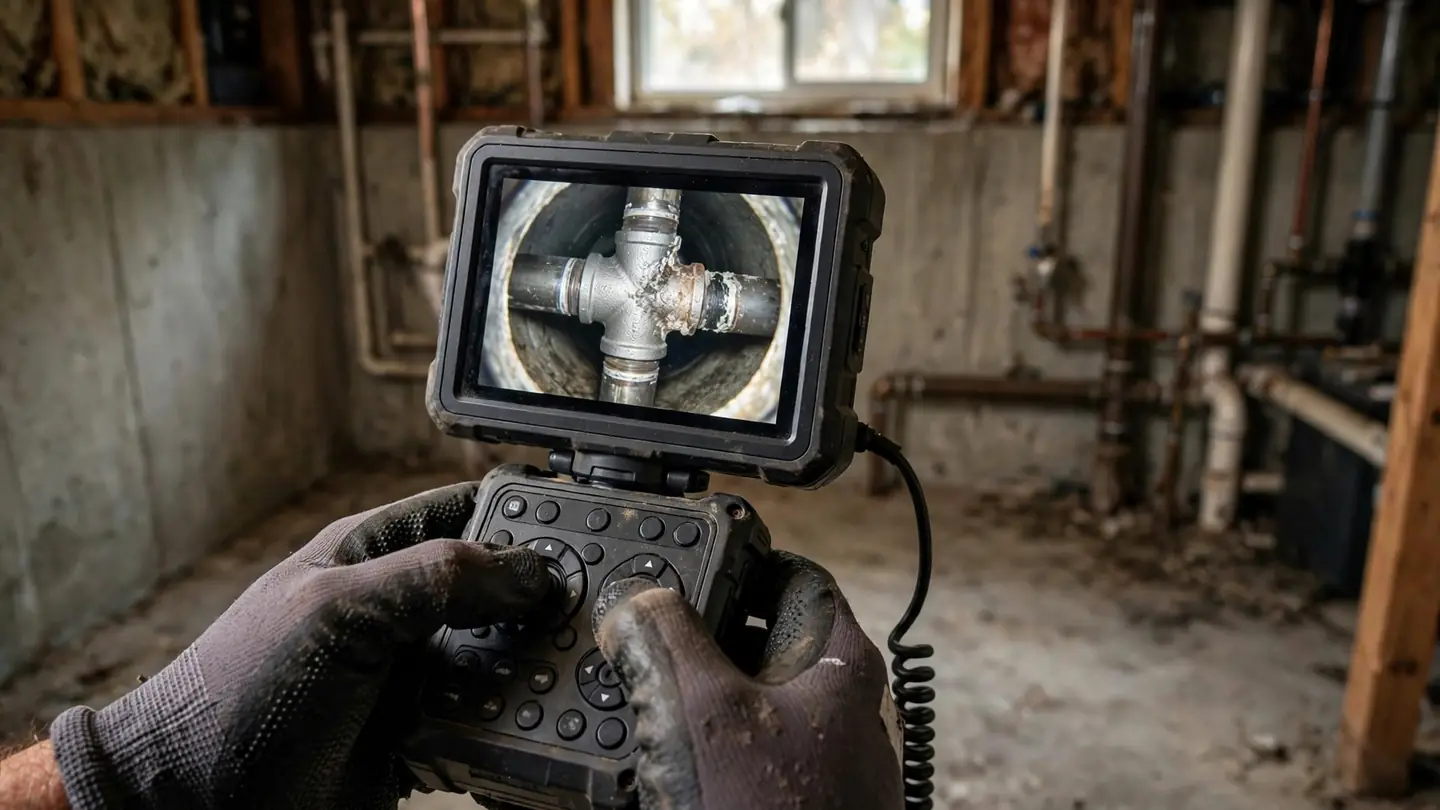
Most Aurora houses have a main cleanout in the basement, usually a capped fitting on the pipe near where the drain passes through the foundation wall. Some also have an outdoor cleanout near the house or by the property line. The plumber opens the best access point, feeds a waterproof camera head on a stiff push cable into the pipe and watches a live picture on a monitor while it records.
As the cable advances, a counter shows the distance traveled. The camera passes through the building drain, out under the foundation, along the service line under the lawn or driveway, and finally reaches the connection to the city main, which may be under the street in front or in an alley behind. Along the way it records the pipe material, every joint, any roots, cracks, offsets or sags, and the condition of the connection at the main.
A transmitter in the camera head lets the plumber find it from above with a handheld locator. At any defect, they mark the spot on the ground and read the depth. That turns a video into a map: what is wrong, how far from the house and how deep.
The plumber then plays back the important moments, explains what each finding means and talks through the realistic options. Many will provide the recording, which is useful for repair planning, insurance questions or a home sale.
When to inspect
When an Aurora home needs a sewer camera inspection
A camera is worth it whenever the main line may be involved.
Basement floor drain backs up
The lowest drain overflowing points to a service line or main problem.
Read moreRepeat clogs
A line that needs clearing again and again has a structural cause.
Read moreGurgling and slow drains throughout
Several fixtures acting up together means a shared restriction.
Read moreBuying an older home
Pre-1980 Aurora homes often have clay or cast iron lines worth checking.
Odors or a soggy lawn strip
A crack may be leaking into the soil.
Read moreAfter foundation or basement work
Lifting, underpinning or finishing a basement can disturb drains.
Camera reel figure

Typical findings in Aurora
What cameras usually find under Aurora yards
In older northwest neighborhoods, cameras often find vitrified clay pipe with roots at the joints. [5] Each joint is a short gap where the original seal has aged, and roots from elms, ash, maples and cottonwoods find them. Cast iron building drains under basement floors show scale and corrosion, sometimes with thin or broken bottoms.
In mid-century subdivisions, the service line may be clay, cast iron or a mix with later PVC repairs. Transitions between materials are frequent trouble spots. Some lines show offsets where the soil has moved, a sign of the swelling clay common along the Front Range. [2]
In newer southeast neighborhoods, lines are usually PVC. Cameras there more often find construction debris left in the pipe, joints that were not fully seated, sags where trench backfill settled, or damage from later landscaping and fence work. Roots are less common but can enter poorly sealed joints.
Everywhere, grease, wipes and paper build-up turn up on video and can be cleared with cleaning rather than repair.
Inspection step by step
How a plumber runs a camera inspection in Aurora
- 1
Choose access
Basement cleanout, outdoor cleanout, or a toilet or vent if needed.
- 2
Clear if blocked
A cable machine or jetter opens a blocked line so the camera can see.
- 3
Record the run
The camera travels to the main while recording distance and condition.
- 4
Locate defects
The plumber finds the camera from above and marks position and depth.
- 5
Review with you
You watch the key footage together and discuss what it means.
- 6
Recommend
Cleaning, spot repair, lining, bursting or replacement, based on the video.
Reading the video
What common camera findings mean in Aurora lines
| On the video | What it means | Typical next step |
|---|---|---|
| Hair-like roots at joints | Roots entering old seals | Clean, then decide on lining |
| Root mass filling the pipe | Long-term root intrusion | Clean and seal or replace |
| Step at a joint | Offset from soil movement | Spot repair or lining if minor |
| Water pooling | Sag in the line | Excavate and re-lay that section |
| Rough, scaled cast iron | Corrosion | Line if sound, replace if failing |
| Debris or concrete in PVC | Construction leftovers | Remove; repair if damaged |
| Damage at the main connection | Tap problem | Report to Aurora Water if public side |
What you can do yourself
Helpful steps before a camera inspection
These help the plumber and keep the household safe.
- Find your basement cleanout and clear boxes or shelving away from it.
- Note which drains back up and in what order.
- Stop using water if the basement drain is overflowing.
- Mark large trees, sprinkler lines and any past digging in the yard.
- Gather any earlier inspection videos or reports.
- Avoid chemical drain openers on a main line blockage.
Where to stop
When to leave it to the plumber
Opening a basement cleanout when the line is backed up can release a surge of sewage onto the floor. Rental cameras exist, but reading the footage and locating defects accurately takes experience. A plumber also knows where private responsibility ends at the main and how to document problems on the city side. If water is standing in the basement, leave the cleanout closed and call.
Sewer camera inspection in Aurora: local specifics
Aurora conditions that shape a camera inspection
Aurora's soils, homes and rules all shape inspections. Much of the city sits on clay that swells and shrinks with moisture, which the Colorado Geological Survey identifies as a common Front Range hazard. That movement shows on camera as offsets and sags, often near the house where seasonal wetting and drying are strongest.
Basements mean the building drain often runs under a concrete basement floor before leaving through the foundation, and finished basements can hide cleanouts behind walls or carpet. If your basement is finished, note where the utility room is when you call.
City rules matter. Aurora makes the owner responsible for the service line to the main in the alley or right of way, including locating it. [1] A camera inspection is often the first step in understanding what you own and what condition it is in.
Weather matters a little too. Frozen ground in winter makes excavation harder but does not stop a camera inspection, which happens from inside the pipe.
Repair choices after the camera
Using the video to choose a repair
| Video shows | Often fixed by | When replacement is likely |
|---|---|---|
| One defect in good pipe | Spot repair | Rarely |
| Roots at many joints in round pipe | Cleaning plus lining | If roots return through damaged sections |
| Cracks but pipe holds shape | Lining | If the pipe is deformed |
| Several sags | Excavation | If sags run the length of the line |
| Collapsed sections | Bursting or replacement | Usually |
Related problems
Problems that often show up alongside camera findings
Camera findings often explain other symptoms. A sag can cause gurgling and slow drains throughout the house. A root mass can explain a smell outside after rain. A crack near the foundation can relate to damp spots in a basement or moisture that affects foundation movement. Mention any of these when you call.
Inspections before buying
Camera inspections when buying an Aurora home
Standard home inspections rarely include a sewer camera. For older Aurora homes, many buyers add one during the inspection period. Clay lines with roots, cast iron with corrosion or a sag under the driveway are far better discovered before closing. Ask the sellers about earlier inspections or repairs and whether a basement cleanout is accessible.
Inspections in finished basements
Finding the cleanout in a finished basement
Finished basements sometimes hide the main cleanout behind drywall, inside a closet or under carpet. Building codes generally expect cleanouts to remain accessible. If yours is buried, a plumber can locate it, and adding an access panel or an outdoor cleanout makes future service far easier.
Video records
Keeping the inspection video
Keep the inspection video with your home records. It helps compare the line's condition over time, supports repair planning and is useful if you sell the home.
When the problem is the city's
When the camera shows a city-side problem
If the camera reaches the main and finds the blockage there, or the main itself is backed up, the problem is on the public side. Aurora Water handles the main. The plumber can share the video and distance so you can report it.
Under the basement floor
Inspecting drains under the basement slab
Before the service line leaves the house, the building drain often runs under the basement floor slab, collecting from floor drains, basement bathrooms and laundry. In older homes this is cast iron, which corrodes from the inside. The camera can follow these lines from the main cleanout or from a basement fixture. Corroded or cracked drains under a slab show up as rough, scaled walls, holes in the bottom of the pipe or standing water. Repairs may involve cutting the basement floor, lining from the cleanout or rerouting.
Depth and frost
Why Aurora sewer lines run deep
Colorado winters freeze the upper ground, so sewer service lines are typically buried well below the surface, deeper still where they slope toward the main. The camera's locator reports depth at each defect. Deeper lines need larger excavations and safety measures such as shoring, which is one reason trenchless methods are attractive for long or deep runs.
Inspections after basement remodels
Checking the line after basement finishing
Finishing a basement often adds a bathroom, laundry or wet bar that ties into the existing drains. Construction can also bury the cleanout behind new walls. A camera inspection after a remodel confirms the new connections are sound and the main line can handle the added fixtures. If the cleanout was covered, adding an access panel is worth doing now.
Clearing before filming
Why a line is sometimes cleared before the camera
If sewage is backed up, the camera sees only murky water. Plumbers first open the line with a cable machine or jetter, wait for it to drain and then run the camera. This also removes loose debris so the pipe walls are visible. The footage after clearing shows the true condition of the pipe.
Alley versus street mains
Where Aurora service lines meet the main
In older parts of Aurora, many homes connect to mains running down alleys behind the houses, so the service line exits the back of the basement and runs under the back yard, often past garages and fences. Newer areas typically connect to mains under the street in front. The camera's distance counter and locator show which way your line runs. That matters for planning any repair, because the route determines what has to be dug up or worked around.
Roots and Aurora's trees
Trees that commonly show up on camera
Older Aurora neighborhoods have mature elms, including Siberian elms that spread aggressively, plus ash, maples, honey locusts and cottonwoods near drainageways. On camera, roots from these trees typically appear at clay joints and at cracks near trees. Newer neighborhoods with young trees see fewer root problems, though they can appear within a decade or two at any loose joint.
When the line is too blocked to film
When cleaning must come first
Some lines are so packed with roots or debris that the camera cannot pass. The plumber clears a path first, often with a cutting head, then films. Sometimes clearing reveals a collapse that stops both the cable and the camera; in that case, the locator marks where the camera stopped so the plumber can plan an excavation at that point.
Sharing results with buyers and sellers
Using camera results in a home sale
In a sale, the camera video gives buyers and sellers a factual basis for discussing the sewer line. Sellers can repair, disclose or credit; buyers can plan. A clear video with distances and depths is far more useful than a verbal summary.
How often to inspect
How often an Aurora sewer line should be filmed
There is no fixed schedule. Lines with past roots or backups are often filmed every year or two to track changes. Lines in good condition may only need filming when symptoms appear, before a remodel or before a sale.
Newer PVC lines
What to look for in newer Aurora PVC lines
In southeast Aurora's newer neighborhoods, cameras check that PVC joints are fully seated, that the line keeps steady slope, and that no concrete, gravel or construction debris was left inside. Settled backfill over the first years can create sags. Finding these early, sometimes within a builder warranty period, can make repairs simpler.
Mixed-material lines
Transitions between old and new pipe
Many Aurora lines have been partly repaired over the decades, so the camera may pass from cast iron to PVC to clay and back. Each transition coupling is a potential weak point where roots or soil can enter. When planning repairs, the plumber considers the whole line, not just the newest failure.
Sewer gas and odors
Using a camera to trace sewer odors
If the house smells of sewer gas without a backup, a camera can look for cracks in drains under the slab or a broken line near the foundation. Pairing it with a smoke test, where harmless smoke is blown into the drains to see where it escapes, can pinpoint leaks.
What a good inspection report includes
What to expect in an inspection summary
A useful summary lists the access point, total distance filmed, pipe materials, each defect with its distance and depth, and the plumber's recommendation. Some plumbers include still images. Ask for one if you need it for a sale or insurance.
Camera inspections and city locates
Locating the line before digging
The locator marks from a camera inspection show where your private line runs, but they do not mark other utilities. Before any digging, Colorado 811 must be called so gas, electric, water and communication lines are located. Aurora's rules also put locating the private service line on the owner, which the camera makes simple.
Inspecting long lines
Long service lines on larger lots
Homes set far back on large lots, common in some southeast areas, have long service lines. The camera cable must reach the main, which may require access from an outdoor cleanout or a second entry point. Long lines have more joints and grade changes, so a full inspection is especially valuable.
Choosing a plumber for inspection
Questions to ask about a camera inspection
Ask whether the plumber will film all the way to the main, locate and mark defects with depth, provide the video and explain findings in plain language. Ask what happens if the line is blocked and how they will access a finished basement. Check their Colorado license.
Camera footage and foundation concerns
When sewer findings relate to the foundation
A broken line near the foundation can leak into swelling clay and contribute to localized movement. If you see new basement wall cracks or a slab heaving near where the drain exits, mention it. A camera can show whether the line near the house is leaking.
After the inspection
What happens after the inspection
If the line is sound, you may only need cleaning or nothing at all. If repairs are needed, the plumber explains options and next steps, including permits and 811 locates for any digging. Either way, keep the video.
Winter inspections
Camera inspections in winter
Cold weather does not stop an inspection, since the camera works inside the pipe and the access is usually indoors in the basement, out of the weather and away from snow, wind and frozen ground in the front yard or alley. Frozen ground only matters if digging follows, and then crews plan around it.
Camera inspection questions
Questions about sewer camera inspections in Aurora
Where does a plumber put the camera in an Aurora home?
Usually the basement cleanout near the foundation wall, or an outdoor cleanout if there is one. A toilet or roof vent can work if needed.
How long does an inspection take?
Often an hour or two, including access and locating. Clearing a blockage first adds time.
Can a camera see the city's part of the line?
It can usually reach the connection with the main. Public-side problems are reported to Aurora Water.
Will the camera show roots?
Yes. Roots are easy to see on video, from fine hairs at joints to full root masses.
Should I inspect the sewer line before buying a home?
For older homes, it is one of the most useful checks you can add.
Can I get a copy of the video?
Many plumbers provide it. Ask on the call.
My basement is finished. Can the plumber still get in?
Yes, but the cleanout may need to be found or exposed. Mention it when you call.
Can a sewer leak affect my foundation?
A leak near the foundation can wet swelling clay and contribute to movement. A camera can check the line near the house.
Why are Aurora sewer lines so deep?
They are buried below frost and must slope to the main, so depth increases toward the street or alley.
Does a camera inspection require a permit?
The inspection itself does not. Repairs that follow may.