Key facts: Root Intrusion Removal
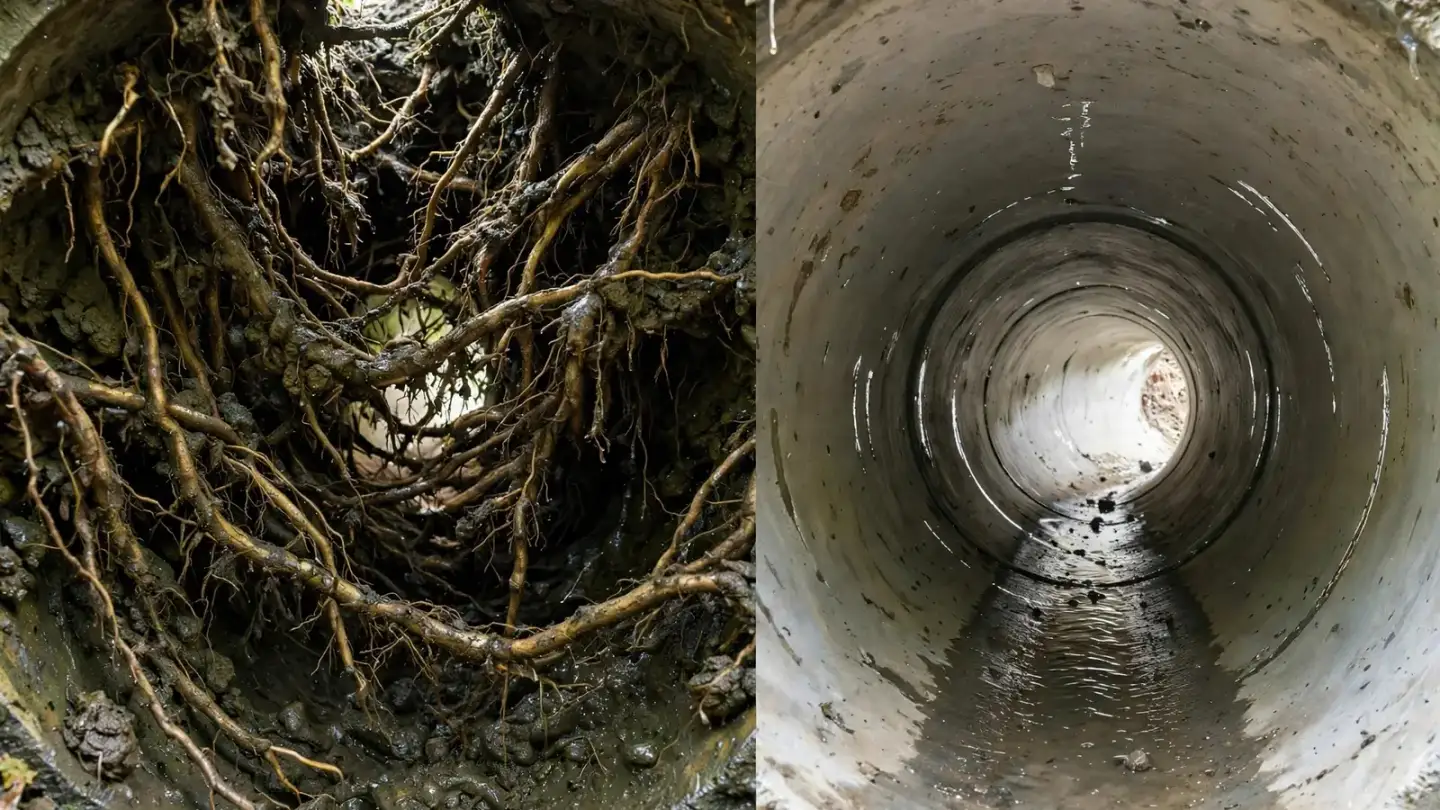
- Roots grow toward water and nutrients, which is why leaking sewer joints attract them [1].
- Clay pipe joints are common entry points for roots as seals age [2].
- Cured-in-place lining forms a jointless pipe that roots cannot enter along its length [3].
- Dry Front Range summers push tree roots to seek moisture wherever they can find it [4].
How root removal works in Aurora
How plumbers clear roots from an Aurora service line
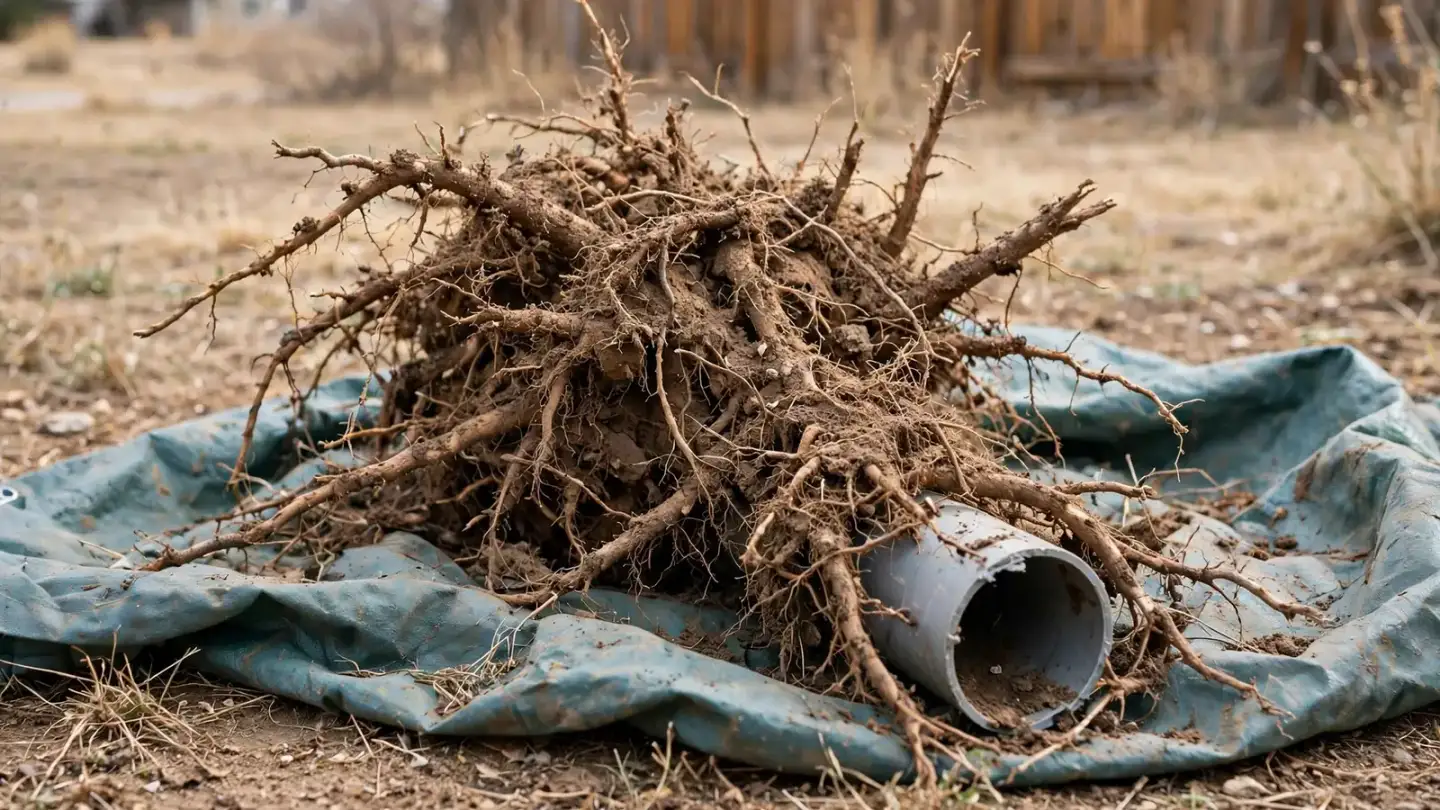
Root removal usually starts at the basement cleanout. The plumber runs a sewer machine with a cutting head on a spinning cable through the line, cutting through root masses toward the main. For dense roots, saw-tooth or spiral cutters chew a path; for finer growth, smaller heads work. Water jetting is another option: a high-pressure nozzle scours roots and buildup from the full pipe wall and flushes debris downstream.
After clearing, a camera inspection shows how much root growth remains, where it enters and what condition the pipe is in. That decides the next step: periodic cleaning, a spot repair at one entry point, lining to seal every joint, or replacement if the pipe is broken.
Root warning signs
Signs roots are in your Aurora sewer line
Root problems build slowly, then all at once.
Basement floor drain gurgles
Restricted flow pushes air back through the lowest drain.
Read moreSlow drains throughout
Roots narrow the line gradually.
Read moreBackups in late summer
Dry weather drives roots toward leaks.
Clogs return after cleaning
Roots regrow from the same joints.
Large trees near the line
Elms, ash and cottonwoods reach far.
Green strip in a dry lawn
Leaking sewage feeding grass over the line.
Read more
Roots figure
Why roots get in
Why roots invade Aurora sewer lines
Roots do not break sound pipe. They find small openings: aging clay joints, cracks, offsets where soil moved, and loose couplings at repairs. Moisture and nutrients escaping from those openings attract fine roots, which enter and multiply.
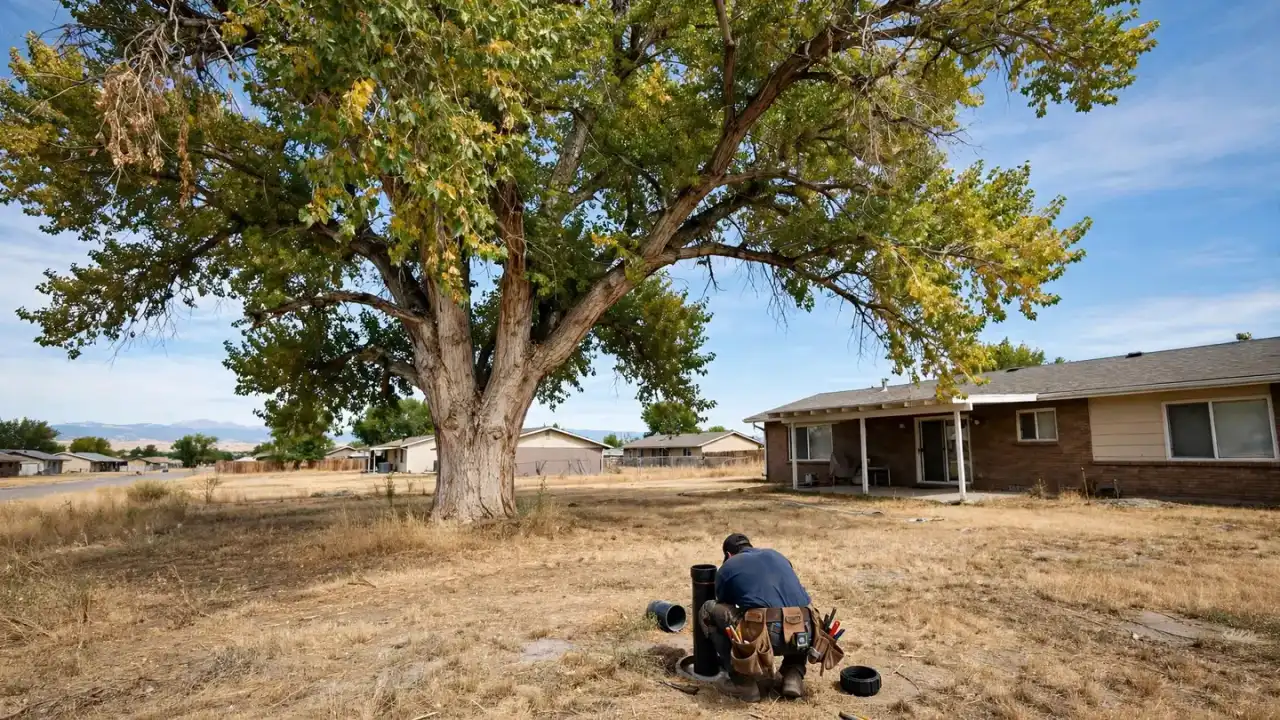
Aurora's climate makes this worse. The Front Range is semi-arid, and summers can be hot and dry. Trees in older neighborhoods, many planted decades ago and some, like Siberian elms, aggressive by nature, search widely for water. A leaking sewer line under a dry lawn is an easy source.
Root removal steps
How root removal is done
- 1
Access
Open the basement or outdoor cleanout.
- 2
Cut or jet
Clear roots with a cutting head or water jet.
- 3
Flush
Wash debris to the main.
- 4
Film
Check the line with a camera.
- 5
Locate
Mark entry points and depth.
- 6
Recommend
Explain cleaning, repair, lining or replacement.
Root methods
Root removal methods compared
| Method | What it does | Limit |
|---|---|---|
| Cable cutting | Cuts a channel through roots | Stubs regrow |
| Water jetting | Scours the full pipe wall | Use care on fragile pipe |
| Root control treatment | Kills roots inside the pipe | Temporary |
| Spot repair | Replaces one entry point | Others remain |
| Lining | Seals the whole line | Needs round pipe |
| Replacement | New jointless pipe | Most digging |
What you can do yourself
Homeowner steps for root problems
These steps help between professional cleanings.
- Note how often drains slow.
- Keep wipes and grease out of drains.
- Keep the basement cleanout accessible.
- Note large trees near the line.
- Follow label directions on any root control product.
- Plan a permanent fix if cleaning becomes frequent.
Where to stop
When root removal needs a professional
Rental augers rarely cut a root mass in a main line and can jam. Jetting equipment is dangerous without training. A professional also films the result. If sewage is backing up in the basement, call rather than attempting removal.
Root intrusion removal in Aurora: local specifics
Aurora trees and sewer roots
Older Aurora neighborhoods near Colfax and in mid-century subdivisions have mature elms, ash, maples, honey locusts and, near drainages, cottonwoods. Many were planted when the houses were new and now have roots spreading across yards. Siberian elms, common in older parts of the Front Range, are notably vigorous.
Newer southeast neighborhoods have younger trees and PVC lines, so root problems are less common, but they can appear at poorly sealed joints within a couple of decades.
Root cleaning is maintenance; repairs that follow, such as replacement, may require permits and 811 locates.
Clean, line or replace
Choosing what to do about recurring roots
| Finding | Next step |
|---|---|
| Light roots, one joint, sound pipe | Cleaning or spot repair |
| Roots at many joints, round pipe | Lining |
| Roots plus cracks and offsets | Lining or replacement |
| Roots plus sags | Excavate sags; line or replace the rest |
| Roots in collapsed pipe | Replacement |
Related problems
Problems that come with root intrusion
Roots often hide cracks, offsets and sags. Backups from roots damage basements. Roots can also enter irrigation lines and drains. Treat the sewer issue as part of a broader look at the yard.
Trees and sewer lines together
Keeping trees and a healthy sewer
Most owners want to keep their trees. A sealed line lets them. Lining or replacing the pipe removes entry points. When planting, keep trees away from the sewer path.
Water use and roots
Lawn watering and root growth
Watering restrictions and dry summers concentrate roots near any reliable moisture. Leaks from sewer joints become prime targets. Repairing the leaks removes the attraction.
Scheduled cleaning
Scheduled root cleaning in Aurora
Owners not ready for a permanent fix often schedule cleaning before summer. Periodic camera checks track whether the pipe is worsening.
Jetting versus cable cutting
Choosing a root clearing method in Aurora
A cable machine with a cutting head opens a path through roots quickly and works well in most lines. It leaves root stubs at the joints, which regrow. A water jetter with a root-cutting nozzle scours the full circumference of the pipe and flushes debris away, leaving a cleaner pipe that takes longer to fill with roots again. On fragile clay or deteriorated cast iron, jetting pressure must be managed carefully. Many plumbers cable first, film, then decide whether jetting is safe.
Root seasons on the Front Range
When roots grow fastest in Aurora
Tree roots grow actively in spring and early summer. In hot, dry late summers, trees push roots toward any moisture, and sewer leaks are a reliable source. That is why many Aurora root backups happen from July through September. Cleaning root-prone lines in late spring can prevent a late-summer backup.
Roots and older Aurora neighborhoods
Neighborhoods where roots are most common
Roots are most common where old clay or cast iron lines meet mature trees: Original Aurora near Colfax, post-war subdivisions such as Hoffman Heights and Del Mar Park, and other neighborhoods built from the 1950s through the 1970s. Townhome communities with mature landscaping can see roots in shared lines too.
Roots in shared lines
Roots in townhome and condo sewer lines
In townhome and condo communities, one sewer line may serve several units. Roots there affect everyone on the line. Associations often schedule cleaning and camera inspections and decide on lining or replacement for shared sections.
Preparing for lining
Root clearing before lining
Before a liner goes in, roots must be cut flush with the pipe wall and debris removed, so the liner bonds and cures smoothly. This preparation is a major part of a lining job on a root-filled clay line.
After a permanent fix
Root-proofing for the long term
Once lined or replaced, roots cannot enter along the pipe. The remaining risk is at the ends, at the house and at the main, which must be sealed well. A camera check a year or two later is a sensible precaution near big trees.
A typical Aurora root call
What a typical root call looks like
A typical call comes from a 1960s ranch where the basement floor drain gurgled for weeks, then backed up during laundry. The plumber opens the basement cleanout, cuts through a root mass about halfway to the street, flushes the line and films it. The video shows roots at most clay joints and the heaviest growth near a large elm in the front yard. The plumber explains periodic cleaning versus lining, and the family schedules lining before the next summer.
Siberian elms and volunteers
Volunteer trees and aggressive roots
Siberian elms and other fast-growing volunteers sprout along fences and alleys in older Aurora neighborhoods. Their roots spread quickly and seek moisture aggressively. Removing volunteers near the sewer path reduces future pressure, though sealing the pipe is the real fix.
Roots and irrigation
Irrigation and roots near the sewer
Sprinkler zones keep soil moist where they run, encouraging shallow roots. Leaking irrigation lines near the sewer add more moisture. Checking irrigation for leaks and avoiding overwatering near the sewer path helps a little.
Roots and foundations
Roots, leaks and foundation moisture
Sewer leaks near the house add moisture to swelling clay, and roots following that moisture can dry the soil elsewhere. Both can affect foundation movement. Fixing the leak removes one source of uneven moisture.
Root problems and home sales
Roots found when selling or buying
Root findings on a pre-sale camera inspection are common in older Aurora homes. Sellers can clean and document, line or disclose; buyers can plan repairs. A clear video helps both.
Choosing a root removal service
Questions to ask about root removal
Ask whether the plumber will film after clearing and provide the video, which tools they will use and why, whether the pipe is safe for jetting and what they recommend for long-term control. Check their Colorado license.
Roots in basement drains
Roots that reach under the house
Roots can follow a leaking line right up to the foundation and occasionally into the building drain under the basement floor. When roots appear on camera close to the house, the plumber checks the foundation penetration and the drain under the slab. Repairs there may involve lining from inside or cutting the slab.
Roots in alley-side lines
Roots along alleys
Alley-side service lines in older Aurora neighborhoods pass fence lines where volunteer trees grow. Camera inspections often show the heaviest roots near the alley. Removing volunteers and sealing the line reduce repeat problems.
Roots and young trees
Young trees in newer neighborhoods
Newer neighborhoods have young trees whose roots will spread over coming decades. Planting trees away from the sewer path and keeping PVC joints sealed now prevents problems later.
Root cleaning frequency
How often to clean roots
Some lines need cleaning yearly; others more often. If backups keep returning within months, the line is a candidate for lining or replacement rather than more cleaning.
Roots and odors
Roots, cracks and yard odors
The cracks roots exploit can also leak sewage into the soil, causing odors in the yard, especially in warm weather. A camera inspection connects the two.
Cottonwoods near drainageways
Cottonwoods and willows near creeks
Homes near Aurora's creeks and drainageways often have cottonwoods and willows nearby, trees with vigorous roots that thrive on moisture. Sewer lines near these trees are prone to root intrusion. Lining is often the best permanent solution.
Roots in winter
Root problems in winter
Root growth slows in winter, but roots already in the pipe still catch debris. Winter backups from roots usually reflect growth that happened in the previous summer. A fall cleaning can prevent winter trouble.
Root control products
Using root control treatments safely
Some products are poured into toilets or cleanouts to kill roots in the pipe. They slow regrowth but do not seal joints. Use them only as labeled and never mix products. A plumber can advise whether they make sense between cleanings.
After a root backup
Cleanup after a root-caused backup
If roots caused a basement backup, the cleanup steps for sewage apply: stop water use, protect people, remove contaminated porous materials, disinfect and dry. Then plan the repair so it does not happen again.
Neighbors' trees
When the roots come from next door
Roots cross property lines easily. Even if the tree belongs to a neighbor or the city's parkway, the service line is the owner's responsibility under Aurora's rules. Sealing the line is the fix either way.
Roots and Aurora's neighborhoods
Where Aurora root problems cluster
Root problems cluster in Original Aurora, the post-war subdivisions north and south of Colfax, and neighborhoods from the 1960s and 1970s with mature landscaping. In those areas, the combination of older pipe and large trees makes regular root trouble common. Newer southeast neighborhoods see fewer root calls.
Lining after roots
Why lining often follows root cleaning
After cleaning, if the camera shows roots entering at many joints of an otherwise round clay pipe, lining seals every joint in one job without trenching. It is often the most practical permanent fix for root-prone lines under mature trees.
Replacement after roots
When roots have damaged the pipe too much
If roots have cracked or displaced the pipe, or the line has sags, lining alone may not work. Replacement, by bursting or trenching, gives a new jointless pipe. The camera shows which applies.
Documenting root work
Keeping a root maintenance log
Record each cleaning date, method and camera findings. Over time, the log shows how quickly roots return and helps decide when a permanent fix is worth it.
Root removal and basement safety
Safety during root clearing from the basement
When the cleanout is in the basement, clearing roots can release water and debris onto the floor. Plumbers protect the area and manage the flow. Keep children and pets upstairs during the work.
Roots and cleanouts
Why an outdoor cleanout helps with roots
An outdoor two-way cleanout near the house lets plumbers clear roots without working through the basement, keeping mess outside. If your home has only a basement cleanout, adding an outdoor one during the first repair is worth considering.
Roots and seasonal backups
Planning around the late-summer peak
Because many root backups happen in late summer, scheduling a cleaning in early summer, or completing lining in spring, can prevent the most common backup season.
What roots look like on camera
Reading root footage
Fine roots look like hair at joints; mature intrusions look like dense mats or thick tendrils. The plumber notes each by distance, which guides where repairs are needed.
When to call
When to call about roots
Call when drains slow or the basement floor drain gurgles, not after the backup. Early cleaning is simpler and avoids basement cleanup.
Root removal for rentals
Root problems in Aurora rental homes
Landlords of older Aurora homes with mature trees often face recurring root backups between tenants. Scheduled cleaning, a camera check at turnover and a permanent fix when cleaning becomes frequent keep tenants' basements dry and reduce emergency calls.
Roots and replacement timing
Planning a permanent fix around the seasons
Spring and fall are good times for lining or replacement, avoiding winter digging and the summer root peak. Plan ahead once the camera shows roots at many joints, so the work happens on your schedule rather than after the next backup.
Roots and the main connection
Roots near the city main
Sometimes roots concentrate at the connection to the main, from a parkway tree. The plumber documents it on video. If the problem is on the public side, it is reported to the city; if on your side of the connection, sealing the end of the line addresses it.
Roots and cast iron
Roots in cast iron lines
Cast iron joints were sealed with lead and oakum in older homes. As those seals age, roots can enter, and corrosion opens cracks. Roots in cast iron often signal that the pipe is near the end of its life, making lining or replacement more sensible than repeated cleaning.
Waiting on roots
Why waiting makes root problems worse
Roots left in a pipe keep growing and widen the joints they entered. A line that could be lined today may crack or sag later, needing replacement. Acting after the first couple of cleanings preserves the simpler options.
Root removal questions
Questions about root removal in Aurora
How do I know roots are in my line?
Slow drains, gurgling floor drains and repeated backups are common signs. A camera confirms it.
Will roots grow back?
Usually, because the openings remain. Lining or replacement stops regrowth.
Is jetting safe for old clay pipe?
Often, with care. A camera inspection helps decide.
Should I remove the tree?
Usually not. Sealing the pipe solves the problem and keeps the tree.
Which trees cause the most trouble in Aurora?
Mature elms, including Siberian elms, plus ash, maples and cottonwoods are common culprits.
When do root backups happen most?
Often in late summer, when dry conditions push roots toward leaks.
Do root killers work?
They can slow regrowth when used as directed but do not seal openings.
Can the new line be routed around a tree?
Often, if slope and connection points allow it.
What should I tell the plumber about a replacement?
Symptoms, camera findings, what sits over the line and whether the main is in the alley or street.
Should I add an outdoor cleanout?
It makes root cleaning easier and keeps mess out of the basement.
Do creek-side trees cause more root problems?
Often. Cottonwoods and willows near drainageways have vigorous roots.
What if the roots come from a neighbor's tree?
The service line is still the owner's responsibility. Sealing the line fixes it either way.
Can roots reach the drain under my basement floor?
Occasionally. If roots appear near the house on camera, the plumber checks the foundation penetration and the drain under the slab.
Do volunteer trees along my fence matter?
Yes. Fast-growing volunteers like Siberian elms send roots toward sewer leaks. Removing them near the line helps.
Can roots affect a townhome's shared line?
Yes. Associations often manage cleaning and repairs for shared sections.
Will cleaning roots from the basement make a mess?
Plumbers protect the area and manage the flow, but keep children and pets upstairs during the work.
Can roots come from the parkway tree?
Yes. If roots enter at or beyond the city connection, the problem is reported to the city.
What should I tell the plumber about roots?
How often drains slow, where large trees stand, whether the basement drain is involved and any past cleaning.
Are roots in cast iron a bad sign?
Often. Roots plus corrosion suggest the pipe is near the end of its life.
How long does root cleaning last?
It varies by tree, season and pipe condition, from months to a year or more.
Does root cleaning need a permit?
Cleaning does not. Repairs that follow may.