
Key facts: Sewer smell in the yard
Yard smell: the short answer
Sewer smell outside: the short answer
Check cleanout caps first. If they are intact and the smell persists, especially near a wet or sunken patch, a cracked service line is likely. A camera inspection finds it.
Smell sources
Common sources of yard odors
| Clue | Likely source | Next step |
|---|---|---|
| Smell near a cleanout | Broken or missing cap | Replace cap |
| Wet or sunken patch | Leaking line | Inspect |
| Smell at the roofline or patio | Vent gas | Check vent height |
| Smell along the alley | City main or neighbor | Report |
| Smell worse after rain | Leak or surcharged line | Inspect |
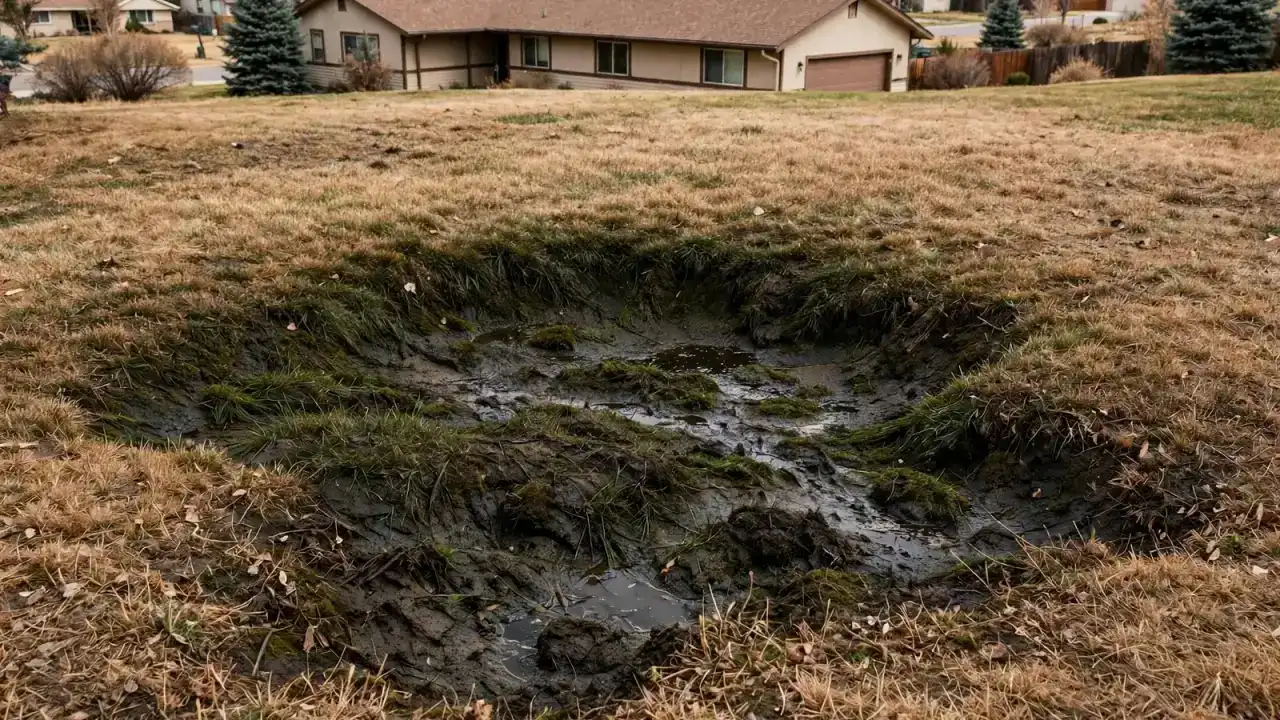
Cracked soil figure

Safe checks
Safe checks outdoors
- Check cleanout caps.
- Look for wet or sunken spots.
- Note when the smell is strongest.
- Call 811 before any digging.
Leaking lines
Leaking service lines
A cracked or separated service line lets wastewater seep into the soil around it. The odor is strongest near the leak and on warm days, and a wet or sunken area may form above it. In a dry Aurora yard, grass over the leak may grow greener than elsewhere. A camera inspection with locating pinpoints the spot and shows how serious the damage is.
Caps and vents
Cleanout caps and plumbing vents
Outdoor cleanout caps sit at ground level, where mowers clip them in summer and snow shovels and blowers catch them in winter. A cracked or missing cap lets sewer gas escape right at the surface. Replacing it is simple. Roof vents release gas by design, but on still evenings air can drift down onto patios and decks, especially with low rooflines or a vent near a second-story deck. Raising or relocating the vent may help.
Dry summers
Dry summers and odors
Aurora's clay soils shrink and crack as they dry in summer. If the service line is leaking below, those cracks act like chimneys, letting odor rise to the surface. Smells that appear every summer and fade in the wet months often point to a small leak that the dry soil reveals.
How plumbers trace it
How a plumber traces the smell
- 1
Check caps and vents
Simple causes first.
- 2
Film the line
Look for cracks.
- 3
Smoke test
Reveal leaks.
Fixing the source
Fixing the source of an outdoor smell
A missing cap is a quick fix. A leaking joint may need a spot repair or lining. A line that is cracked along its length or collapsed may need replacing. The camera video guides which repair fits, and repairs that involve digging require 811 locates first.
Alley odors
Odors along Aurora alleys
In older neighborhoods with alley mains, odors along the alley may come from the public main, a manhole or a neighbor's line. If the smell is strongest in the alley rather than your yard, report it to the city. If your line connects in the alley, a camera can check whether your connection is leaking.
When the smell moves indoors
Odors inside the house
If the smell is also in the basement, check that the floor drain trap has water, since dry Colorado air evaporates traps quickly. If traps are full, a cracked drain under the slab or a loose cleanout cap indoors may be the source.
Smoke testing
How smoke tests find leaks
A smoke test blows harmless, visible smoke into the sewer line. Smoke escaping from the lawn, a cleanout or around the house shows where the system is open. Combined with a camera, it pinpoints leaks quickly.
Odors and snowmelt
Odors in spring
As snow melts and soil warms, odors from small leaks can become noticeable again after winter. If the yard smells every spring, a crack may be letting sewage into the soil.
Odors near the foundation
Smells close to the house
A smell near the foundation can come from a crack where the line leaves the basement, a loose outdoor cleanout cap or a vent near a window well. Check caps first, then have the line filmed near the house.
Pets and smells
Why pets dig at the same spot
Dogs often dig or sniff at the same patch of lawn when sewage is leaking below it. If your dog keeps returning to one spot, check it for dampness and odor.
Missing caps after snow removal
Checking caps after winter
After winter, walk the yard and check outdoor cleanout caps. Snow shovels, blowers and plows often crack or knock them off. Replacing a cap is quick and stops odors at the source.
When to call
When an outdoor smell needs a plumber
If caps are intact and the smell persists, especially near a wet or sunken spot or a lush strip of grass, call. A camera inspection and, if needed, a smoke test will find the source.
Vents and window wells
Vents near decks and window wells
Plumbing vents that end near a second-story deck or close to a basement window well can send odors where people notice them. Extending the vent or relocating it is a plumbing task, sometimes needing a permit.
Odors and HOAs
Reporting common-area odors
In townhome and condo communities, odors from common areas or shared lines should be reported to the association, which manages shared sewer sections.
Wet spots that are not sewage
Wet spots from irrigation or water lines
Not every wet spot is a sewer leak. Broken sprinklers or a leaking water service can also soak the lawn. The difference is usually the smell: sewer leaks smell. If unsure, a plumber can check both.
Summer heat and smells
Why heat makes smells stronger
Warm weather speeds the breakdown of sewage and helps gases rise, so a small leak that is barely noticed in winter can smell strongly in July.
Prevention
Preventing outdoor odors
- Keep caps intact and visible.
- Fix leaks early.
Tell the plumber
What to tell the plumber about the smell
- Where it is strongest.
- Any wet spots.
Smell guide questions
Questions about outdoor sewer smells
Is a yard sewer smell dangerous?
Mostly unpleasant, but strong odors should be traced and fixed.
Why is it worse in summer?
Heat and cracked soil let odors rise.
Can a snow shovel break a cleanout cap?
Yes, and mowers too.
Could it be the city main?
Yes, especially along alleys.
Can sprinklers cause a wet spot that looks like a sewer leak?
Yes. A leaking sprinkler or water line can soak the lawn too. Sewer leaks smell.
Can a vent cause odors on my deck?
Yes, if it ends close to the deck. Extending or relocating it may help.
Does a sewer smell outside mean a broken line?
Not always. Check caps and vents first; persistent smells near wet spots suggest a leak.
Why does my basement smell like sewer?
Often a dry floor drain trap. Pour water into it. If the smell persists, have the drains checked.
Should I dig to find the leak?
No. Call 811 and have a plumber locate it.