
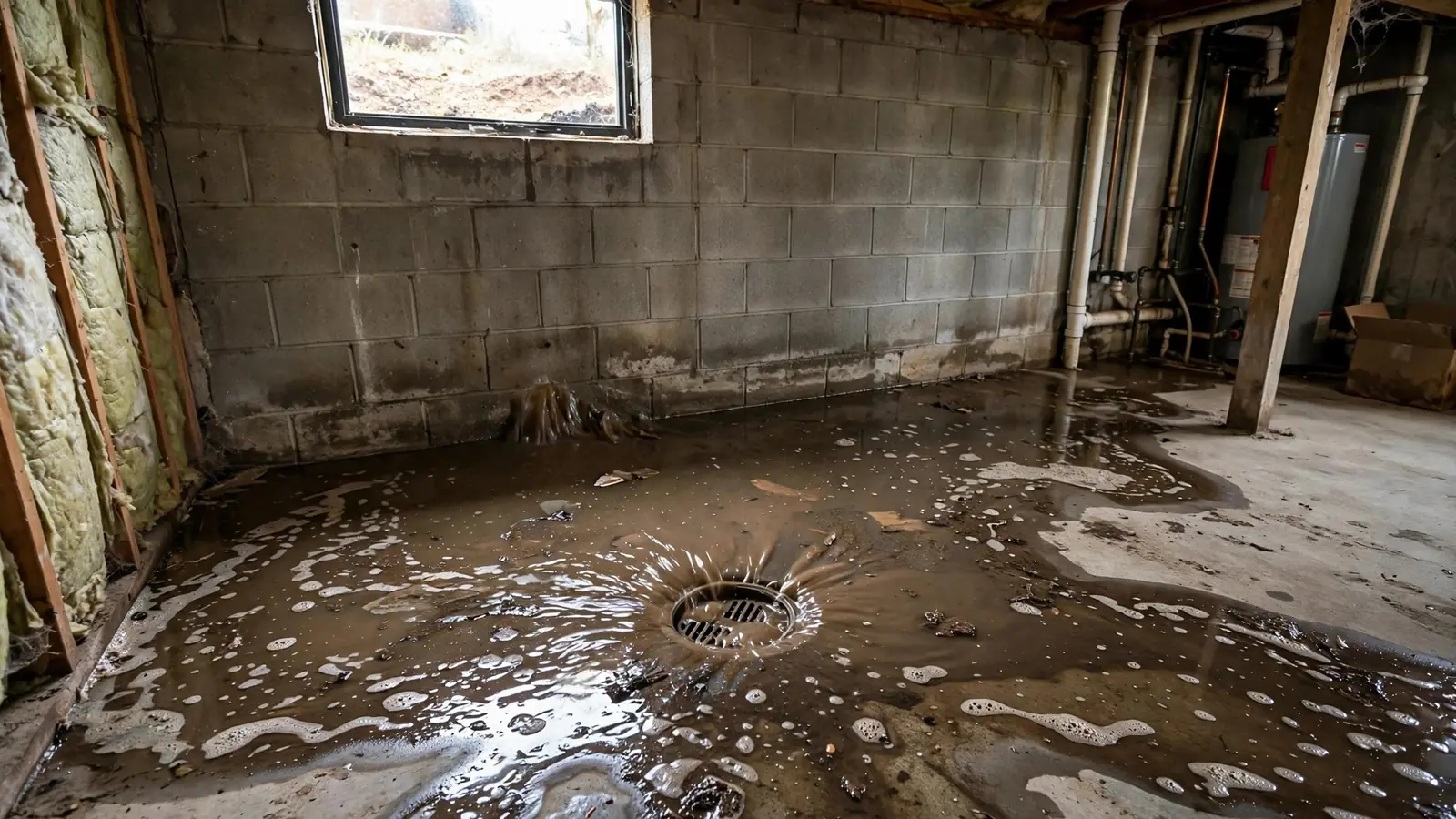
Key facts: Sewer backup in the basement
Basement backup: the short answer
What to do when the basement drain backs up
Stop every source of water in the house, keep people and pets out of the basement and call a plumber to clear the main line. Do not open the basement cleanout while sewage is backed up behind it, and do not pour drain chemicals into the floor drain. Once the line flows, a camera inspection shows why it happened.
Basement backup clues
Reading the signs around the floor drain
| What you see | Likely cause | Next step |
|---|---|---|
| Water rises when the washer drains | Restricted service line | Stop laundry; call |
| Sewage rises when upstairs toilets flush | Main line blocked | Stop all water use |
| Clear water at the drain, no odor | Water heater relief or sump overflow | Check those first |
| Several neighbors backing up | City main problem | Report to the city |
| Backups after snowmelt or storms | Groundwater entering cracks | Camera inspection |
Basement cleanout figure
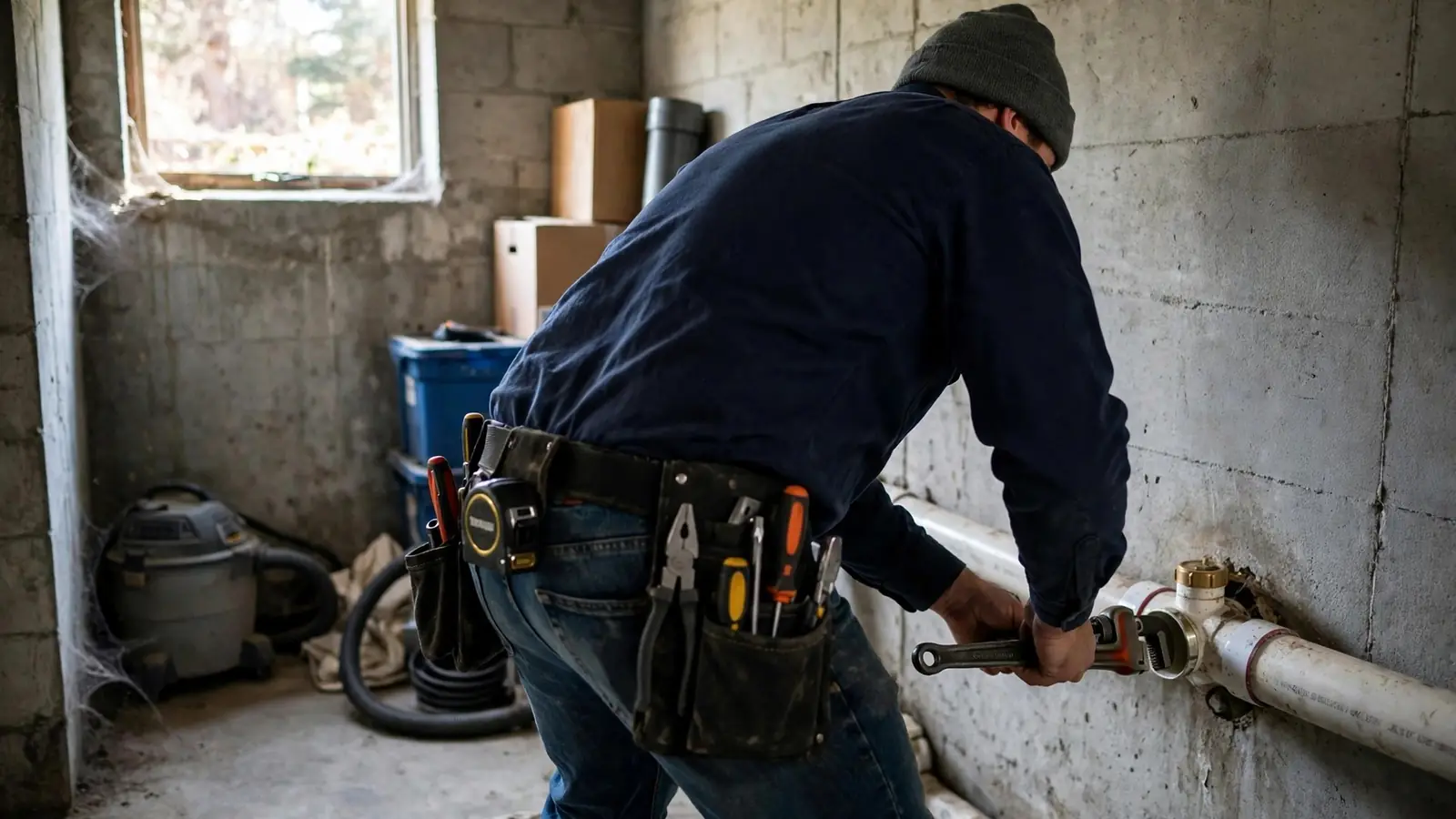
Safe first steps
Safe first steps in a flooded basement
- Tell everyone to stop flushing, showering and running appliances.
- Keep children and pets upstairs.
- Wear boots and gloves if you must go down.
- Turn off power to the basement only if you can reach the panel without wading.
- Open windows and run fans for air.
- Photograph the damage.
Why basements back up
Why Aurora basements are vulnerable
Aurora's homes overwhelmingly have basements, and the floor drain sits at the bottom of the plumbing system. Anything that blocks the service line, roots, a sag, a collapse or a grease plug, forces wastewater to the lowest opening. When the city main is overloaded, the same thing can happen from the other direction.
Finished basements
When the basement is finished living space
Finished basements turn a messy cleanup into a major one. Carpet, pad and the bottom of drywall that sewage reached are typically removed. Furniture and stored items may be lost. Professional drying helps prevent mold behind walls.
Appliances and the floor drain
Furnaces, water heaters and washers
Utility rooms cluster the furnace, water heater and washer near the drain. If sewage reached them, have them checked before use, particularly gas appliances.
How plumbers handle it
How a plumber handles a basement backup
- 1
Relieve pressure
Open the line safely and clear the blockage.
- 2
Film the line
Run a camera to find the cause.
- 3
Locate
Mark defects and depth.
- 4
Advise
Explain repair, maintenance or a city report.
Repair or maintain
Fixing the cause of a basement backup
Grease and wipes call for cleaning and new habits. Roots call for cleaning and, often, lining. Sags and collapses need excavation. City-side problems are reported, and a backwater valve may be worth adding.
Aurora notes
Basement backups and Aurora conditions
Spring snowmelt and storms raise groundwater that can seep into cracked lines. Dry summers drive roots toward leaks. Both seasons bring basement backup calls in Aurora.
The city main and backups
When the city main is the problem
Sometimes your line is fine and the public main is blocked or overloaded, often during storms or snowmelt. Wastewater then backs up into connected homes through the lowest drains. If several neighbors back up at the same time, report it to the city. A plumber's camera can confirm your line is clear. Backwater valves protect against this kind of backup.
Sump pits versus floor drains
Telling sump water from sewer water
Many Aurora basements have a sump pit for groundwater in addition to the floor drain. If clear water is rising in the sump or seeping through walls, that is a groundwater issue, not a sewer backup. Sewer water is gray or brown and smells. Knowing the difference tells you whom to call.
Cleanup after the line is clear
Cleaning up once the line flows
Once the plumber has cleared the line, begin cleanup in the most contaminated area. Remove soaked porous materials, disinfect hard surfaces and dry everything thoroughly with fans and dehumidifiers. Keep ventilating. For larger backups, a restoration company handles removal and drying.
Insurance and the basement
Insurance after a basement backup
Many standard homeowners policies exclude sewer backup unless a specific endorsement was added. Photograph the damage, keep damaged items until your insurer says otherwise and keep receipts for plumbing, cleanup and drying. A plumber's written note of the cause helps.
Basement bathrooms
Basement bathrooms that back up on their own
If only a basement bathroom backs up and the floor drain stays dry, the bathroom may rely on an ejector pump that has failed. A plumber can check the pump, float and check valve.
Keeping traps full
Floor drain traps in dry Colorado air
Basement floor drains have traps that hold water to block sewer gas. Colorado's dry air evaporates them, especially in winter with the furnace running. Pour a bucket of water into floor drains every few weeks. A dry trap also lets odors in that are easy to mistake for a backup.
After cleanup
Getting back to normal after a backup
Once the line is repaired and the basement is dry, test with several fixtures running and watch the floor drain. Rebuild finished spaces only after moisture readings confirm the structure is dry. Keep the plumber's video and notes with your records.
Keeping storage off the floor
Storing belongings safely in the basement
Keep boxes on shelves or in sealed bins away from the floor drain, so a future backup does less damage.
Prevention
Preventing the next basement backup
- Keep grease and wipes out of drains.
- Film older lines periodically.
- Fix roots and cracks before they block.
- Consider a backwater valve.
- Keep floor drain traps filled.
What to tell the plumber
What to tell the plumber about a basement backup
- When it started and what was running.
- Whether sewage or clear water is present.
- Whether neighbors have problems.
- Where your basement cleanout is.
Basement guide questions
Questions about basement sewer backups
Can a backup damage my furnace?
If sewage reached it, have it checked before running it, especially gas appliances.
How long until I can use the basement again?
Small cleanups may take a day; larger ones need days of drying before rebuilding.
Should I open the basement cleanout?
Not while the line is backed up. Pressure behind the cap can release sewage onto the floor.
Is it safe to stay in the house?
Usually, if the basement is closed off and nobody uses water until the line is cleared.
Why does the floor drain smell even without a backup?
The trap may be dry. Pour water into it.
Will a backwater valve prevent all backups?
It stops backups from the main, not blockages in your own line.
How do I know if it is sewage or groundwater?
Sewage is gray or brown and smells. Clear water in a sump pit or seeping through walls is groundwater.
Can I use the washing machine after the line is cleared?
After the plumber confirms the line is clear and the cause is known.